Class 9 is the system’s catch-all. If a material is genuinely hazardous in transport but does not fit any of the first eight classes, it lands here. That makes Class 9 a grab bag, and it includes one of the fastest-growing hazards on the road today: lithium batteries.
This is study guidance, not regulatory advice. The binding definition is in 49 CFR 173.140 and your official state CDL manual.
What the placard looks like
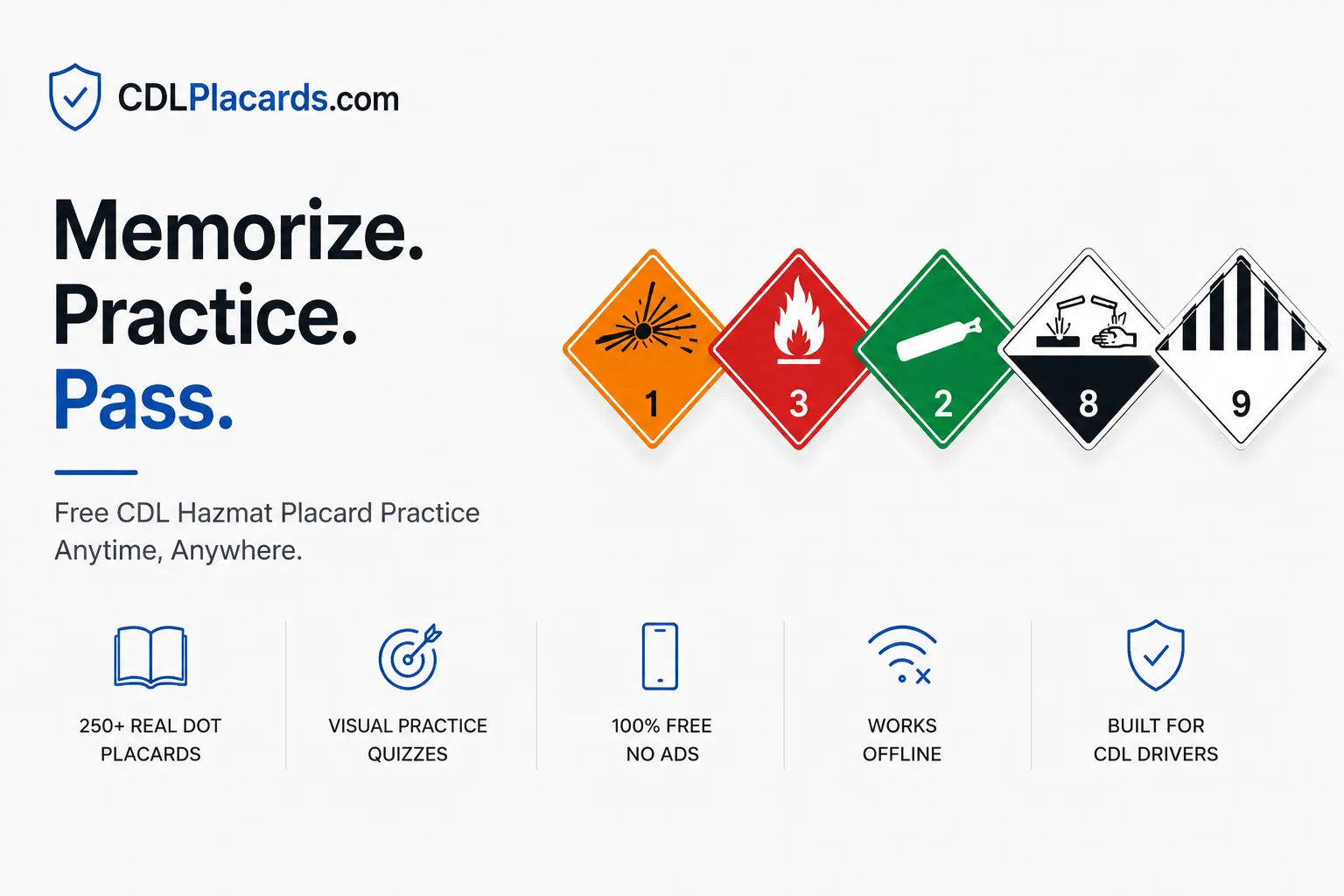
The Class 9 placard is unmistakable once you know it: seven black vertical stripes across the top half, a white lower half, and the number 9 at the bottom point. There is no colored hazard symbol, just the stripes. That uniqueness makes it a reliable anchor when you are scanning a load, much like the blue of dangerous when wet.
What falls in Class 9
| Example | Why it is Class 9 |
|---|---|
| Lithium batteries | Fire risk that does not fit classes 1 to 8 |
| Dry ice (solid carbon dioxide) | Asphyxiation and pressure hazard |
| Elevated-temperature materials | Hot enough to injure, such as molten asphalt |
| Marine pollutants | Environmental hazard in transport |
| Asbestos | Health hazard as a regulated material |
Lithium batteries are the headline case. As more electronics, tools, and vehicles ship with them, recognizing the Class 9 diamond and the associated lithium-battery marking matters more each year. PHMSA keeps dedicated guidance on transporting lithium batteries.
The scale of that growth shows up in safety data. The FAA now logs dozens of lithium battery smoke, fire, or extreme-heat events on aircraft every year, a count that has climbed steadily as the batteries spread into more shipments.
The placarding quirk
Class 9 has a wrinkle other classes do not. Under domestic rules, the Class 9 placard is not always required for highway transport in the same way the others are, even though packages still carry the Class 9 marking and the shipment still carries its four-digit identification number. This is exactly the kind of detail to confirm in your manual rather than assume. The general placarding framework is in when hazmat placards are required and 49 CFR 172.504.
Where it fits
Class 9 closes out the nine hazard classes. Because it is a catch-all, the safest approach is to recognize the striped diamond instantly and then rely on the identification number and shipping papers for specifics. The FMCSA hazardous materials regulations cover the handling rules.
The lithium battery case
Because lithium batteries are the fastest-growing Class 9 material, they have their own detailed rules, covered in lithium battery transport rules.
Frequently asked questions
What is a Class 9 hazardous material?
Class 9 is the miscellaneous category for materials that are regulated in transport but do not fit classes 1 through 8. Lithium batteries, dry ice, elevated-temperature materials, marine pollutants, and asbestos are common examples.
What does the Class 9 placard look like?
It has seven black vertical stripes across the top half over a white background, with the number 9 at the bottom point and no colored hazard symbol.
Are lithium batteries Class 9?
Many lithium batteries are regulated as Class 9 because their fire risk does not fit the earlier classes. They also carry a specific lithium-battery marking, and exact requirements depend on the battery type and quantity.
What is the best way to study the Class 9 placard?
Memorize the black-stripe pattern as a unique anchor, then drill it with a recognition app such as CDL Placards alongside the other classes. Confirm the domestic placarding exceptions in your state CDL manual, which is the source of truth.