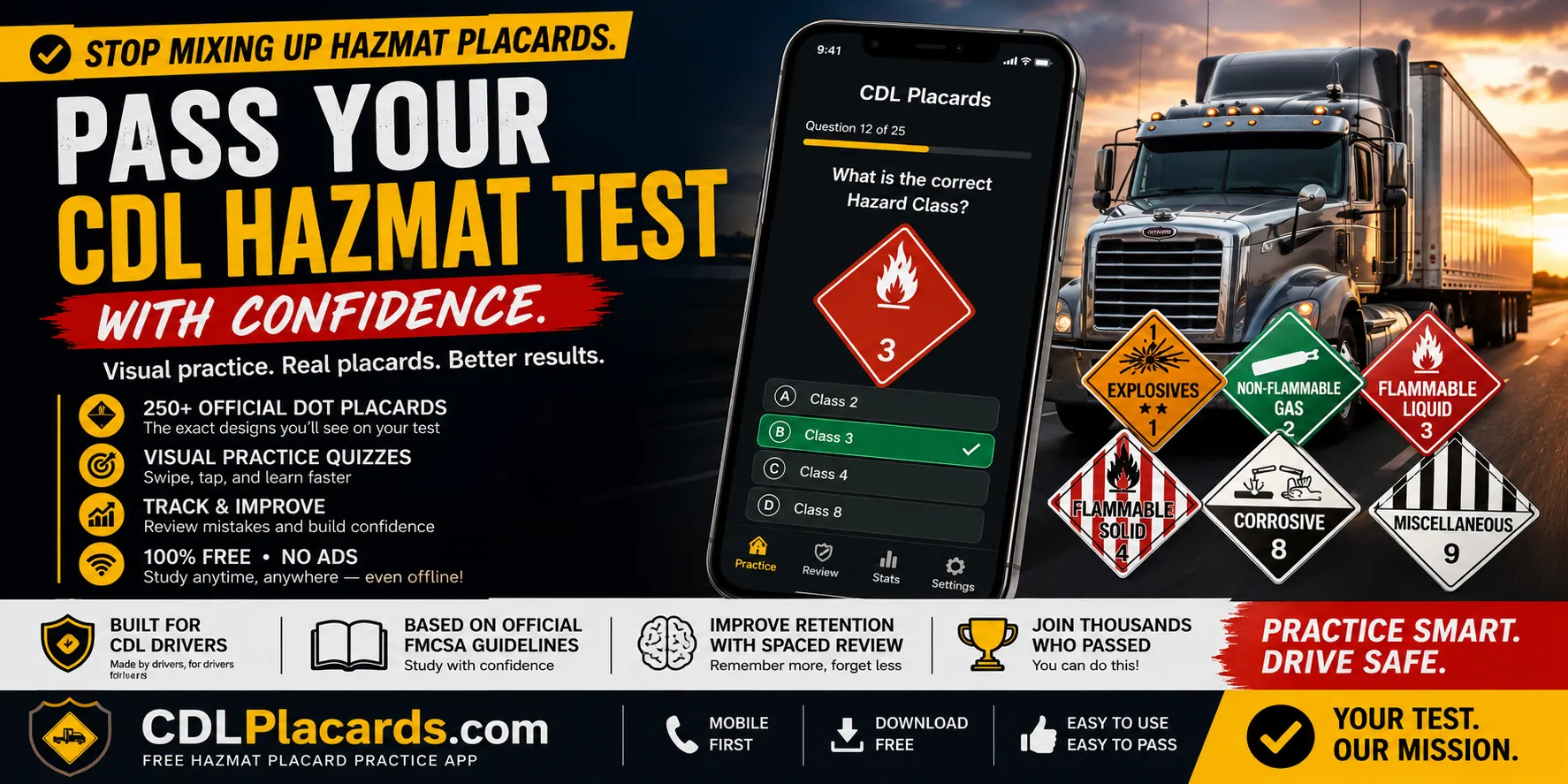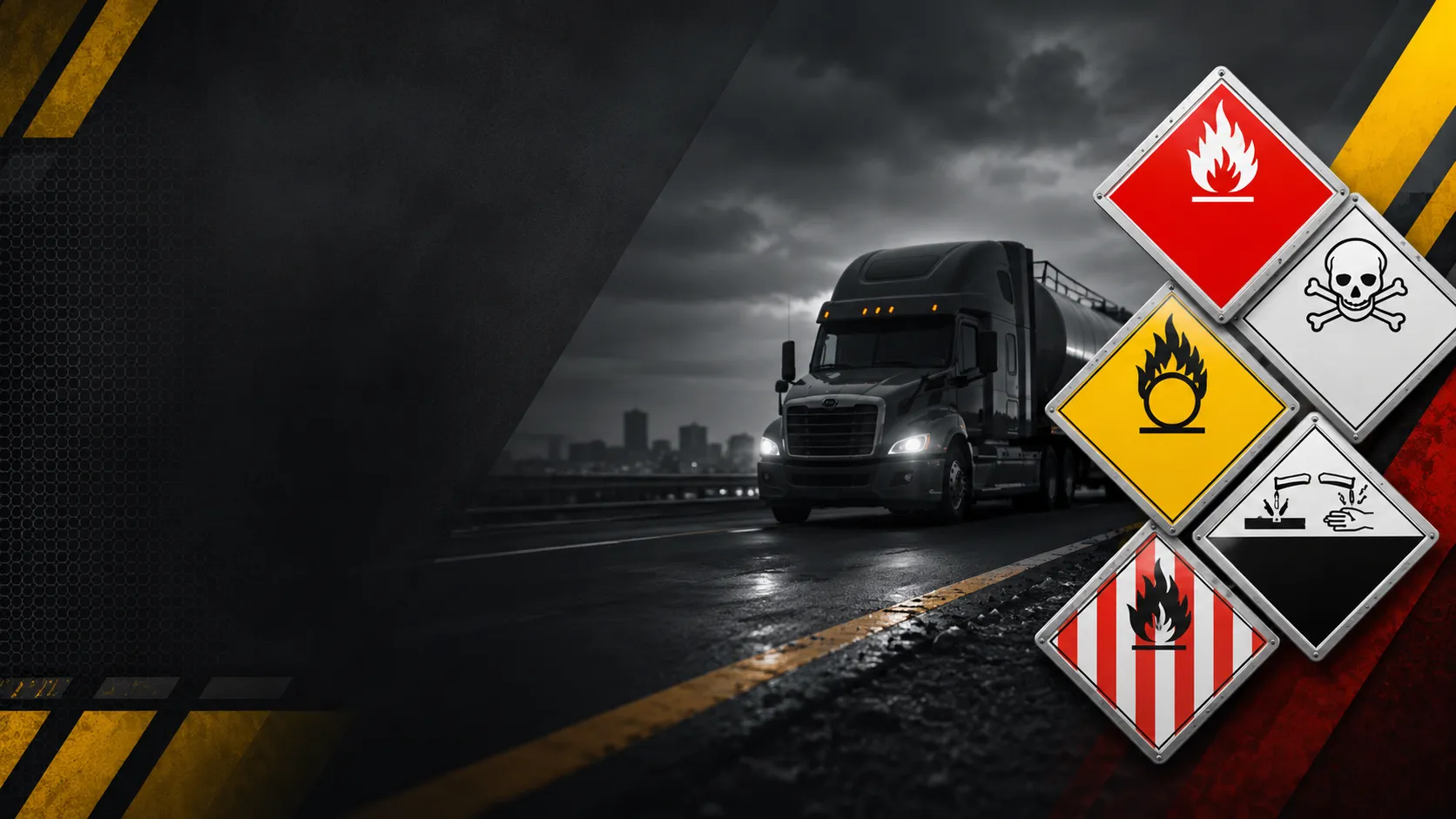
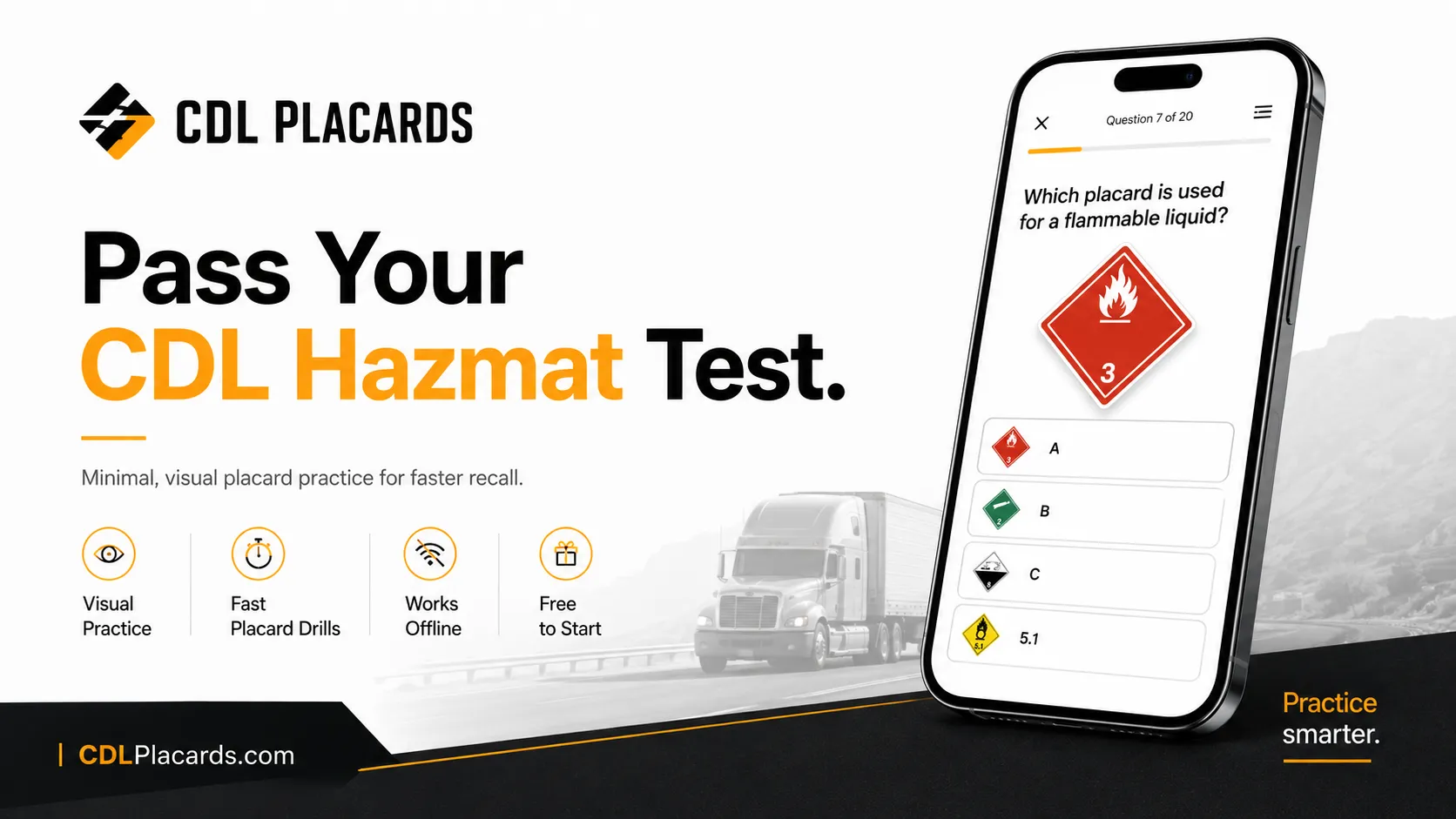
When you study Hazmat placards, color is the first thing your eye lands on. Before you read a number or recognize a symbol, you have already registered red, or orange, or green. That makes color a powerful first filter, and learning the color system is one of the fastest ways to make placard recognition feel less overwhelming.
This post walks through what each color generally signals, how to use color as a first step, and the important places where color alone will not get you to the right answer. As always, your official state CDL manual is the source of truth. Treat this as a study aid, not a regulatory reference.
Why color comes first
Placards are designed to communicate at a distance, often to people who are not transportation experts. A first responder approaching a scene needs to read the hazard quickly, and color does a lot of that work. The same property that helps on the road helps you on the test: color lets you eliminate wrong answers fast.
If a placard is red, you already know you are in the flammable family and can stop considering corrosives or explosives. That narrowing is most of the battle.
That real-world use is not hypothetical. Federal preparedness guidance at Ready.gov tells the public to move away from a hazardous materials release and let trained responders identify the material, and a placard’s color is often the very first thing anyone can read from a safe distance.
The general color system
Here is the broad pattern most CDL learners rely on. Confirm the details in your manual, since edge cases exist.
- Orange usually means explosives, the Class 1 family.
- Red usually means flammable, including flammable liquids and flammable gases.
- Green usually means a non-flammable gas.
- Yellow usually points to oxidizers and organic peroxides.
- White often signals toxic or poison materials.
- Black and white together, with white on top, commonly indicates corrosives.
- Blue is associated with materials that are dangerous when wet.
- Yellow and white together appears on radioactive placards.
You will notice that a few colors do double duty. That is exactly why color is a first filter and not the final answer.
Where color alone is not enough
Color narrows the field, but several hazards share a color or sit close to each other. Red covers more than one flammable category. White appears in more than one context. To land on the right answer, you combine three signals: the color, the symbol inside the diamond, and the class number at the bottom.
Think of it as a quick three-step read. Color tells you the neighborhood. The symbol tells you the street. The number confirms the house. Trained together, those three checks happen almost instantly, which is the whole goal. For the full sequence, see how to read a Hazmat placard step by step.
This is also where many people lose points, because they learn colors in isolation and never practice the look-alikes side by side. If you want a deeper look at the traps, see 5 common Hazmat placard mistakes.
How to practice the colors
Reading this list once will not lock it in. Recognition is a skill, and skills come from short, repeated practice with feedback. A few minutes a day, where you see a placard and name the hazard before checking, will do more than an hour of passive reading.
A simple routine helps here. If you want a ready-made one, try the five-minute daily CDL Hazmat study routine. The idea is to drill the colors and classes in tiny sessions, then review whatever you missed the next day.
Put it together
Color is your fastest first clue, and learning the color system gives the whole placard set a structure your memory can hold. Use it as step one, confirm with the symbol and number, and practice the pairs that look alike. Then keep verifying everything against your official state CDL manual, which is always the final word on what you need to know for your test.
Keep exploring placards
Go beyond color with the placard specifications and sizes, the rules for subsidiary hazard placards, the difference between hazmat package markings and placards, and how US placards compare with international systems.