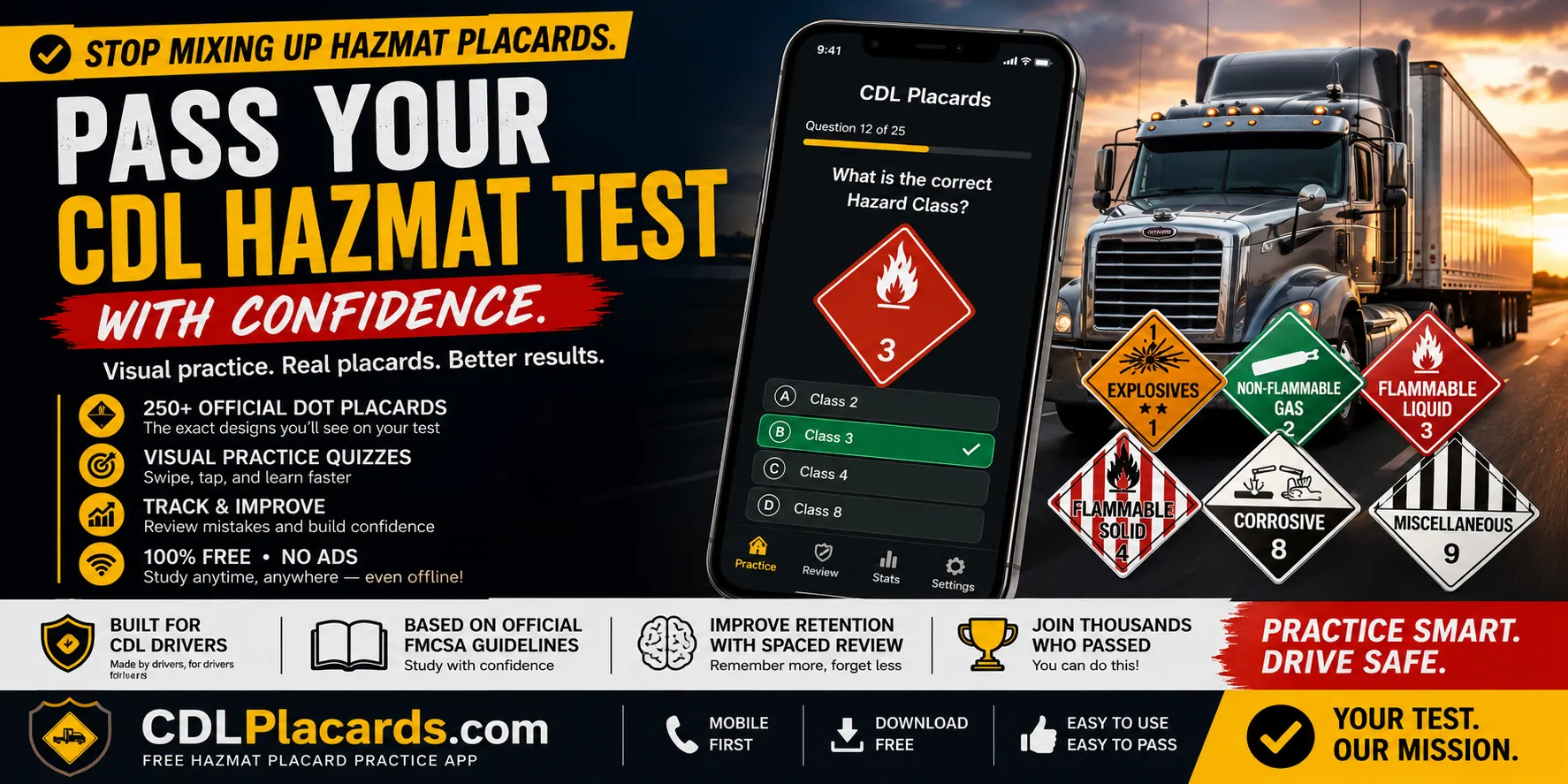
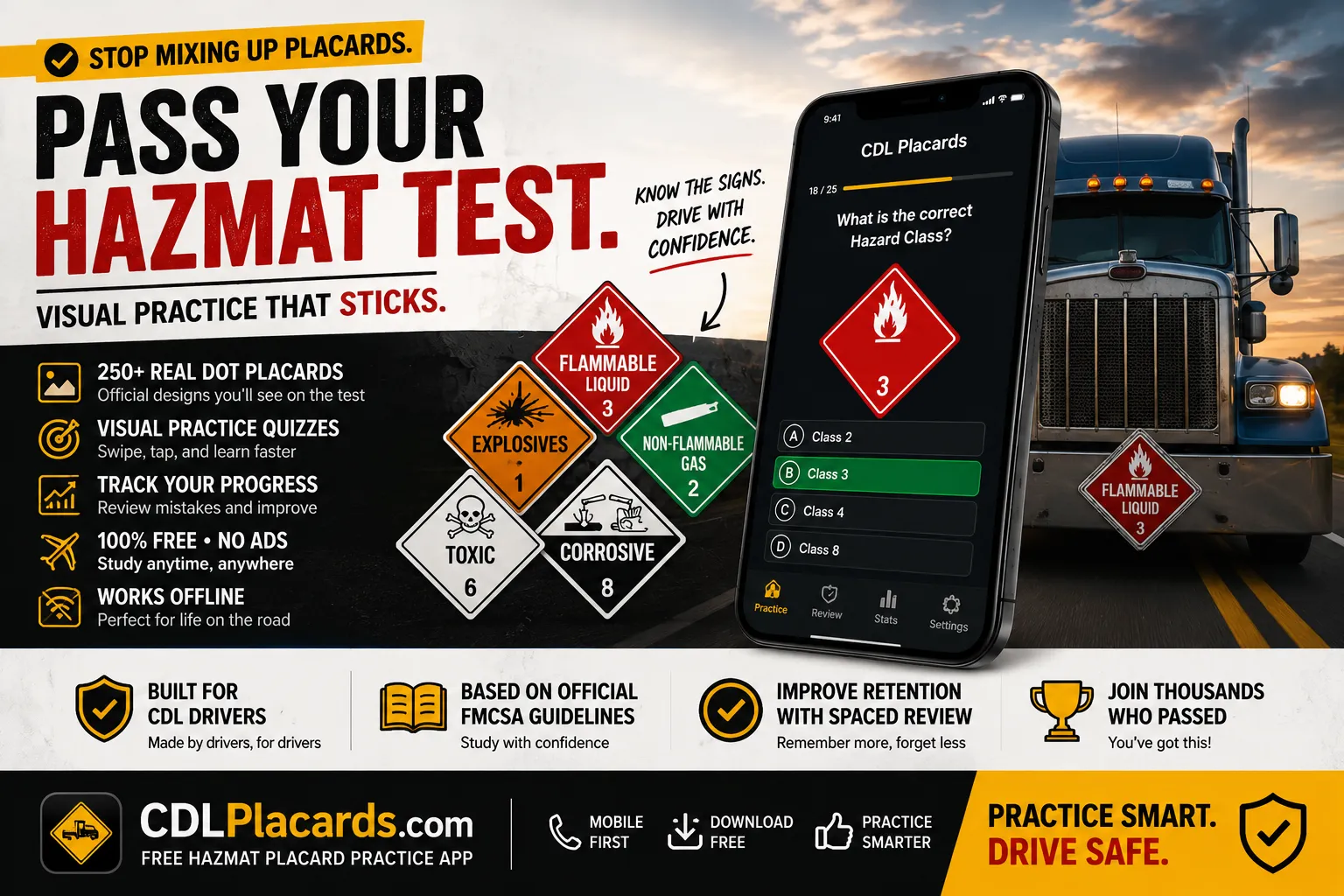
The Class 8 placard is one of the most distinctive in the system once you know its two-tone look. White on top, black on the bottom, with a symbol that literally shows the hazard: liquid eating into a hand and a metal bar. That image is the whole idea of a corrosive.
This is study guidance, not regulatory advice. The binding definition is in 49 CFR 173.136 and your official state CDL manual.
What a corrosive is
A corrosive is a material that can destroy living tissue on contact or severely corrode steel and aluminum. That dual danger, to skin and to metal, is why the symbol shows both a hand and a metal bar. Common examples include sulfuric acid (battery acid), sodium hydroxide (caustic soda), and hydrochloric acid.
| Element | Class 8 placard |
|---|---|
| Top half | White |
| Bottom half | Black |
| Symbol | Liquids dripping onto a hand and a metal bar |
| Class number | 8, at the bottom point |
| Table | Table 2 (placard at 1,001 lb or more) |
The mix-up to avoid
Because the top half of the Class 8 placard is white, it can be confused with the white toxic placard (division 6.1). The symbol settles it: a skull and crossbones means toxic, while liquid dripping onto a hand and metal means corrosive. This is a frequent test trap, covered in most confused hazmat placards, and a good reason to read the symbol, not just the color.
Where it fits
Class 8 is one of the nine hazard classes and one of the more common on the road, since acids and bases move constantly for industry. As a Table 2 material it follows the standard 1,001-pound placarding rule set out in 49 CFR 172.504. For handling and response, see the FMCSA hazardous materials regulations and the PHMSA Emergency Response Guidebook.
The word corrosive can understate the danger. NOAA’s CAMEO Chemicals entry for sulfuric acid, the battery acid in the examples above, warns that it is corrosive to all body tissues and to metals, that eye contact can cause loss of vision, and that skin contact can cause severe injury, which is precisely the hazard the dripping symbol represents.
Frequently asked questions
What does the Class 8 placard look like?
It is a diamond that is white on the top half and black on the bottom half, with a symbol of liquids dripping from two test tubes onto a hand and a metal bar, and the number 8 at the bottom point.
What is a corrosive material?
A corrosive is a substance that can destroy skin on contact or severely corrode metals such as steel and aluminum. Acids and strong bases, like battery acid and sodium hydroxide, are typical examples.
How do I tell Class 8 from a toxic placard?
Both can show white, so use the symbol. A skull and crossbones means toxic (division 6.1), while liquid dripping onto a hand and a metal bar means corrosive (Class 8).
What is the best way to memorize the Class 8 placard?
Anchor on the white-over-black split and the dripping symbol, then drill it against look-alikes with a recognition app such as CDL Placards. Your state CDL manual is the authority on the underlying rules.