Placards
Hazmat Placard Colors Explained for CDL Students
What each Hazmat placard color signals, why color is the fastest first clue, and where color alone is not enough.
Lawrence Arya··6 min read
Essays, playbooks and research from the CDL Placards team. One email per week if you want it in your inbox.
What each Hazmat placard color signals, why color is the fastest first clue, and where color alone is not enough.
What separates bulk from non-bulk hazmat packaging, the capacity thresholds that define each, and why the difference changes placarding and markings.
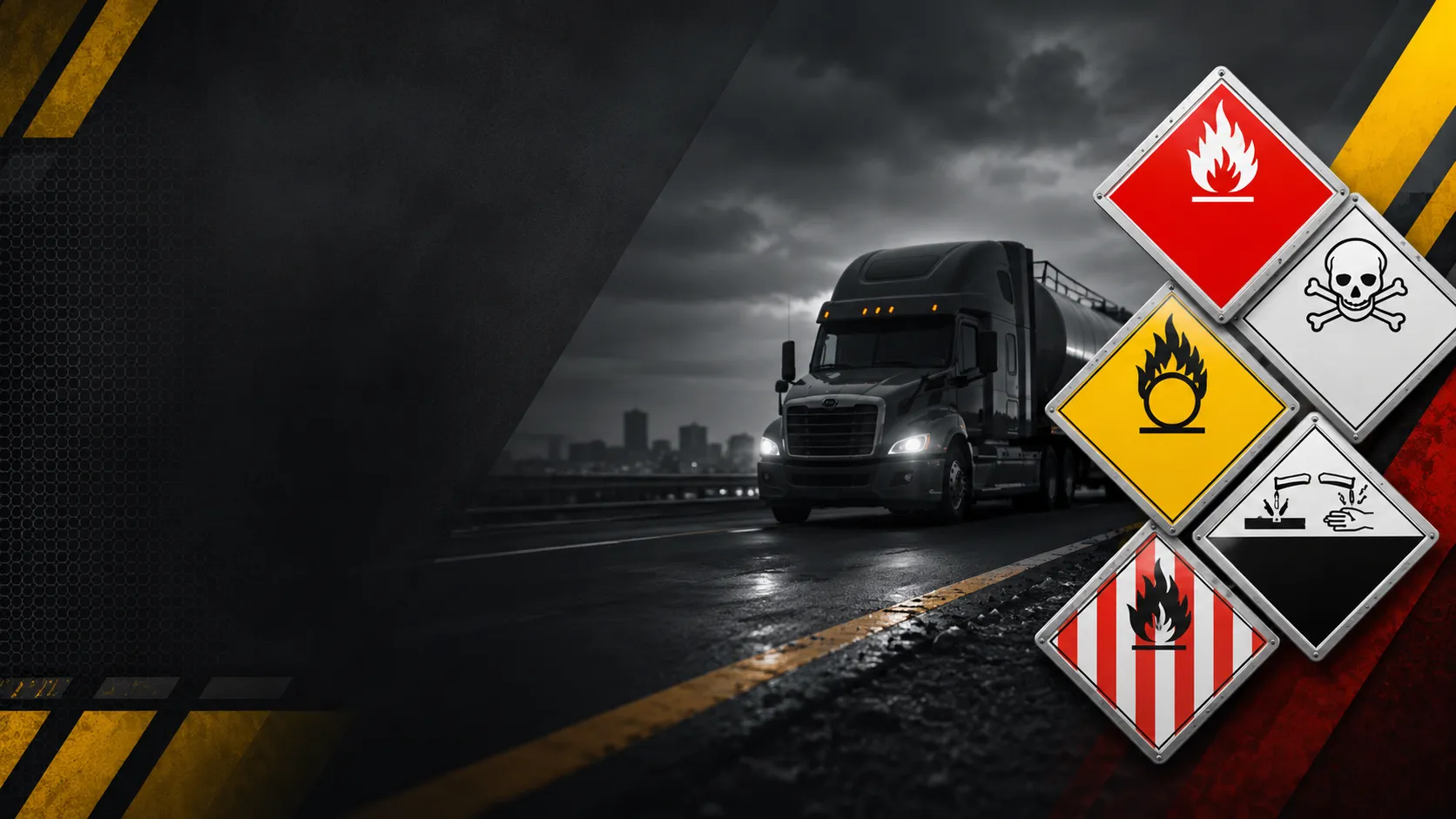
The main cargo tank types and what each one hauls, from flammable liquids to high-pressure gases. A CDL study guide to recognizing tankers.
A study-focused rundown of what the CDL hazmat (H) endorsement involves: the knowledge test, the TSA security threat assessment, eligibility, fees, and renewal.
Nervous about the CDL hazmat test? Practical, no-nonsense ways to lower test anxiety before and during the exam, from preparation to breathing to question strategy.
What the orange Class 1 explosives placard means, the six divisions from 1.1 to 1.6, compatibility groups, and which ones must be placarded in any amount.
Class 2 gases come in three colors for three divisions: red flammable gas, green non-flammable gas, and white toxic gas. Here is how to tell them apart.
The red Class 3 placard is the one drivers see most. Here is what it means, the common materials behind it, and the UN numbers worth recognizing.
Class 4 has three very different divisions: flammable solids, spontaneously combustible materials, and dangerous-when-wet. Here is how to tell the placards apart.
Class 5 has two yellow-leaning divisions that students mix up. Here is how oxidizers (5.1) and organic peroxides (5.2) differ and how to read each placard.