
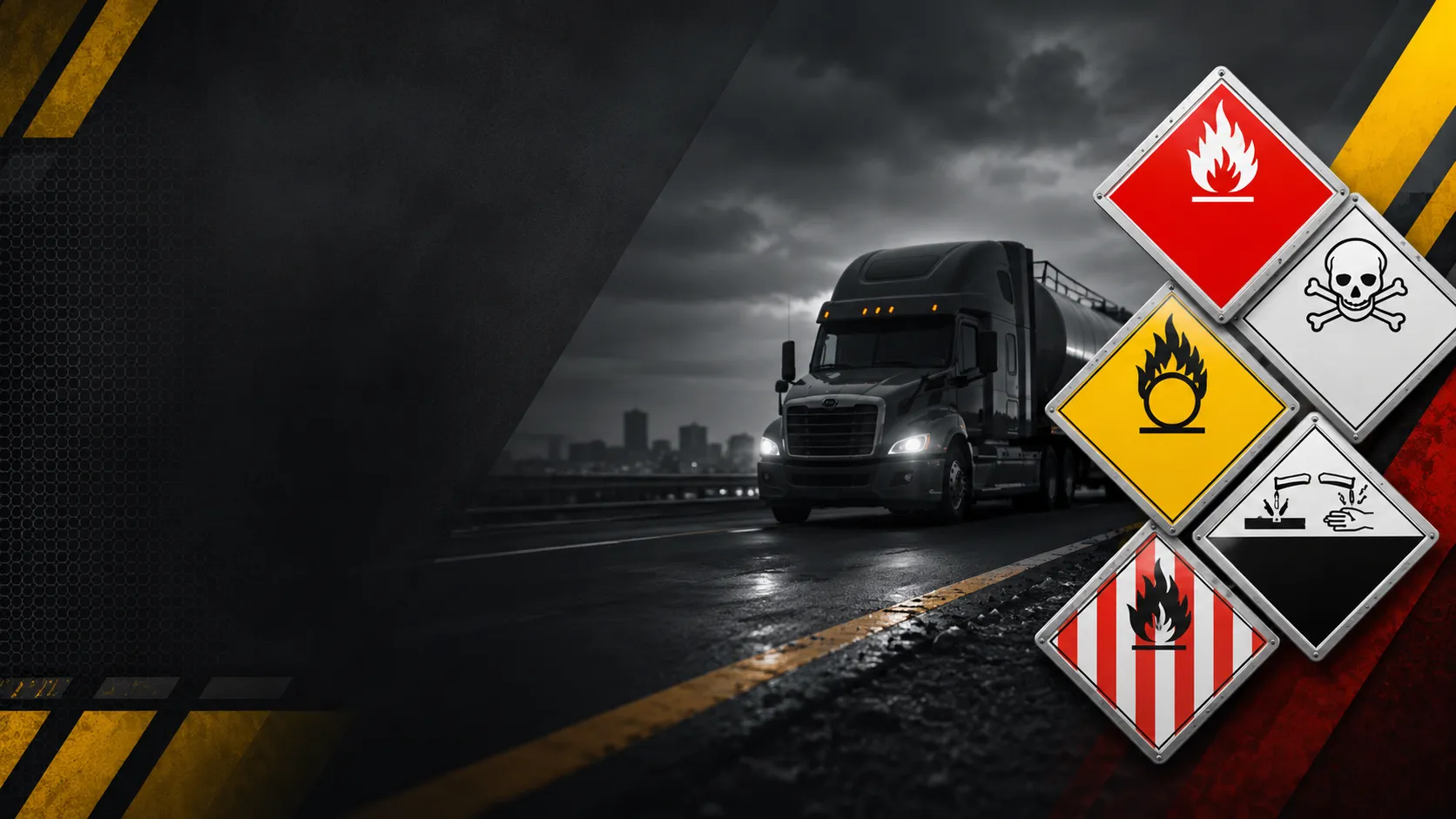
A tanker is not just a tube on wheels. Each cargo tank is built to a specification matched to the materials it carries, and the shape often gives it away. Knowing the main types helps you connect a tank to the hazards it can hold, which is useful whether you drive one or just share the road with them.
This is study guidance, not regulatory advice. The cargo tank specifications are in 49 CFR Part 178 and your official state CDL manual.
The main cargo tank types
| Specification | Older name | Typically carries |
|---|---|---|
| DOT406 | MC306 | Flammable and combustible liquids, like fuel |
| DOT407 | MC307 | Chemicals and mild-pressure liquids |
| DOT412 | MC312 | Corrosives, like acids |
| MC331 | - | High-pressure liquefied gases, like propane and anhydrous ammonia |
| MC338 | - | Cryogenic (refrigerated) liquids |
Reading the shape
The designs differ for a reason. Fuel tankers (DOT406) are often elliptical and unpressurized. Chemical tankers (DOT407) are rounder and can handle some pressure. Corrosive tankers (DOT412) often look smaller in diameter because dense acids do not need a large volume. The high-pressure MC331 is a rounded, bolster-mounted vessel built to hold gases under pressure, and the cryogenic MC338 is a heavily insulated tank that keeps its contents extremely cold.
Why it matters
Matching the tank to the material is a safety system. A tank built for corrosives is not appropriate for high-pressure gas, and vice versa. This connects to the bulk packaging rules, since cargo tanks are bulk packagings, and to the combined X endorsement you need to haul hazmat in a tank. The tank still displays the placards in their required positions for whatever it carries.
What is at stake when a tank lets go is not abstract. When an MC331 carrying 9,001 gallons of propane rolled over on an Indianapolis interchange ramp in 2009, the NTSB investigation documented how the tank tore free, released a vapor cloud that ignited, and knocked out a bridge support column, injuring five people.
How it connects
Rollovers are the recurring failure mode for this equipment: FMCSA’s cargo tank rollover prevention program reports that cargo tanks account for 31 percent of large truck rollover crashes, and most trace back to driver behavior rather than the tank itself. Cargo tanks are inspected closely, since a tank failure is a serious release, which is part of what roadside inspections check. For the federal framework, see the FMCSA hazardous materials regulations and the PHMSA hazmat resources.
Frequently asked questions
What are the main cargo tank types?
DOT406 (formerly MC306) for flammable liquids, DOT407 (MC307) for chemicals and mild-pressure liquids, DOT412 (MC312) for corrosives, MC331 for high-pressure liquefied gases, and MC338 for cryogenic liquids.
What tank carries propane or anhydrous ammonia?
The MC331, a rounded, pressure-rated cargo tank built for high-pressure liquefied gases such as propane and anhydrous ammonia.
Why are there different cargo tank types?
Because different materials need different containment. Flammable liquids, corrosives, high-pressure gases, and cryogenic liquids each have distinct hazards, so the tanks are built to specifications matched to them.
What is the best way to study cargo tanks for the CDL test?
Learn which tank type carries which family of materials, and keep your placard recognition sharp with an app such as CDL Placards since the tank still carries placards. Your state CDL manual is the authority.