If there is one placard you will see again and again, it is the red Class 3. Flammable liquids move constantly, from the fuel that runs the country to the solvents and paints that supply industry. That makes Class 3 the workhorse of the placard world and a near-certain topic on the test.
This is study guidance, not regulatory advice. The binding definition is in 49 CFR 173.120 and your official state CDL manual.
What the placard shows
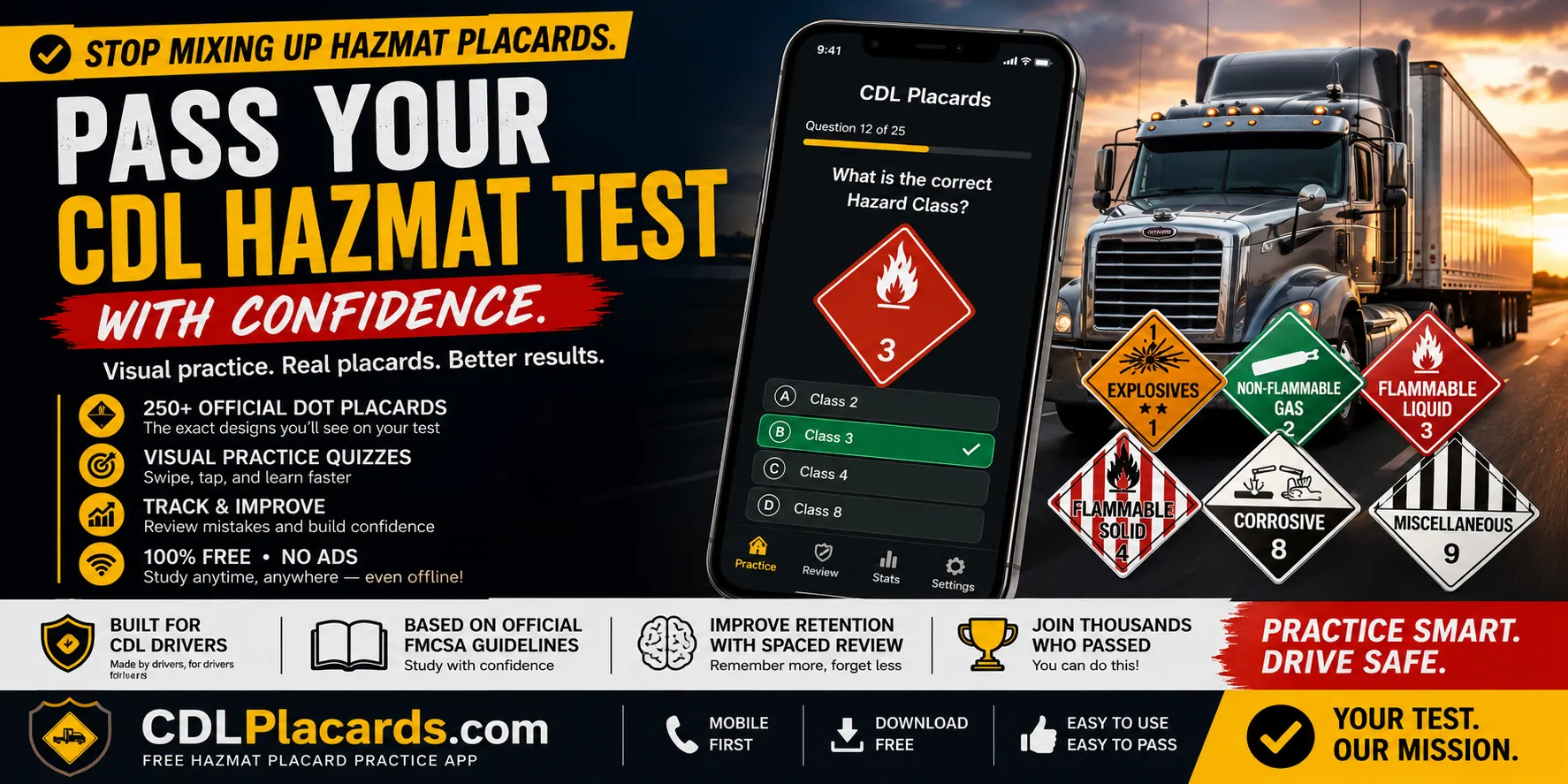
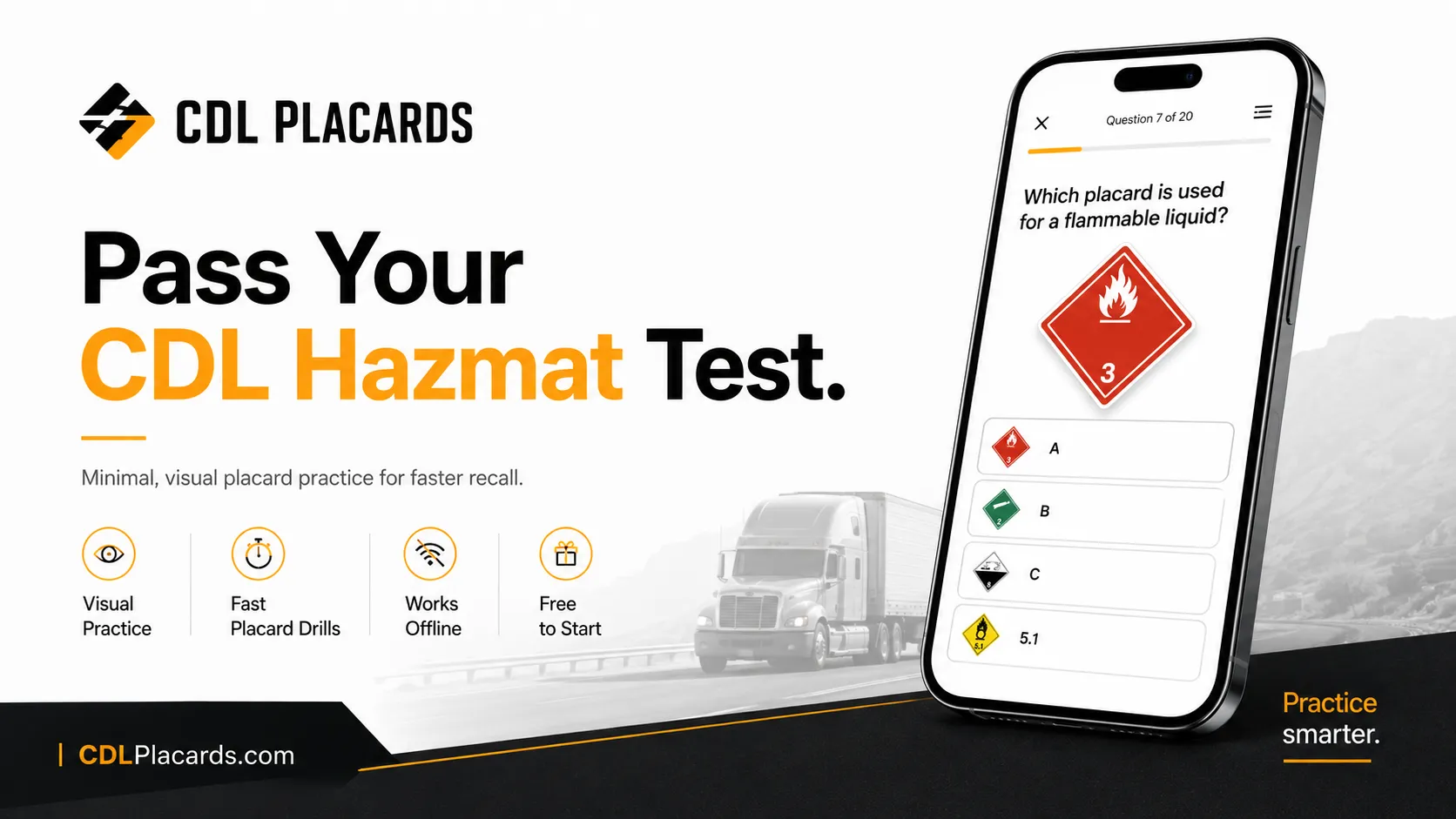
The Class 3 placard is red, with a flame symbol at the top and the number 3 at the bottom point. Red signals the flammable family, which it shares with flammable gas, so the class number is what confirms you are looking at a liquid and not a gas.
Common Class 3 materials
These are the flammable liquids a driver is most likely to encounter, with their four-digit identification numbers.
| Material | UN number |
|---|---|
| Gasoline | UN1203 |
| Ethanol (ethyl alcohol) | UN1170 |
| Diesel fuel | UN1993 |
| Acetone | UN1090 |
| Paints and related material | UN1263 |
The four-digit number pins down the exact liquid, while the red diamond gives the family at a glance.
These liquids move in enormous volume, and the consequences of a failure are real. A 2009 NTSB investigation documented how a derailment near Cherry Valley, Illinois sent nineteen tank cars of ethanol off the rails into a pool fire that killed a motorist and injured several others, which is why Class 3 loads are handled with such care.
The flammable versus combustible line
Not every burnable liquid is a flammable liquid in the regulatory sense. The split depends on flash point, and liquids above the flammable cutoff are classed as combustible, which changes the placard. That distinction has its own deep dive in flammable versus combustible liquids, and it is worth knowing because diesel often sits near the line.
The red-on-red trap
Because red also marks flammable gas (division 2.1), the classic mistake is calling a flammable-gas placard a flammable liquid or the reverse. The tiebreaker is the class number: 2 for gas, 3 for liquid. This is one of the most confused hazmat placards, and it is the reason to read the number, not just the color. The role of red across the system is in hazmat placard colors explained.
Where it fits
Class 3 is one of the nine hazard classes and, as a Table 2 material, follows the 1,001-pound placarding rule in 49 CFR 172.504. For the regulations and response, see the FMCSA hazardous materials regulations and the PHMSA Emergency Response Guidebook.
Frequently asked questions
What does the Class 3 placard mean?
It marks a flammable liquid. The placard is red with a flame symbol and the number 3, and it covers materials like gasoline, ethanol, and many solvents.
What color is the flammable liquid placard?
Red. Red is shared with flammable gas, so the class number at the bottom (3 for liquid, 2 for gas) is what tells the two apart.
What are common Class 3 materials?
Gasoline (UN1203), ethanol (UN1170), diesel (UN1993), acetone (UN1090), and paints (UN1263) are among the most common flammable liquids on the road.
What is the best way to study the Class 3 placard?
Lock in red plus the number 3, then drill it against the red flammable-gas placard with a recognition app such as CDL Placards so the look-alikes separate. Your state CDL manual is the authority on the definitions.