Placard mistakes are rarely spread evenly. A small set of look-alike pairs causes most of the wrong answers, because they share a color and the difference comes down to one detail. Once you study them as pairs rather than as isolated diamonds, the trap stops working on you.
This is study guidance, not regulatory advice. The authoritative source is 49 CFR Part 172 and your official state CDL manual.
The look-alike pairs that cause the most errors
| Pair | What they share | How to tell them apart |
|---|---|---|
| Flammable gas (2.1) vs flammable liquid (3) | Both red | Class number at the bottom: 2 versus 3 |
| Oxidizer (5.1) vs organic peroxide (5.2) | Both yellow | Division and symbol; 5.2 is shown red-and-yellow in current guidance |
| Toxic (6.1) vs corrosive (8) | Mostly white | Symbol: skull and crossbones versus dripping liquid on a hand and metal |
| Flammable solid (4.1) vs spontaneously combustible (4.2) | Both red-and-white | 4.1 is vertical stripes; 4.2 is solid red lower half |
| Non-flammable gas (2.2) vs flammable gas (2.1) | Both Class 2 | Color: green for 2.2, red for 2.1 |
Red is the busiest color
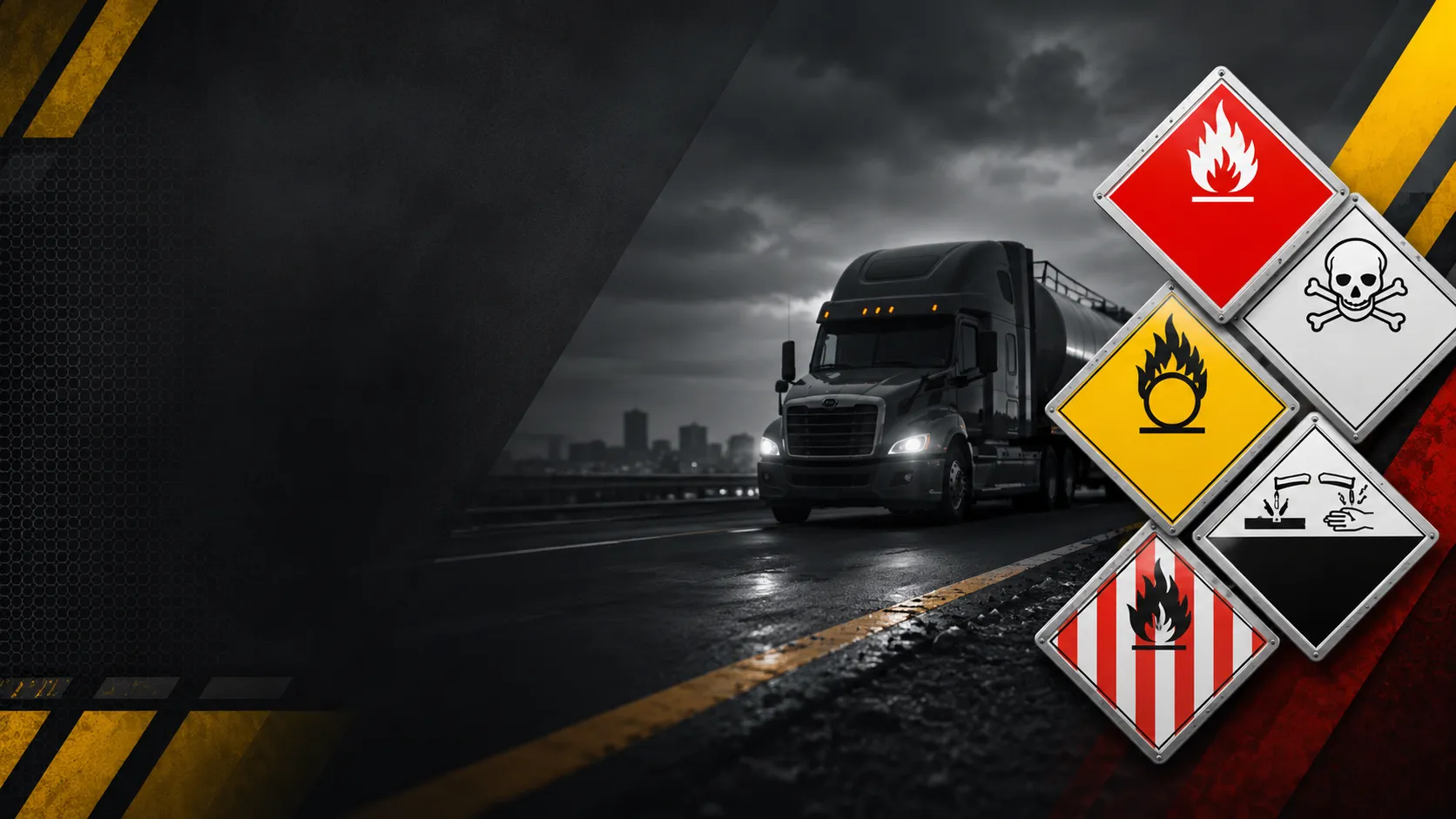
Red covers flammable gas (2.1) and flammable liquid (3), so red alone never settles it. The class number at the bottom point is the tiebreaker. This is the single most common red-on-red mix-up, and it is the reason reading the class number, not just the color is drilled so hard.
Yellow hides two different hazards
Both oxidizers (5.1) and organic peroxides (5.2) are yellow, and both feed fires, but they are different divisions with different handling. Current guidance shows organic peroxide with a red-and-yellow split, which is your fastest visual cue. If you only learn “yellow equals oxidizer,” 5.2 will catch you.
White needs the symbol
Toxic substances (6.1) and corrosives (Class 8) both lean white, so color is useless here. The symbol decides it: a skull and crossbones means toxic, while liquid dripping onto a hand and a metal bar means corrosive. The full color guide shows how white is split in the Class 8 placard, which is white on top and black on the bottom.
The standouts you can use as anchors
A few placards are unmistakable, and you can lean on them. Blue means dangerous when wet (4.3) and appears nowhere else. The radioactive trefoil (Class 7) and the black-and-white stripes of miscellaneous (Class 9) are also one of a kind. Anchoring on the unique ones frees up attention for the look-alikes. For the deeper list of slips beyond placards, see common hazmat placard mistakes, and for the full framework, the nine hazard classes.
When responders sort these out in the field, they rely on the PHMSA Emergency Response Guidebook, and the classification rules sit in the FMCSA hazardous materials regulations.
Getting these right matters beyond the exam room. In the 2024 CVSA International Roadcheck, inspectors recorded 163 hazardous materials and dangerous goods out-of-service violations in just three days of checks, a reminder that placard and paperwork errors get caught and can sideline a truck.
Frequently asked questions
Which hazmat placards look the most alike?
The most-confused pairs are flammable gas (2.1) and flammable liquid (3), which are both red, and oxidizer (5.1) and organic peroxide (5.2), which are both yellow. Toxic (6.1) and corrosive (Class 8) are also confused because both are largely white.
How do you tell two red placards apart?
Read the class number at the bottom point of the diamond. Flammable gas is Class 2 and flammable liquid is Class 3. Color alone cannot separate them because red covers both.
What color placard is unique and easy to remember?
Blue is unique to dangerous-when-wet materials (division 4.3). Because blue appears on no other placard, it is a reliable anchor when you are scanning a load.
What is the best way to practice telling confusing placards apart?
Drill them as pairs with a recognition app such as CDL Placards, which can show look-alike diamonds back to back and resurface the ones you miss. Studying the pairs together, then confirming with your state CDL manual, is what breaks the confusion.