White Sands missile base contractor CDL H placard visual mock checks apps tests
A contractor hauling for a military or test site that involves explosives or munitions will encounter Class 1 explosives placards, the orange diamond with a division (1.1 to 1.6) and a compatibility group letter. The hazmat (H) endorsement and the same nine-class recognition apply. Explosives are tightly regulated, so confirm the specific requirements for the work.
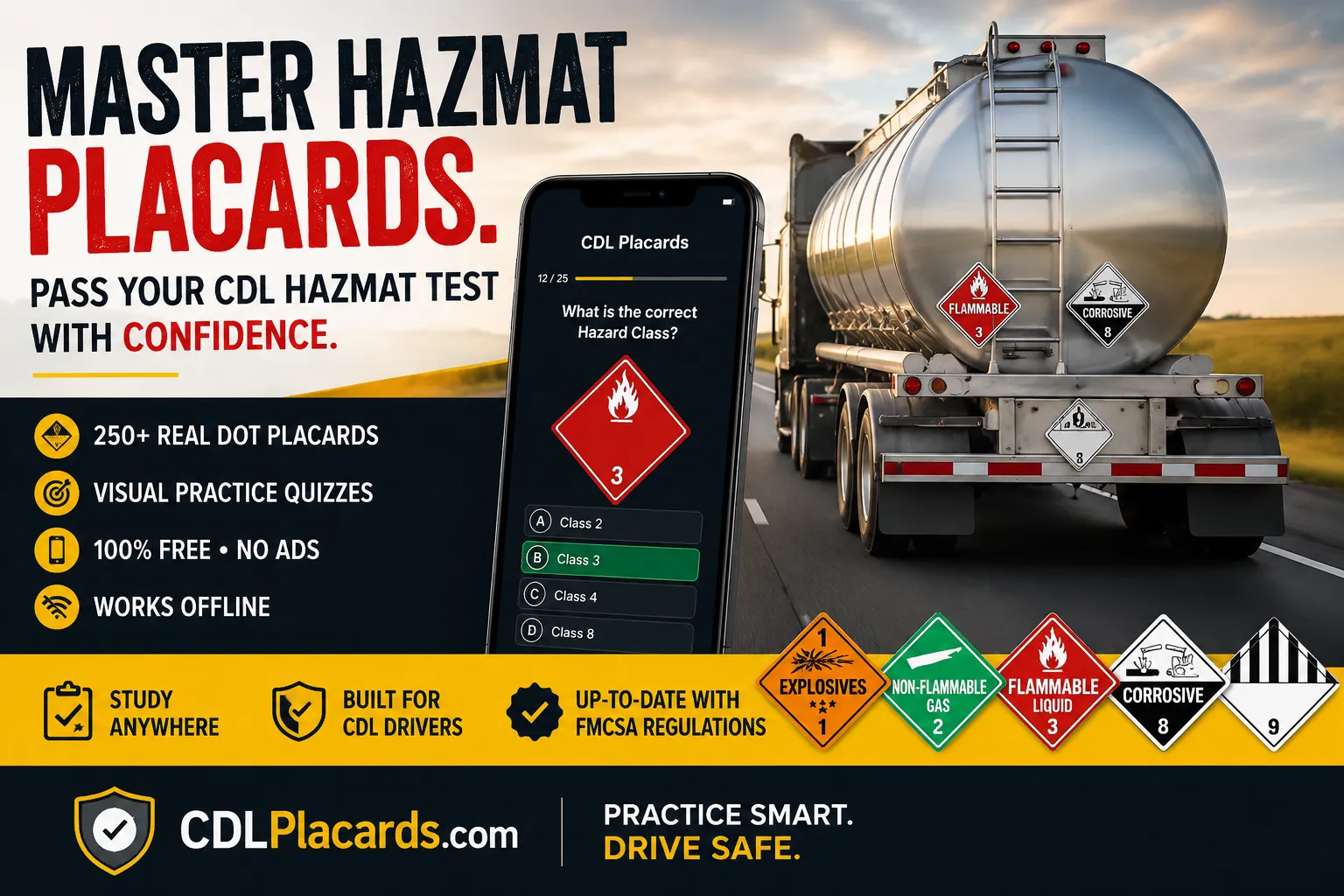
Explosives mean Class 1
Work involving munitions or explosives brings you into Class 1, the explosives class. The placard is the orange diamond, and because all explosives are orange, the division number (1.1 through 1.6) and a compatibility group letter do the work of telling you how dangerous and what kind. Orange plus division plus letter is the read.
What the Class 1 placard shows
The cues on an explosives load:
| Cue | Meaning |
|---|---|
| Orange diamond | Class 1 explosives |
| Division (1.1-1.6) | Severity, from mass explosion to insensitive |
| Compatibility letter | What can be loaded together |
| Endorsement | Hazmat (H) endorsement required |
Orange plus division plus letter identifies the explosive. Confirm requirements in the regulations.
The endorsement and recognition apply
Hauling placarded explosives requires the hazmat (H) endorsement, and the visual recognition is the same nine-class system, with Class 1 as the orange explosives family. So the recognition you study applies; explosives are just the high-stakes end of it, with the division and compatibility letter adding detail.
Explosives are tightly regulated
Class 1 carries some of the strictest transport rules: security, loading and segregation, and the compatibility groups that govern what travels together. Hauling for a site that handles munitions adds site-specific and possibly government requirements on top. So this is not casual work, and the specific rules matter.
How to study and verify
For recognition, treat any orange diamond as explosives and read the division and compatibility letter. For the actual work, the hazmat endorsement, the explosives handling rules, and any site or government requirements are detailed and set by the regulations and the site, so confirm them there and in your official manual rather than assuming.
Frequently asked questions
- What placards does a munitions or explosives contractor see?
- Class 1 explosives: the orange diamond with a division (1.1 to 1.6) and a compatibility group letter. The hazmat (H) endorsement and nine-class recognition apply, and explosives are tightly regulated. Confirm requirements with the regulations and the site.
- Do you need a hazmat endorsement to haul explosives?
- Yes, hauling placarded explosives requires the hazmat (H) endorsement, plus the TSA assessment, and explosives carry strict security, loading, and segregation rules. Confirm the requirements in the regulations.
- Why is the explosives placard orange?
- Orange is the color for all of Class 1. The division number and the compatibility group letter identify how dangerous the explosive is and what it can be loaded with.