Rivian amazon delivery step van driver hazard label picture training app
A delivery step-van driver usually does not need a hazmat endorsement, because ordinary parcels are not placarded hazardous materials. The one area to know is batteries: many packages contain lithium batteries (Class 9), which carry a lithium battery mark, and an electric van like a Rivian runs on a large lithium battery itself. Whether anything must be placarded depends on the actual cargo.
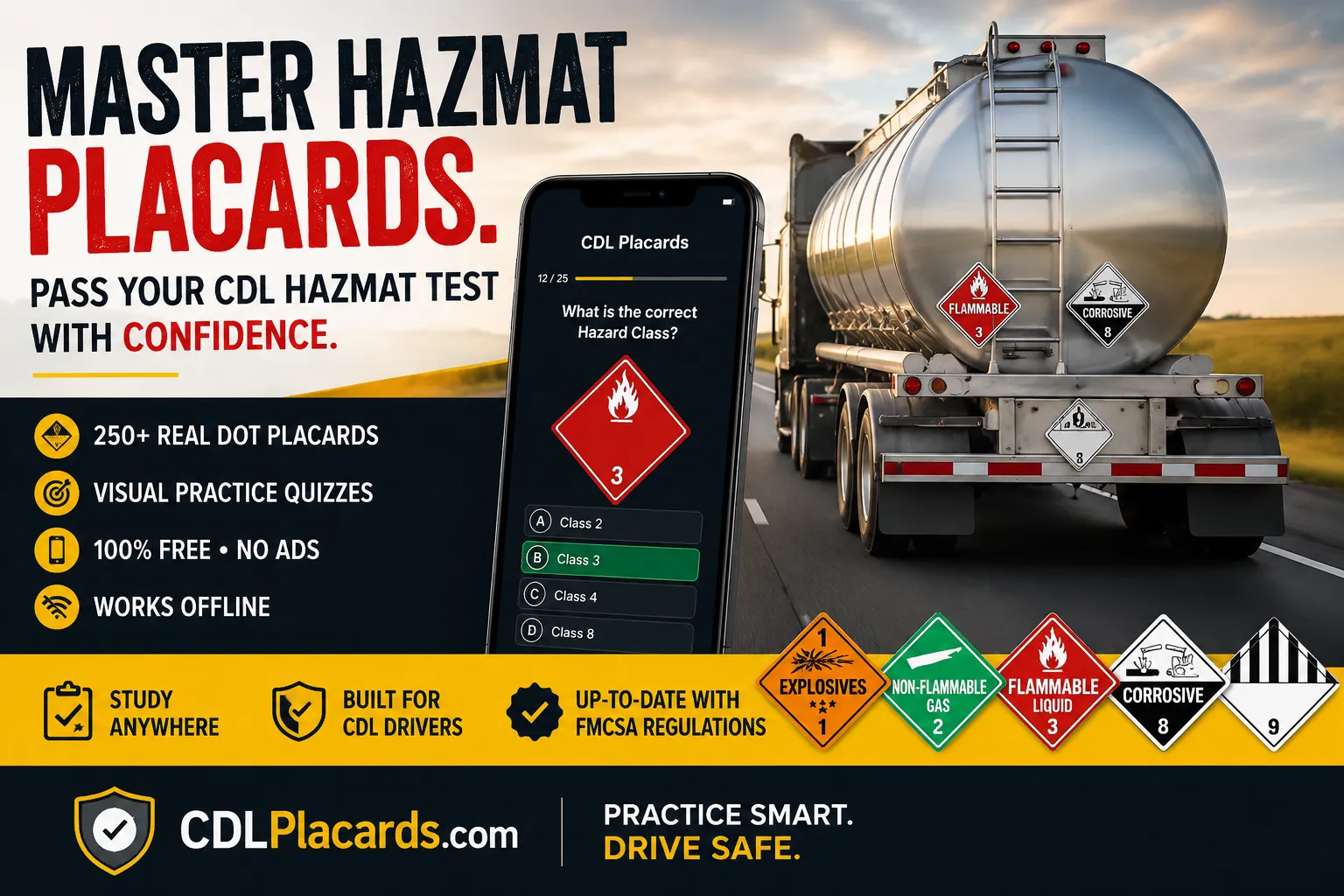
Ordinary delivery is not placarded hazmat
A step van delivering parcels is moving general freight, boxes of consumer goods, which are not placarded hazardous materials. So a delivery driver typically does not need the hazmat endorsement for that work. The endorsement is for hauling hazardous materials in placarded amounts, which routine parcel delivery is not.
The lithium battery angle
The one hazmat-adjacent thing worth knowing is batteries. Many delivered packages contain lithium batteries (in phones, laptops, tools), and lithium batteries are Class 9, often carrying a dedicated lithium battery mark on the package. That mark is the hazard label a delivery driver is most likely to actually see.
What a delivery driver might encounter
The relevant cues:
| Item | Detail |
|---|---|
| Ordinary parcels | Not placarded; no endorsement needed |
| Lithium battery packages | Class 9, lithium battery mark |
| An electric van (e.g. Rivian) | Runs on a large lithium battery |
| When placarding applies | Depends on the actual cargo and quantity |
Delivery is usually non-hazmat; batteries are the exception. Confirm with the carrier and your state.
The van being electric does not change the cargo rules
An electric step van like a Rivian runs on its own large lithium battery, but that is the vehicle, not the cargo, and it does not make the deliveries hazmat. The placarding question is always about what you are carrying and in what quantity, not what powers the van. So an EV delivery van is not a placarded load by virtue of being electric.
How to study and verify
For a delivery role, knowing the lithium battery mark (Class 9) and recognizing the nine classes is useful awareness even without the endorsement. Whether your specific work ever requires the hazmat endorsement depends on the cargo, so confirm the requirements with your carrier, your state licensing authority, and the regulations rather than assuming.
Frequently asked questions
- Does a delivery step-van driver need a hazmat endorsement?
- Usually no, because ordinary parcels are not placarded hazardous materials. The endorsement is for hauling placarded hazmat. Whether anything applies depends on the cargo, so confirm with the carrier and your state.
- What hazard label might a delivery driver see?
- Most often the lithium battery mark on packages containing batteries (phones, laptops, tools). Lithium batteries are Class 9, and the mark is the hazard label most likely to appear on delivered goods.
- Does driving an electric van make it a hazmat load?
- No. An EV like a Rivian runs on a lithium battery, but that is the vehicle, not the cargo. Placarding depends on what you carry, not what powers the van.