Hazmat Placard Meanings Directory
This is a directory of Hazmat placard meanings: what each diamond signals, the color and symbol that identify it, and the class it belongs to. It is built for fast visual recognition, which is the skill the CDL Hazmat test actually checks.
Everything here is a study aid. CDL Placards is independent and not affiliated with any government agency, and it does not guarantee a pass. Use it alongside your official state CDL manual, which is the authority on what you need to know.
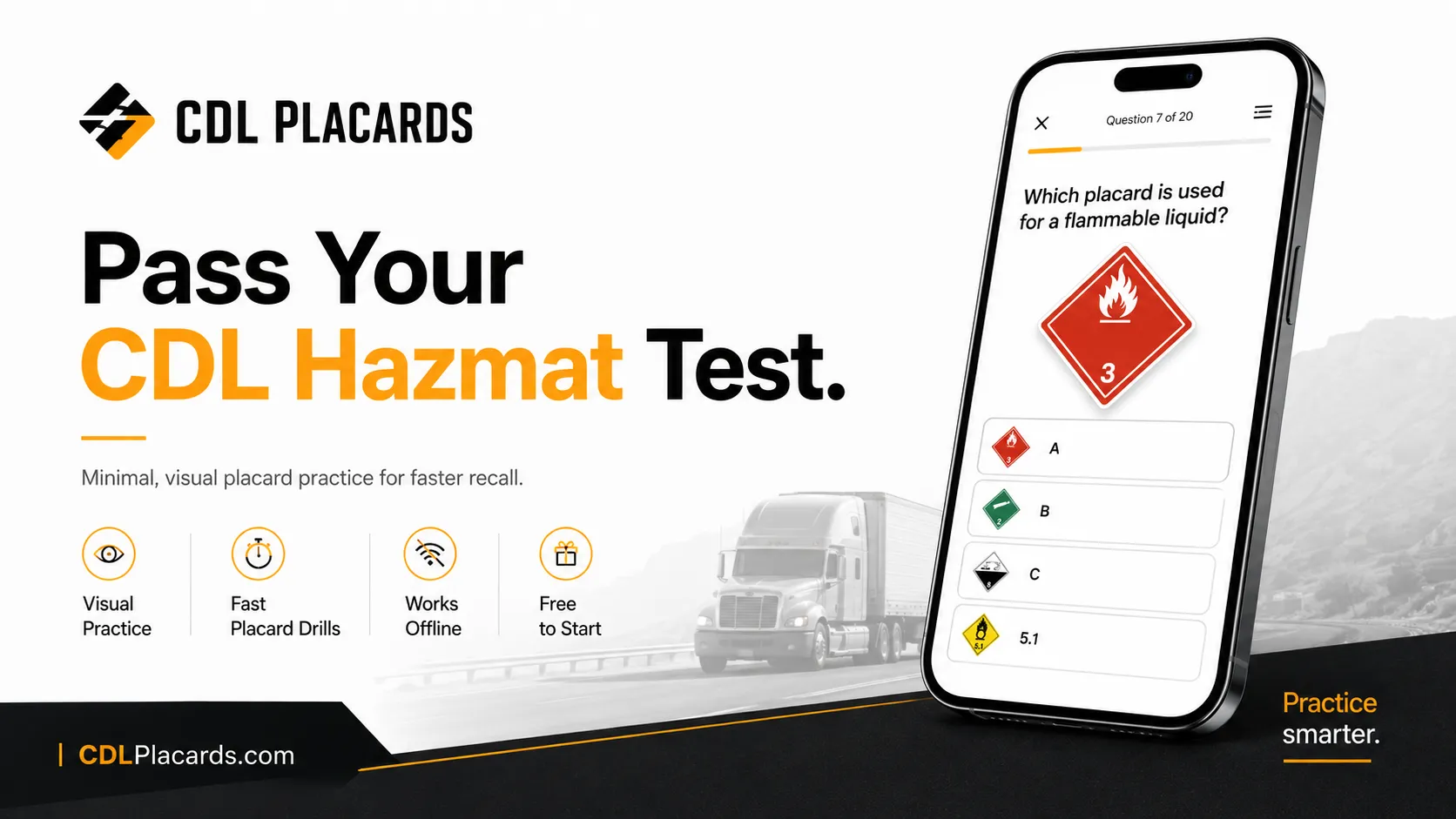
How to read any placard
Read it in the same order every time and recognition becomes automatic.
- Color first: it tells you the hazard family
- Symbol next: a flame, skull, or other mark confirms the type
- Class number at the bottom: 1 through 9
- Identification number, when shown: identifies the specific material
Try it before you study
A quick, demo-only taste of how the practice works. Pick what each generic hazard diamond means and get instant feedback.
What hazard does this placard show?
That is the idea: see the sign, name the hazard, and keep the ones you miss in a review pile. The full app drills all nine hazard classes.
In this topic (7 pages planned)
- Speed running cdl endorsement signs test drill game helper visual generator flash prep pa…
- X endorsement visual testing differences app USA
- Test screens inverted color visual check CDL mock app generator app
- RTA theory heavy dangerous signs vehicle memory trick tool visual free check test tools
- Easiest trick to pass the hazmat visual test the first time
- Hazmat symbols cheat codes patterns colors memorization map test
Frequently asked questions
- What do the colors on Hazmat placards mean?
- Color signals the hazard family: red for flammable, orange for explosives, green for non-flammable gas, yellow for oxidizers, and so on. Color narrows it down; the symbol and class number confirm it. Verify details with your official manual.
- How many Hazmat placards are there?
- Placards map to the nine hazard classes and their divisions. Focus on recognizing the class, the color, and the symbol, plus the common look-alikes. Your state CDL manual lists what you are responsible for.