What visual parts of the CFR 49 DOT label are tested most often?
The visual test leans most on recognizing the nine hazard classes by their color, symbol, and class number, and on telling apart the common look-alikes. So the parts of a label tested most often are the hazard color, the symbol inside the diamond, and the class number, the three cues that identify any placard.
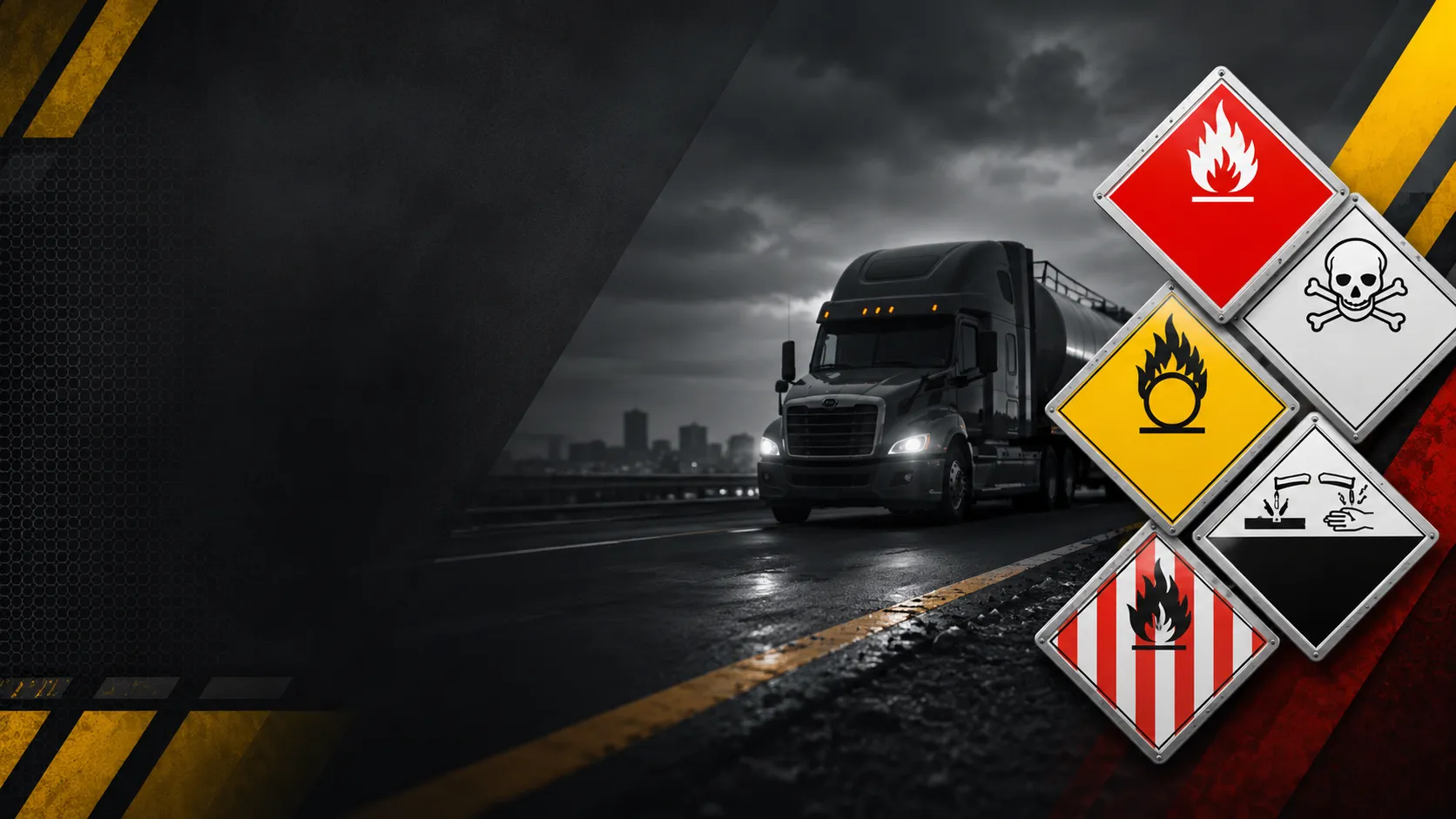
The test rewards recognition
Across the visual portion, the skill being checked is whether you can look at a placard and identify the hazard. That comes down to reading three things together: the color, the symbol, and the class number. So those are the parts of a label that come up most often, because they are what identification depends on.
The three cues that matter most
What to focus your study on:
| Label part | Why it is tested |
|---|---|
| Color | Points to the hazard family fast |
| Symbol | Confirms the specific hazard type |
| Class number | Pins down the exact class (1 to 9) |
| Look-alikes | Where points are most often lost |
Color, symbol, and number identify any placard. Confirm what your state tests in your manual.
Where the look-alikes come in
Beyond the basic nine, the test tends to probe the pairs that get confused: the black-and-white Class 8 corrosive versus Class 9 miscellaneous, the white skull of poison 6.1 versus toxic gas 2.3, and the three Class 2 gas divisions separated only by color. Those overlaps are where a lot of points are won or lost, so they get attention.
Why not memorize the regulation text
Although the rules live in 49 CFR, the visual test is not asking you to recite regulation numbers. It is asking you to recognize placards. So the most useful preparation is drilling the color-symbol-number recognition and the look-alikes, not memorizing citations. The regulation is the authority behind the placards, but recognition is the tested skill.
How to prepare and verify
Start with the nine classes by color, add the symbols and numbers, then spend extra time on the confusing pairs. That targets what the visual test emphasizes. Because exactly what your state covers and how it weights topics can vary, confirm the specifics in your official state CDL manual.
Frequently asked questions
- What parts of a hazmat label are tested most often?
- The color, the symbol, and the class number, the three cues that identify the nine hazard classes, plus the common look-alikes. Recognition of the classes is the core skill. Confirm what your state tests in your manual.
- Do I need to memorize 49 CFR text for the test?
- The visual portion tests placard recognition, not regulation citations. Focus on reading the color, symbol, and number and on the look-alikes rather than memorizing the regulation text.
- Which placards are most often confused?
- Class 8 versus Class 9 (both black and white), poison 6.1 versus toxic gas 2.3 (both white with a skull), and the three Class 2 gas divisions separated by color.