Free onboarding driver dangerous placard cheat sheet check pdf app format
A useful onboarding cheat sheet has two parts: the nine hazard classes by color so a new driver can read any placard, plus the rule for the DANGEROUS placard, which lets one placard cover a mixed load of two or more Table 2 classes (with a weight exception). Below is a starting cheat sheet to learn from, then verify against the official manual.
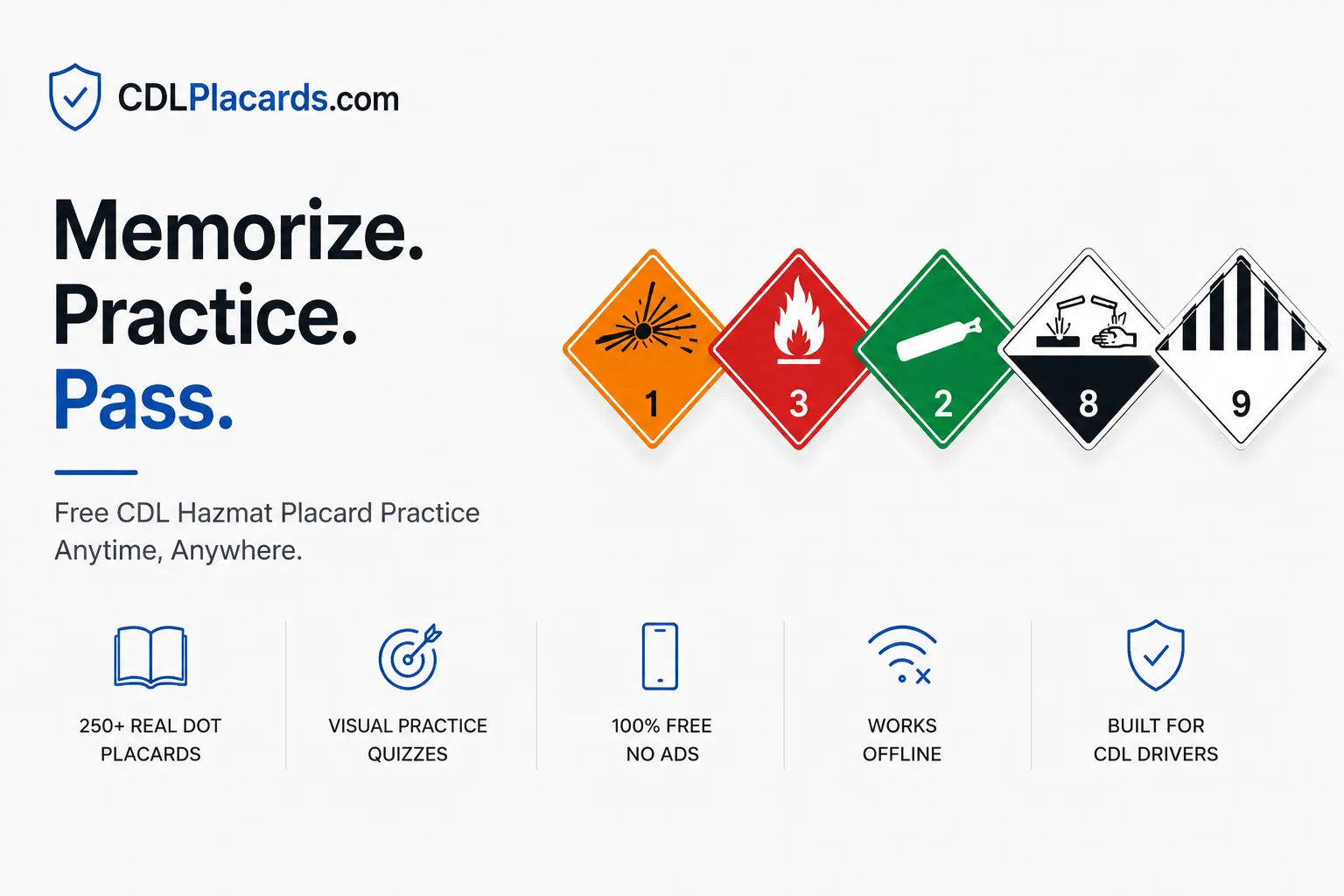
Part one: the nine classes by color
The fastest thing a new driver can learn is the color map, because color gets you to the right hazard family before you read anything else. The symbol and the class number then confirm it.
| Class | Color | Hazard |
|---|---|---|
| 1 | Orange | Explosives |
| 2 | Red / green / white | Gases |
| 3 | Red | Flammable liquids |
| 4 | Red-and-white / red / blue | Flammable solids, dangerous when wet |
| 5 | Yellow | Oxidizers and organic peroxides |
| 6 | White | Poison |
| 7 | Yellow over white | Radioactive |
| 8 | White over black | Corrosives |
| 9 | White with black stripes | Miscellaneous |
A starting map for onboarding, not the full rulebook. Confirm in the official CDL manual.
Part two: when to use the DANGEROUS placard
The DANGEROUS placard, red and white, is the mixed-load shortcut. In general terms, you may use one DANGEROUS placard in place of separate placards when the load contains two or more categories of Table 2 hazardous materials. It keeps a genuinely mixed load from needing a wall of different placards.
The exception drivers must know
The shortcut has a limit: if 2,205 pounds (1,000 kg) or more of one hazard class is loaded at one place, you generally must display that class's specific placard instead of DANGEROUS. And any Table 1 material follows its own rule and must be placarded specifically, at any amount. New drivers should treat DANGEROUS as the mixed-load option, not a universal one.
Use it as a starting point
A cheat sheet builds confidence, but it is a study aid, not the authority. The exact classes, the aggregation rules, and the DANGEROUS thresholds are defined in the regulations and can change. This site is an independent study tool, so have new drivers confirm the current rules with the official manual and 49 CFR before relying on any summary in the field.
Frequently asked questions
- When can a driver use the DANGEROUS placard?
- Generally when a load contains two or more categories of Table 2 hazardous materials, in place of separate placards. But if 2,205 pounds or more of one class is loaded at one place, use that class's specific placard. Verify in the regulations.
- What should a placard cheat sheet for new drivers include?
- The nine hazard classes by color (so any placard can be read fast) plus the DANGEROUS mixed-load rule and its weight exception. Treat it as a starting map and confirm with the official manual.
- Does the DANGEROUS placard cover everything?
- No. It is for Table 2 mixed loads and has a weight-based exception, and Table 1 materials must be placarded specifically. Always confirm the current requirements for the load.