NTSA hazardous cargo symbol chart mobile application drill check offline app test
An NTSA-style hazardous cargo symbol chart is the nine international hazard classes, because dangerous-goods symbols follow the UN system worldwide. The chart pairs each class with its color, symbol, and number: explosives, gases, flammable liquids, flammable solids, oxidizers, poison, radioactive, corrosives, and miscellaneous. The recognition transfers across countries; the local authority sets the rules around it.
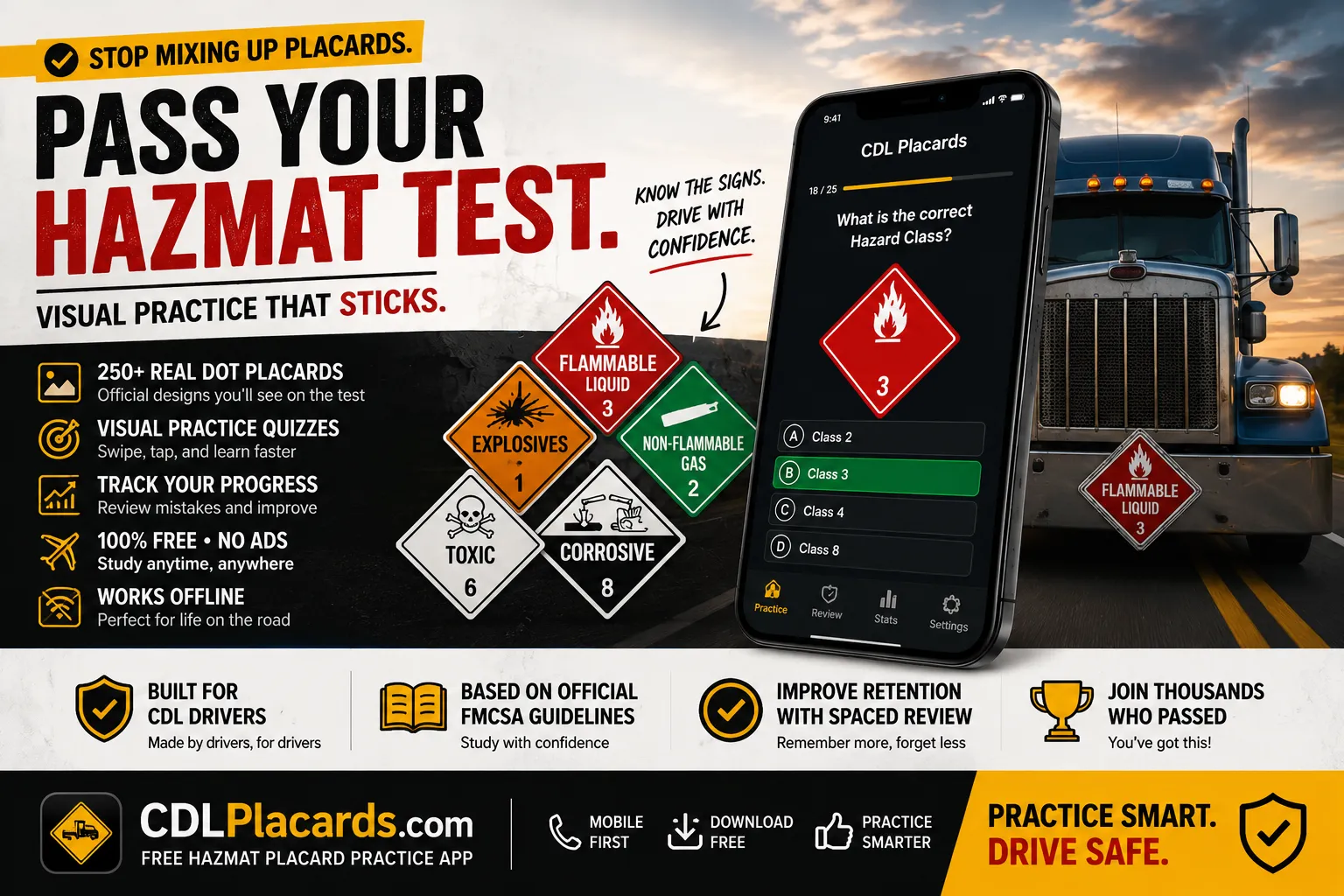
The chart is the nine international classes
A hazardous cargo symbol chart, whether from a national authority like NTSA or anywhere else, is built on the international UN hazard classes. So the chart is the same nine classes used worldwide, each shown by a color, a symbol, and a class number. Learning that chart is learning the universal system, not a country-specific one.
The nine-class chart
What the symbol chart contains:
| Class | Color | Hazard |
|---|---|---|
| 1 | Orange | Explosives |
| 2 | Red / green / white | Gases |
| 3 | Red | Flammable liquids |
| 4 | Red-white / red / blue | Flammable solids, dangerous when wet |
| 5 | Yellow | Oxidizers and organic peroxides |
| 6 | White | Poison and infectious |
| 7 | Yellow over white | Radioactive |
| 8 | White over black | Corrosives |
| 9 | White, black stripes | Miscellaneous |
The international nine-class chart. Confirm local specifics with the official materials.
Why the symbols are universal
The whole point of the UN hazard-class system is that the symbols mean the same thing everywhere, so dangerous goods can move across borders and be recognized by responders anywhere. That is why a symbol chart from one country matches another: the diamonds, colors, and numbers are internationally harmonized.
The local authority sets the rules
While the symbols are universal, each country's authority (NTSA in Kenya, for example) sets the surrounding rules: how dangerous goods must be documented, who must be licensed, and the specific local requirements. So the symbol chart transfers, but the regulatory framework around it is local and is the authority on what you must actually do.
How to drill and verify
Drill the nine classes by color, symbol, and number, since that chart is the same wherever you are, and focus on the look-alikes. For the specific NTSA or local requirements around dangerous-goods transport, confirm those with the official national authority and its materials rather than assuming they match another country.
Frequently asked questions
- What is on a hazardous cargo symbol chart?
- The nine international UN hazard classes by color, symbol, and number: explosives, gases, flammable liquids, flammable solids, oxidizers, poison, radioactive, corrosives, and miscellaneous. The symbols are the same worldwide. Confirm local specifics with the official materials.
- Are NTSA hazard symbols the same as elsewhere?
- Yes. Dangerous-goods symbols follow the international UN system, so the nine-class diamonds are the same as in other countries. The local authority sets the surrounding rules, but the symbols transfer.
- Does a symbol chart from one country work in another?
- For recognition, yes, because the UN hazard classes are internationally harmonized. The regulatory framework around the symbols is local, so confirm the specific rules with the national authority.