Municipal hazardous waste driver cdl h visual placard test drill tests checks apps genera…
Hazardous waste is placarded by its hazard class, the same as any other hazardous material. A waste that is corrosive uses the Class 8 placard, a flammable waste uses Class 3, and so on. The shipment also uses a HAZARDOUS WASTE marking and travels with a manifest. So you read the normal hazard-class diamond, plus the waste marking and paperwork.
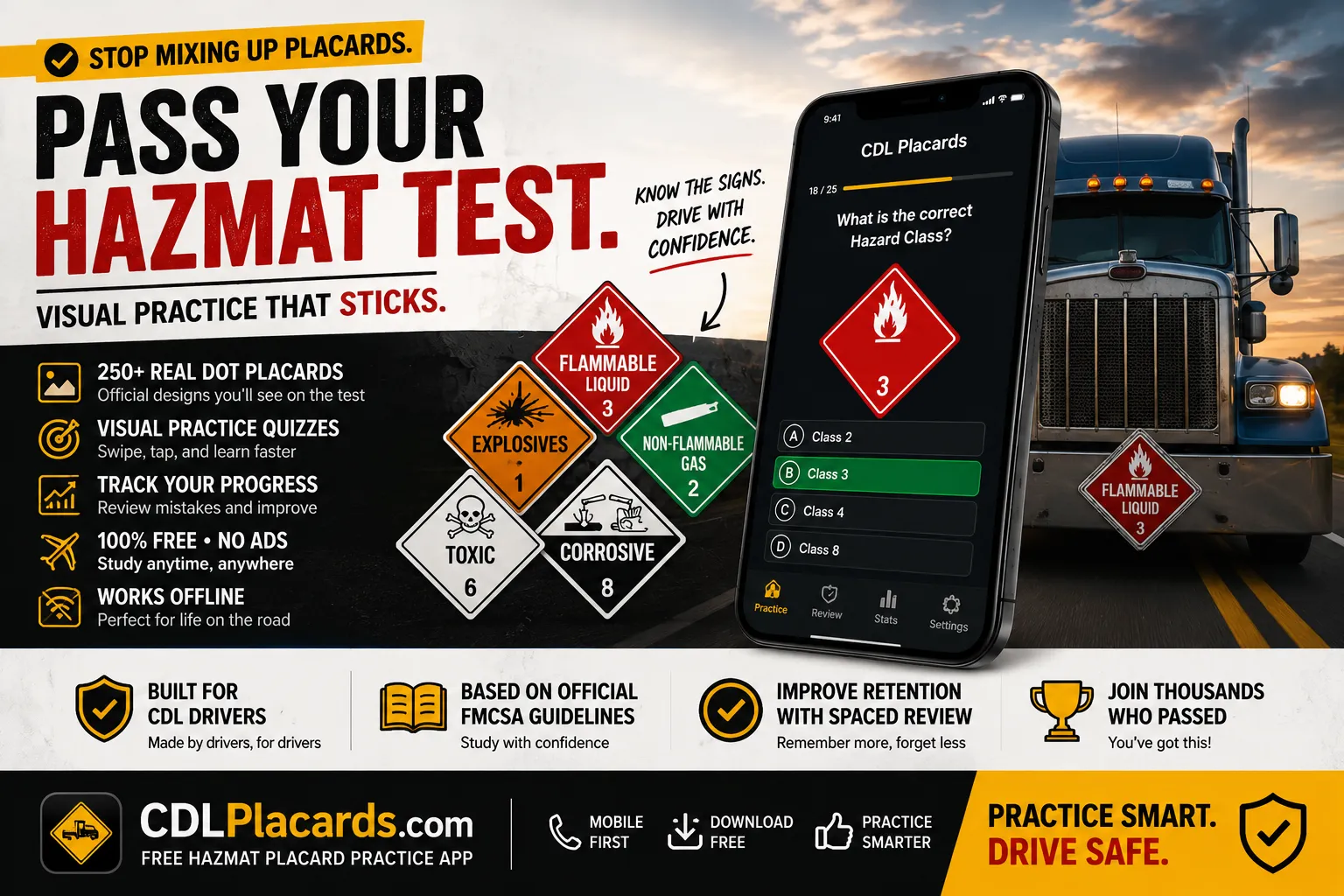
Waste is classed by its hazard
Calling something a hazardous waste does not give it a special placard color. The waste is placarded according to the hazard it actually presents: a corrosive waste is Class 8, a flammable liquid waste is Class 3, a toxic waste falls under Class 6, and so on. So the recognition skill is the same nine-class system you already learn.
The HAZARDOUS WASTE marking and manifest
What sets waste apart is the additional handling. Hazardous waste shipments carry a HAZARDOUS WASTE marking and move with a manifest, a tracking document that follows the waste from generator to disposal. That paperwork and marking are layered on top of the normal hazard-class placard, not in place of it.
What a municipal hazmat driver reads
The pieces of the picture:
| Element | What it tells you |
|---|---|
| Hazard-class placard | The actual hazard (corrosive, flammable, etc.) |
| HAZARDOUS WASTE marking | It is a regulated waste |
| Manifest | Tracks the waste to disposal |
| UN/ID number | The specific material |
The hazard class drives the placard; the waste marking and manifest ride along. Confirm in the regulations.
Why it is handled this way
The placard tells responders the immediate danger, corrosive, flammable, toxic, which is what they need at the scene of an incident. The HAZARDOUS WASTE marking and manifest serve the separate goal of tracking the material so it is disposed of properly. Both systems run together, which is why a waste load shows both.
How to study and verify
For recognition, identify hazardous waste exactly as you would any load, by the hazard-class diamond, then note the HAZARDOUS WASTE marking as the extra flag. The detailed rules on waste classification, marking, and the manifest are set by the environmental and transportation regulations, so confirm the specifics in the official rules and your manual rather than assuming from the term waste alone.
Frequently asked questions
- What placard does hazardous waste use?
- The placard of its hazard class: corrosive waste uses Class 8, flammable waste uses Class 3, and so on. It also carries a HAZARDOUS WASTE marking and travels with a manifest. Confirm in the regulations.
- Is there a special placard just for hazardous waste?
- No. Waste is placarded by the hazard it presents, using the normal nine-class diamonds. The HAZARDOUS WASTE marking and the manifest are added alongside the hazard-class placard.
- What is a hazardous waste manifest?
- A tracking document that follows the waste from the generator to disposal. It is part of the paperwork for hazardous waste, separate from the hazard-class placard that shows the immediate danger.