Multiple hazmat placards vs dangerous graphic exam meaning
Multiple placards mean the vehicle is showing a separate placard for each hazard class it carries. The single DANGEROUS placard is an allowed shortcut that can replace those separate placards when the load contains two or more categories of Table 2 materials. So multiple specific placards and one DANGEROUS placard are two ways of marking a mixed load.
What multiple placards mean
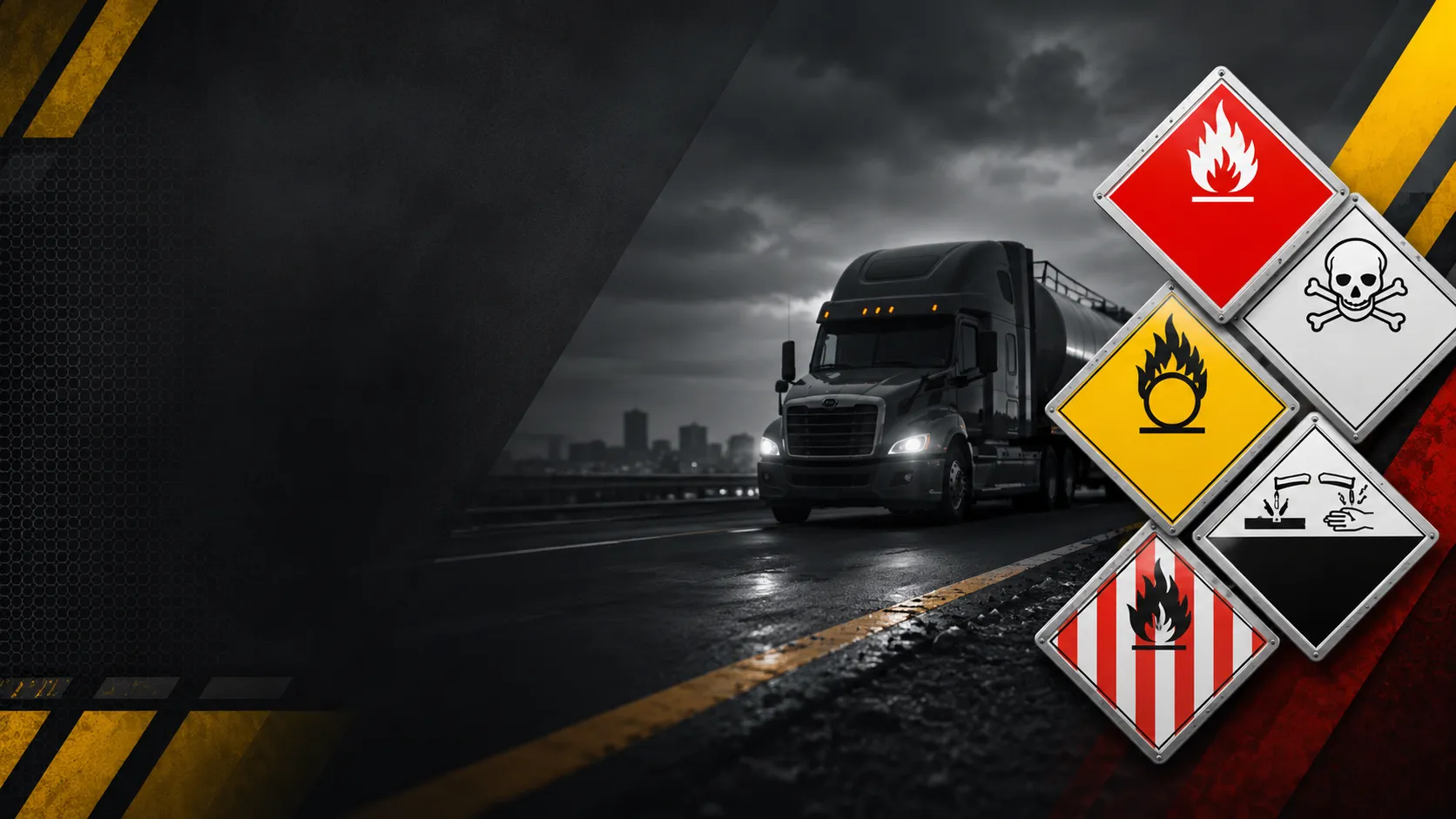
When a vehicle carries more than one kind of hazardous material, one straightforward approach is to display a separate placard for each hazard class present, a Class 3 here, a Class 8 there, and so on. That is the multiple-placards picture: several different diamonds, each naming a specific hazard on board.
What the DANGEROUS placard does
The DANGEROUS placard, red and white with the word DANGEROUS, is the shortcut. In general terms, you may use one DANGEROUS placard in place of the separate placards when the load contains two or more categories of Table 2 hazardous materials. It signals a mixed load without needing a wall of individual diamonds.
Two ways to mark a mixed load
The comparison the exam is testing:
| Multiple placards | DANGEROUS placard | |
|---|---|---|
| What it shows | One placard per hazard class | One placard for the mix |
| When used | Always an option | Two or more Table 2 classes |
| Exception | n/a | 2,205 lb of one class at one place uses that class's placard |
| Table 1 materials | Specific placard, any amount | Still need their specific placard |
Both can be valid for a mixed load; DANGEROUS has limits. Verify the rules in the regulations.
The exception to know
The DANGEROUS shortcut is not unlimited. If 2,205 pounds (1,000 kg) or more of one hazard class is loaded at one place, you generally must show that class's specific placard instead. And the most dangerous materials (Table 1) must be placarded specifically at any amount. So DANGEROUS is a mixed-load convenience, not a universal replacement.
How to read the exam question
If a question contrasts multiple placards with the DANGEROUS placard, the point is that they are two ways to mark the same kind of mixed load, with DANGEROUS being the allowed shortcut under specific conditions. Remember the Table 2 basis and the weight exception. Confirm the exact aggregation and thresholds in your official manual and 49 CFR.
Frequently asked questions
- What is the difference between multiple placards and the DANGEROUS placard?
- Multiple placards show a separate diamond for each hazard class; the DANGEROUS placard is a shortcut that can replace them for a mixed load of two or more Table 2 classes. Same situation, two valid markings. Verify in the regulations.
- When can you use the DANGEROUS placard instead of separate ones?
- Generally when the load has two or more categories of Table 2 materials. But if 2,205 pounds or more of one class is loaded at one place, use that class's specific placard, and Table 1 materials always need their own.
- Is DANGEROUS always allowed for mixed loads?
- No. It is for Table 2 mixed loads and has a weight-based exception, and Table 1 materials must be placarded specifically. Confirm the current rules for your load.