Hazmat cdl test placard memory techniques ofw drivers
The most effective memory techniques for the placards are tying each color to a vivid meaning, chunking the nine classes into a few groups, and using active recall instead of rereading. Anchor color to idea (red is fire, blue is water-danger), group related classes, and quiz yourself by producing answers. Those three together make the nine classes stick.
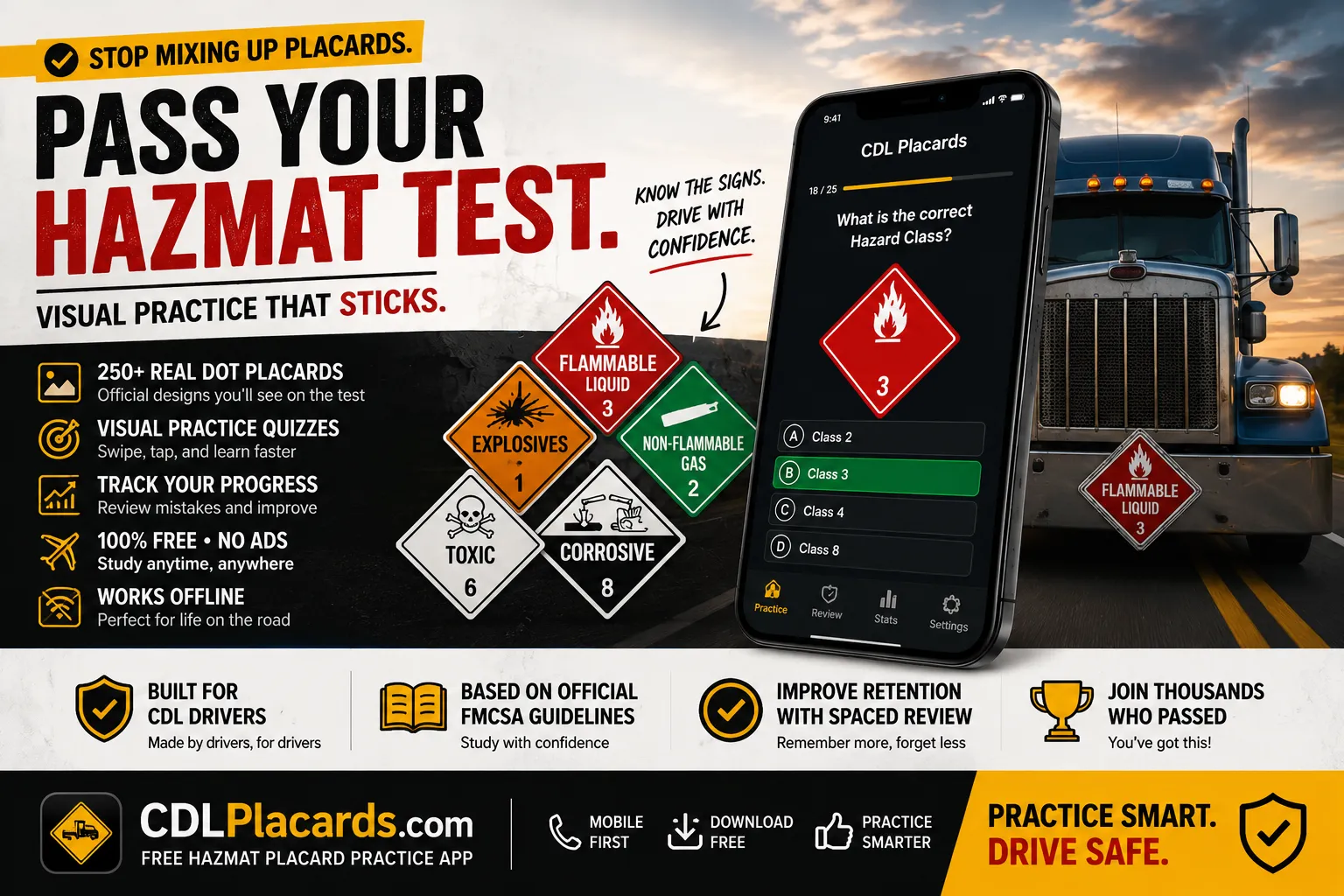
Associate color with a vivid idea
The strongest hook is to tie each color to a memorable meaning so the color instantly calls up the hazard. Red is fire (flammable), green is go, safe gas (non-flammable), yellow is the sun feeding fire (oxidizer), orange is a blast (explosives), blue is water makes it worse (dangerous when wet), white with a skull is poison. Vivid associations stick far better than a plain list.
Chunk the nine into groups
Nine separate facts are hard; a few groups are easy. Chunk them: the fire-related family (red flammable, orange explosive, yellow oxidizer), the gas trio (red, green, white Class 2), and the black-and-white pair (corrosive 8, miscellaneous 9). Chunking turns a long list into a handful of clusters your memory can hold.
Three techniques that work
Combine these:
| Technique | How to use it |
|---|---|
| Color association | Tie each color to a vivid meaning |
| Chunking | Group the nine into a few clusters |
| Active recall | Produce the answer, then check |
| Spacing | Short sessions over several times |
Association, chunking, and recall beat plain repetition. Verify the placards against your manual.
Use active recall, not rereading
Rereading the classes feels like studying but builds weak memory. Active recall, looking at a placard with the answer hidden, naming it, then checking, forces your brain to produce the answer, which is what fixes it in memory and matches what the test asks. Pair it with the associations and chunks above.
How to study and verify
Build a vivid color association for each class, group the nine into clusters, and quiz yourself with active recall in short, spaced sessions. Focus extra recall on the look-alikes. Make sure the placards you are memorizing are correct by checking them against your official state CDL manual, the authority on each design.
Frequently asked questions
- What are good memory techniques for hazmat placards?
- Tie each color to a vivid meaning (red fire, blue water-danger, yellow oxidizer), chunk the nine classes into a few groups, and use active recall instead of rereading. Association, chunking, and recall make the classes stick. Verify the placards against your manual.
- How do I memorize the nine classes fast?
- Chunk them into clusters (the fire family, the gas trio, the black-and-white pair) and anchor each color to a vivid idea, then quiz yourself by producing the answers. Chunking beats memorizing nine separate facts.
- Why is active recall better than rereading?
- Because producing an answer from memory fixes it far better than passively rereading, and it mirrors what the test asks, identifying a placard cold rather than recognizing it on a page.