App to practice matching hazard diamonds and placards
Matching practice, pairing a hazard diamond to its class, hazard, or name, is an effective way to learn placards, because it rehearses recognition rather than passive reading. To match well, read each diamond's color, symbol, and class number, then connect it to the right hazard. Focus matching rounds on the look-alikes, where matching mistakes cluster.
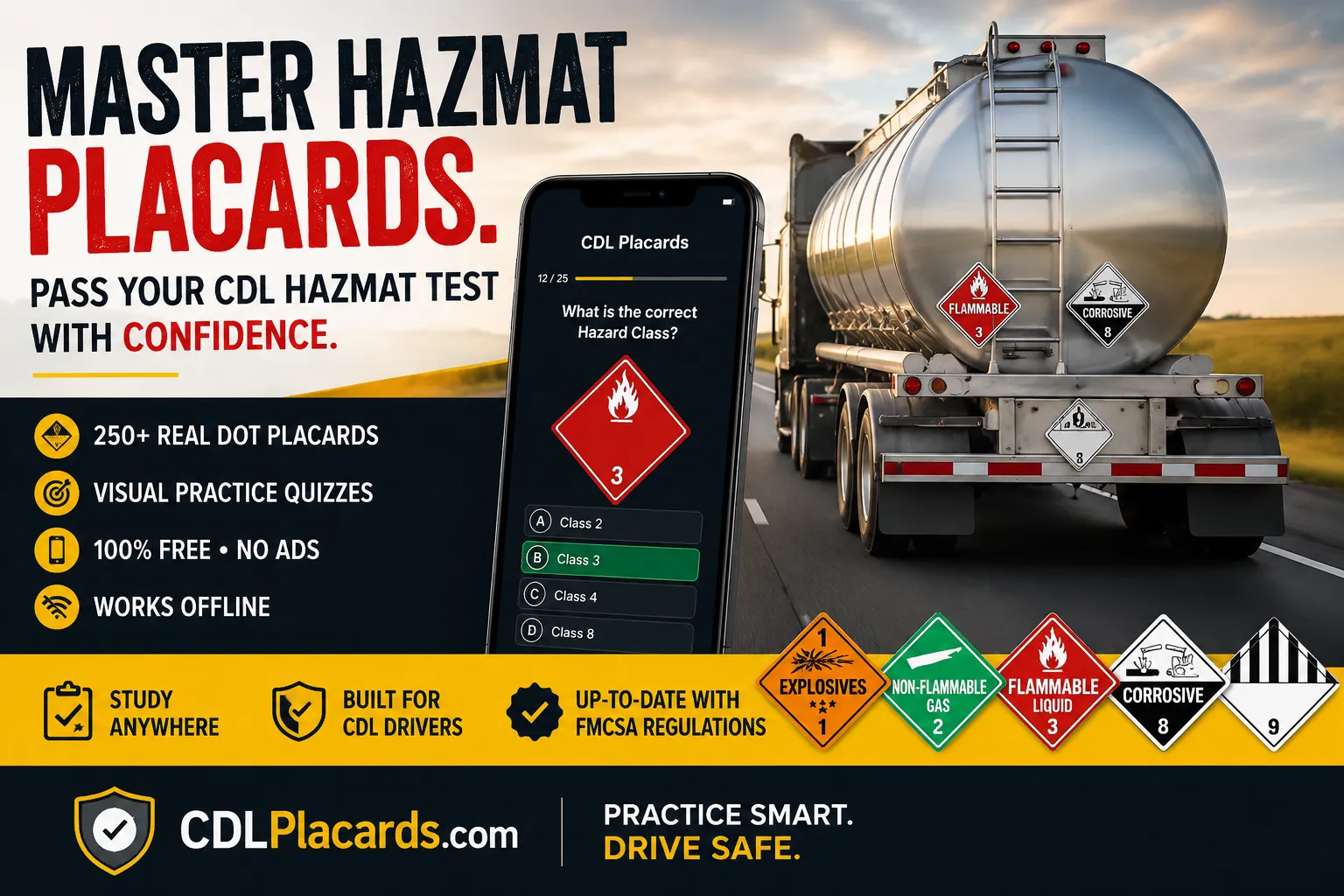
Matching rehearses recognition
A matching drill, pairing each diamond with its class, hazard, or name, is effective because it makes you produce the connection rather than just read it. That active step is what builds recognition. So matching practice is closer to what the test asks (identify this placard) than passively reviewing a list of classes.
How to match a diamond
To match correctly, read the diamond's three cues: color points to the hazard family, the symbol confirms the type, and the class number locks the class. Then connect it to the right hazard or name. Doing all three reads, rather than guessing from color alone, is what makes matching accurate.
What to match
Useful matching pairings:
| Match this | To this |
|---|---|
| The diamond | Its class number (1 to 9) |
| The diamond | Its hazard (flammable, corrosive, etc.) |
| The symbol | The class it belongs to |
| The color | The hazard family |
Match by reading color, symbol, and number. Verify the placards against your manual.
Focus on the look-alikes
Matching mistakes cluster on the pairs that share a cue: Class 8 versus 9, poison versus toxic gas, the three Class 2 gases. So give matching rounds extra weight there, pairing each look-alike to its correct hazard and noting how it differs from its twin. That is where matching practice pays off most.
How to study and verify
Use matching as active practice: read each diamond's color, symbol, and number, pair it correctly, and check, focusing on the look-alikes. Keep sessions short and re-drill the misses. Make sure the diamonds you are matching are correct by checking them against your official state CDL manual, the authority on each design.
Frequently asked questions
- Is matching practice good for learning placards?
- Yes. Matching a diamond to its class or hazard rehearses recognition rather than passive reading, which is closer to what the test asks. Match by reading color, symbol, and number, and focus on the look-alikes. Verify the placards against your manual.
- How do I match a hazard diamond correctly?
- Read its three cues: color (the family), symbol (the type), and class number (the class), then connect it to the right hazard or name. Reading all three, not just color, makes matching accurate.
- What should matching drills focus on?
- The look-alikes, where matching mistakes cluster: Class 8 vs 9, poison vs toxic gas, and the three Class 2 gases. Pair each to its correct hazard and note how it differs from its twin.