Is liquefied natural gas red or green placard test question CDL trick differences app?
Red. Liquefied natural gas is mostly methane, a flammable gas, so it takes the red Division 2.1 flammable gas placard, not green. The trick is the assumption that any gas is green; green is only for non-flammable gas (2.2). Because LNG burns, it is red, and it is also carried cold as a cryogenic liquid.
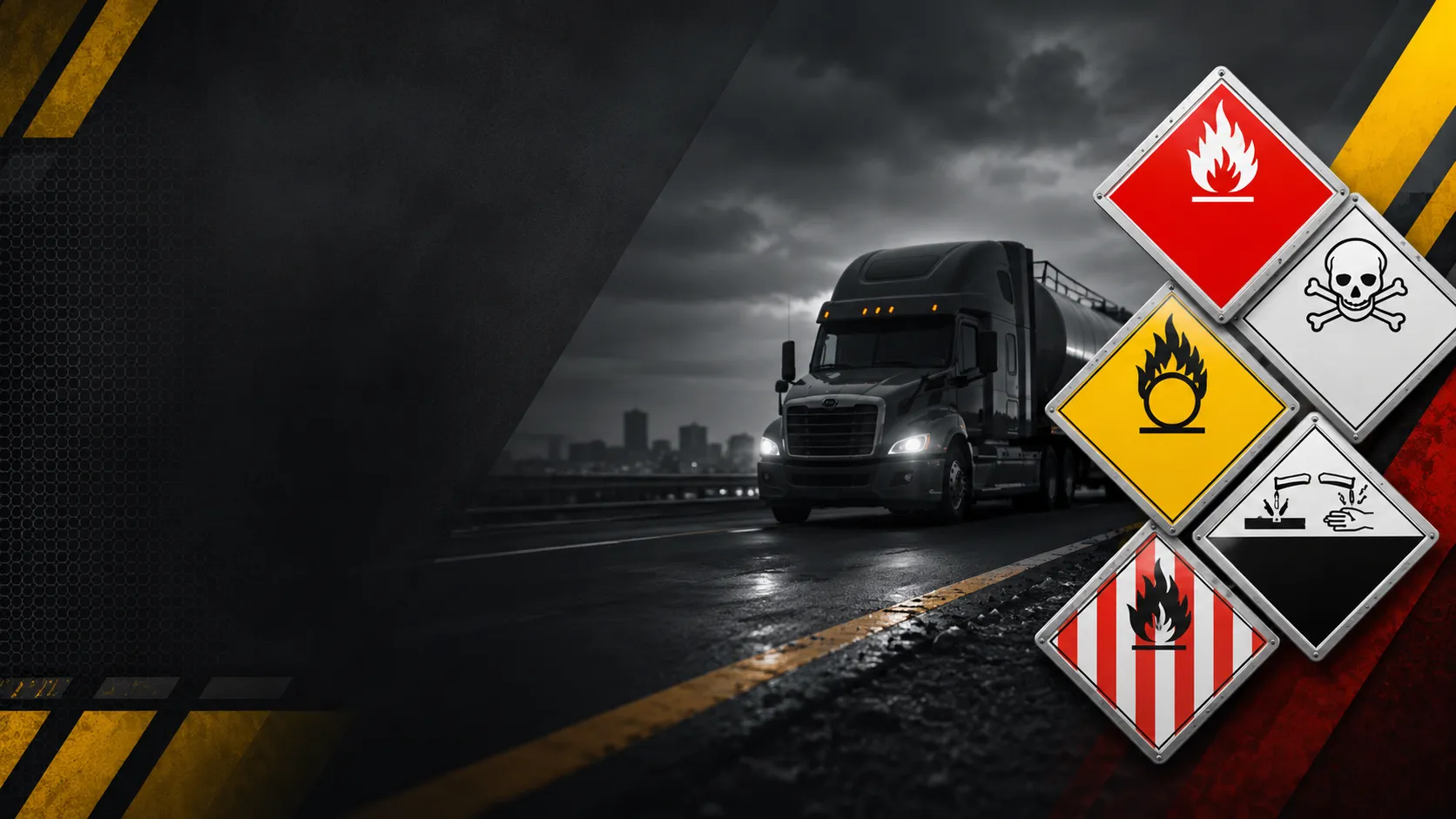
Why the question is a trick
The trap is a tidy but wrong rule: gas equals green. Green is only for non-flammable gases like nitrogen or carbon dioxide. Liquefied natural gas is almost entirely methane, which is very much flammable, so it does not belong in the green family at all.
When a test offers green as an option for LNG, it is baiting the gas-equals-green shortcut. The correct read is to ask whether the gas burns, and methane clearly does.
LNG is a flammable gas: red 2.1
Because LNG is flammable, it is placarded as a Division 2.1 flammable gas, which is red with a flame symbol and a 2. Red is the flammable color across the system, whether the material is a liquid (Class 3) or a flammable gas (2.1). The class number 2 keeps it in the gas family while the red color and flame tell you it burns.
Red gas versus green gas
The comparison that defeats the trick:
| LNG (flammable gas) | Non-flammable gas | |
|---|---|---|
| Division | 2.1 | 2.2 |
| Color | Red | Green |
| Symbol | Flame | Cylinder |
| Burns? | Yes | No |
| Examples | LNG (methane) | Nitrogen, carbon dioxide gas |
Flammable gas is red; non-flammable gas is green. Confirm specifics in your official manual.
Do not forget the cold hazard
LNG is carried as a cryogenic liquid, meaning it is kept extremely cold to stay liquid, and it can be shown as a refrigerated liquefied gas with its own identification number. For the placard question, the key point is still the flammable hazard, which makes it red. The cryogenic nature adds a cold-burn and pressure concern on top of the fire risk.
How to lock the answer in
Tie the color to the behavior, not the state of matter. If a gas burns, it is red 2.1; if it does not, it is green 2.2. Practice LNG, propane, and hydrogen as red flammable gases alongside nitrogen and carbon dioxide as green non-flammable gases, so the gas-equals-green reflex never fires. Always verify the specifics in your official state CDL manual.
Frequently asked questions
- Is liquefied natural gas a red or green placard?
- Red. LNG is mostly methane, a flammable gas, so it uses the red Division 2.1 placard, not green. Green is only for non-flammable gas. Confirm in your official manual.
- Why is LNG not green?
- Green is reserved for non-flammable gases. LNG is flammable, so it takes the red flammable-gas color. The gas-equals-green assumption is the trick.
- What division is LNG?
- Division 2.1, flammable gas (red, with a flame and a 2). It is also carried as a cryogenic refrigerated liquid, which adds a cold and pressure hazard.