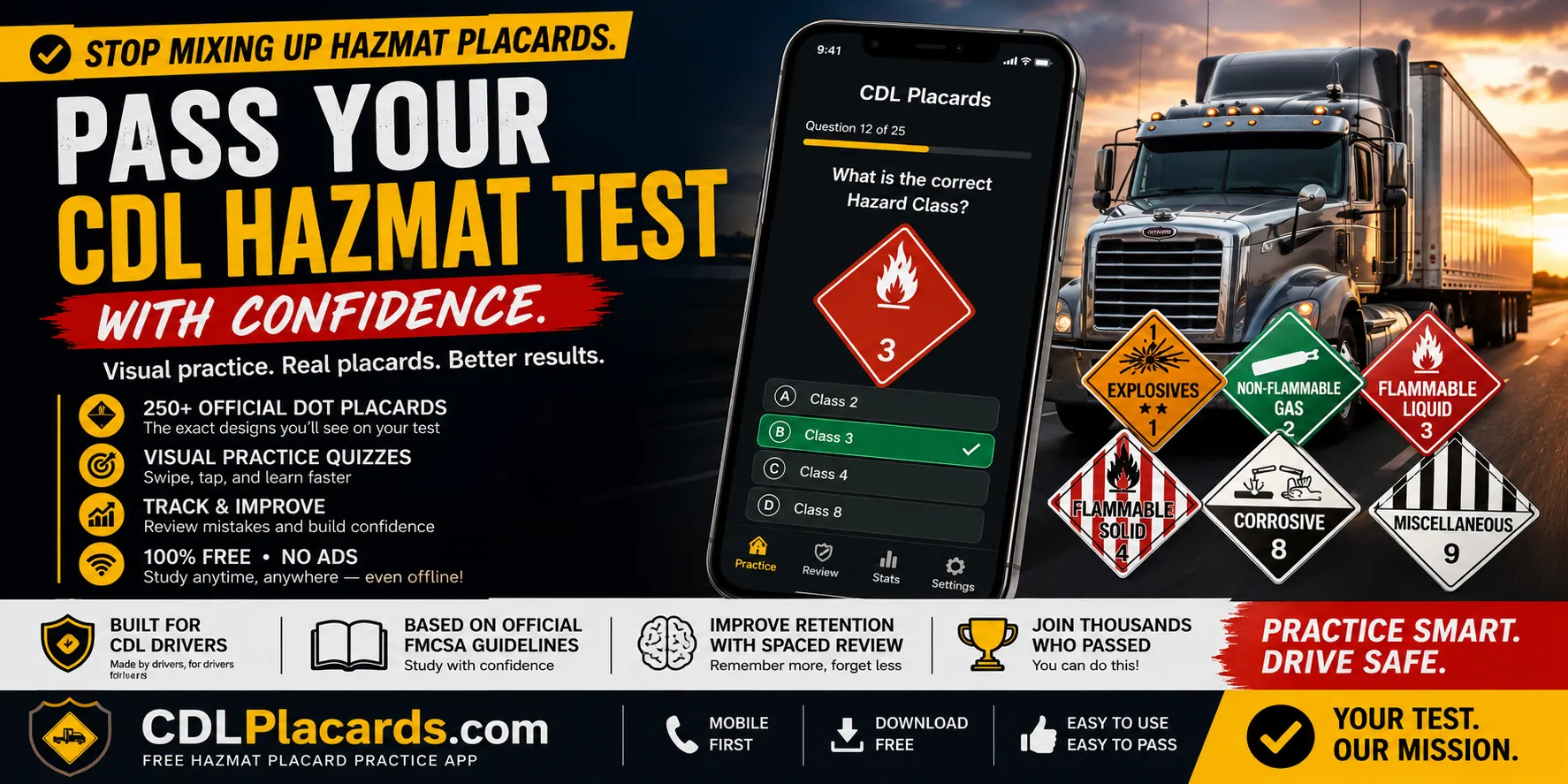
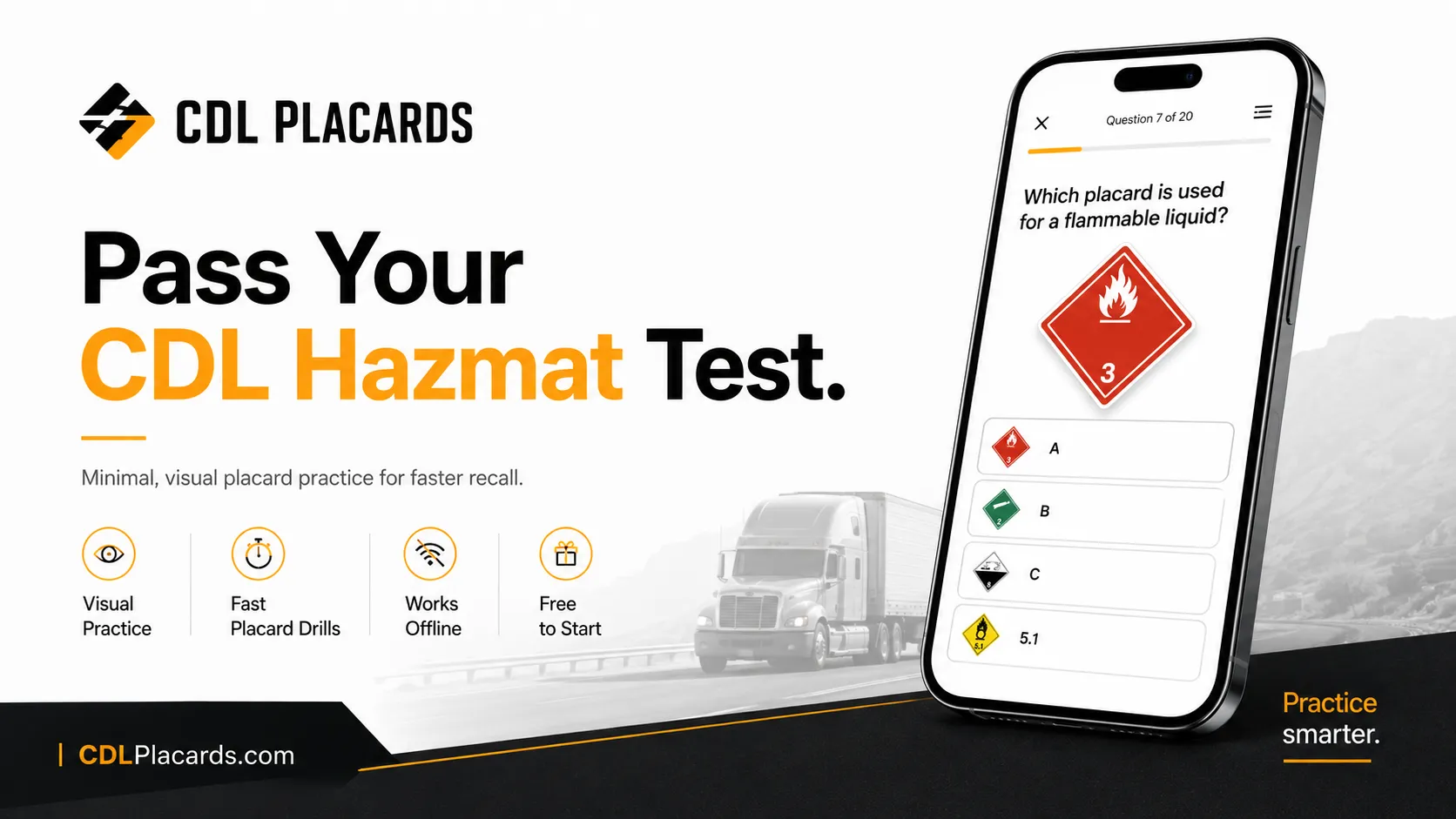
If you are color blind, the placard system can look like it was designed against you, since color is the headline feature. It was not. Placards carry several cues on purpose, so a responder can identify a hazard even in poor light, at a distance, or with imperfect color vision. You can lean on those same backup cues.
This is study guidance, not medical advice. Your official state CDL manual is the authority on what is tested, and a qualified professional can advise on your specific vision.
You are not alone, and the system has backups
Color blindness affects roughly 1 in 12 men and about 1 in 200 women, according to the National Eye Institute. Because so many people see color differently, every placard carries information beyond color: a symbol, a class number, often text, and a recognizable pattern or position.
| Cue | What it gives you |
|---|---|
| Symbol | Flame, skull, trefoil, dripping liquid, stripes |
| Class number | The single digit at the bottom point |
| Text | Words like CORROSIVE, OXIDIZER, RADIOACTIVE on many placards |
| Pattern and position | Which half is darker, stripes, split designs |
Lean on the symbol and number
The fastest non-color strategy is to read the symbol and the class number first. A skull is toxic, a trefoil is radioactive, dripping liquid on a hand and metal is corrosive, no matter how the colors appear to you. The number at the bottom confirms the class. Together, symbol plus number identifies almost every placard without relying on hue.
Use pattern and position
Many placards have a structure you can read by light and dark rather than color. The corrosive placard is dark on the bottom half, the Class 9 placard has distinctive vertical stripes, and several placards are split designs. Learning these patterns gives you another color-independent cue, which also helps with the most confused placards.
Practice the right way
When you drill, deliberately identify each placard by symbol, number, text, and pattern rather than color. That builds the habit you will use on the test and the road. A recognition app such as CDL Placards lets you practice the full set repeatedly, so the non-color cues become automatic. For the regulations, see the FMCSA hazardous materials regulations.
This also connects to a real licensing rule. Federal driver-qualification standards in 49 CFR 391.41 require a commercial driver to recognize the colors of traffic signals, so building confident, non-color placard reading habits fits the same practical demand of the job.
Frequently asked questions
Can you be a truck driver if you are color blind?
Many color-blind drivers work successfully, and placards are designed with non-color cues for exactly this reason. Specific medical and licensing standards apply, so check with your licensing agency and a qualified professional about your situation.
How do you read hazmat placards if you are color blind?
Use the symbol, the class number, the text, and the pattern or position rather than relying on color. A skull means toxic and a trefoil means radioactive regardless of how the colors appear to you.
Do hazmat placards rely only on color?
No. Every placard carries a symbol and a class number, many include text, and many have a recognizable pattern. Color is one cue among several, by design.
What is the best way to study placards with color blindness?
Drill each placard by its symbol, number, text, and pattern using a recognition app such as CDL Placards, so the non-color cues become automatic. Your state CDL manual is the source of truth.