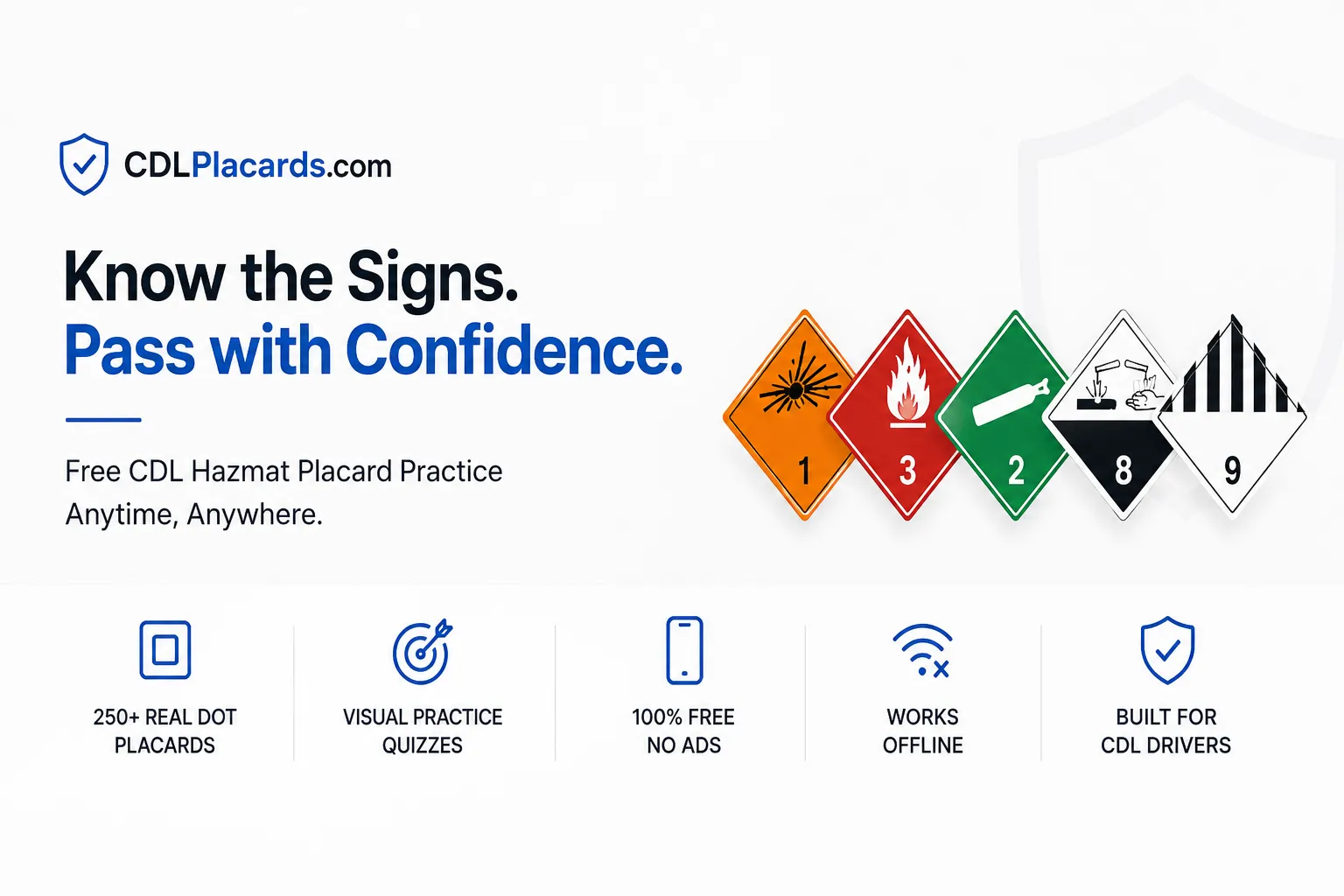
Placards
Hazmat Placard Symbols Explained (Every Diamond Icon)
A guide to every hazmat placard symbol: the flame, skull, trefoil, exploding bomb, dripping corrosive, and more, plus what each one tells you instantly.
Lawrence Arya··6 min
73 posts · page 4 of 7.
A guide to every hazmat placard symbol: the flame, skull, trefoil, exploding bomb, dripping corrosive, and more, plus what each one tells you instantly.
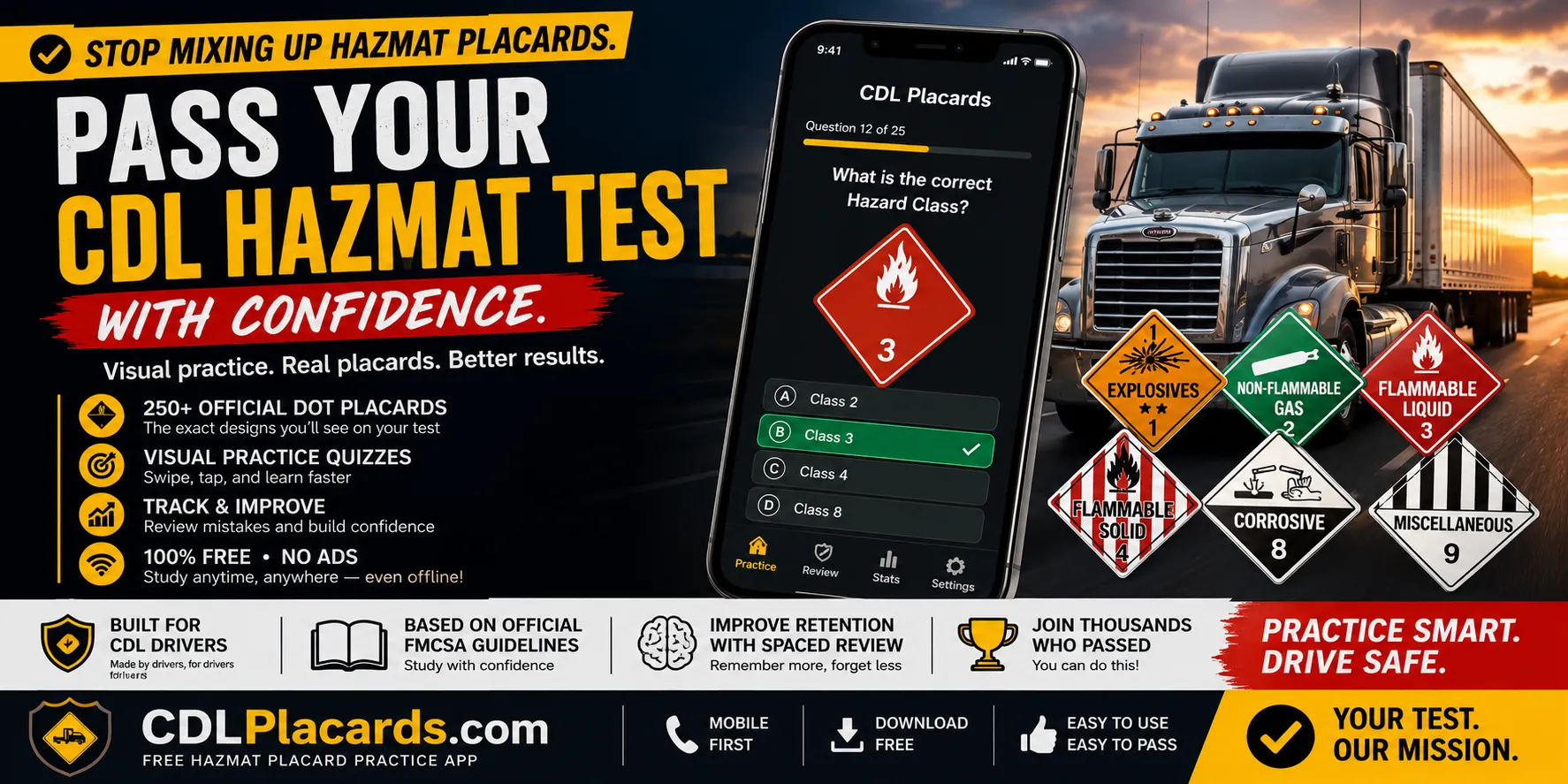
Placards and labels use the same diamond and colors but are not the same thing. Here is how they differ by size, placement, and the rules that govern them.
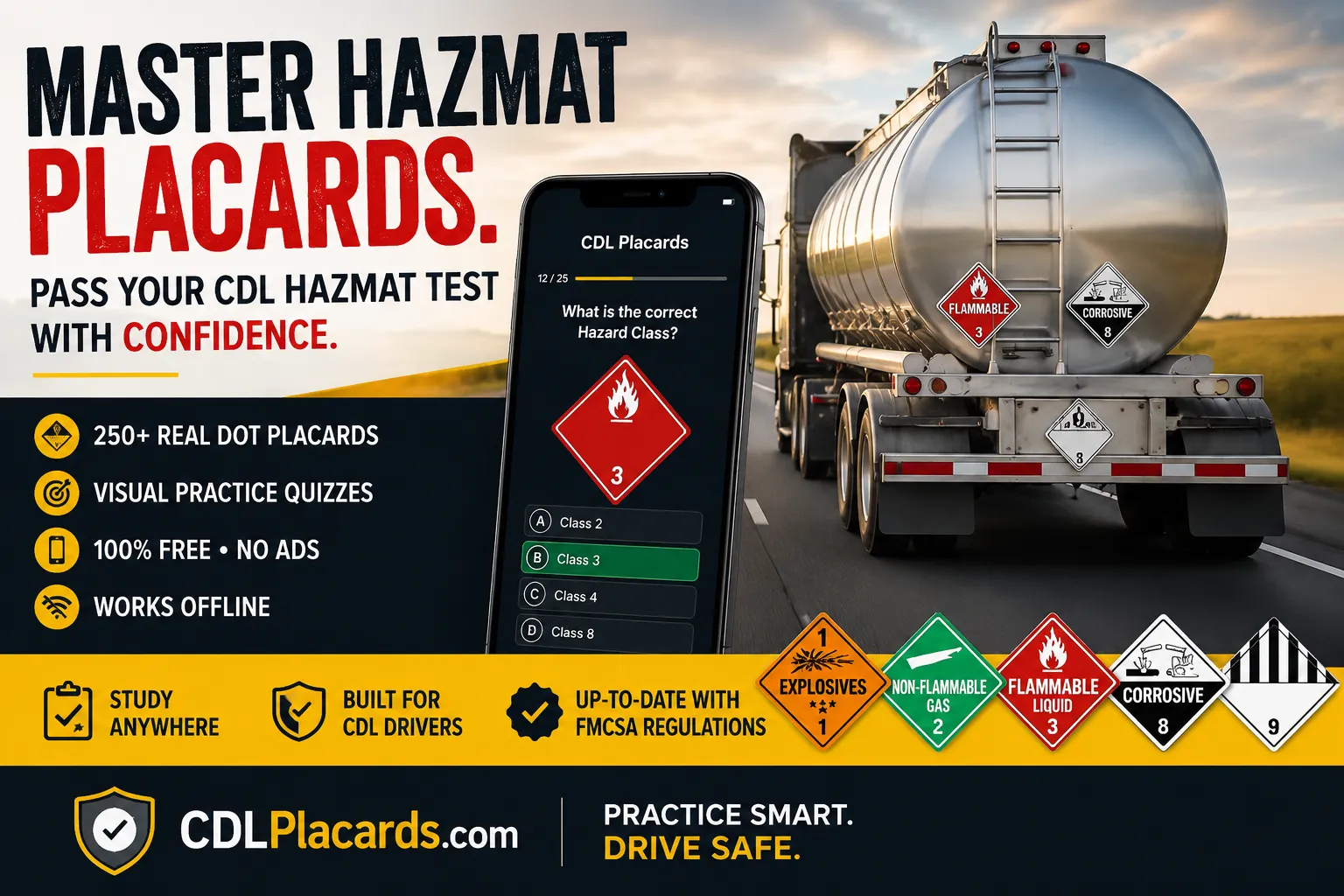
Why hazmat vehicles face route restrictions, how tunnel and bridge limits work, and where designated routes and permits come into play.
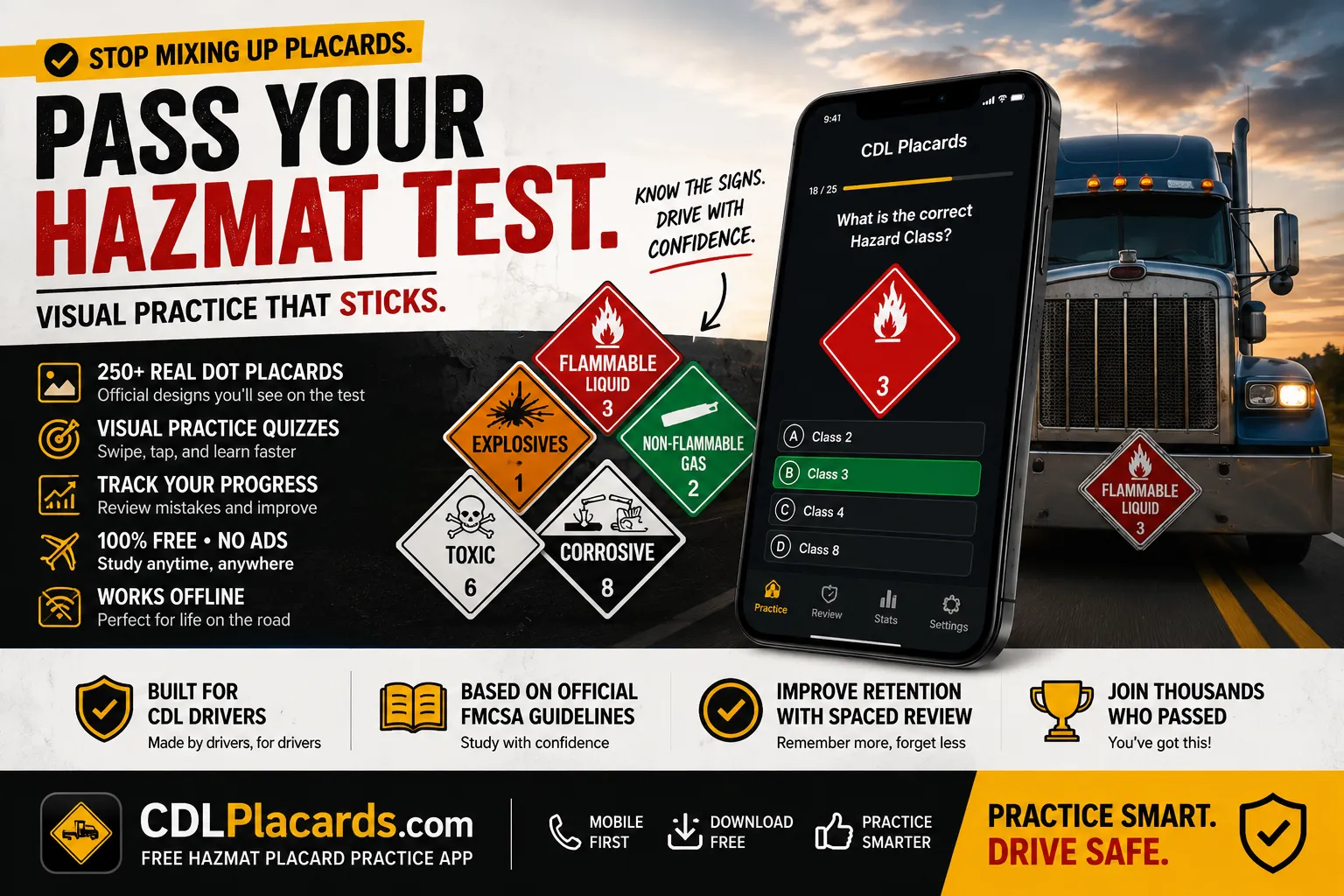
Who needs a hazmat security plan, what it must address, and how it relates to security training. A CDL hazmat study guide to the security rules.
Why some hazardous materials cannot be loaded together, how the segregation table works, and the dangerous combinations CDL students should know.
What a hazmat shipping paper must include, the emergency response phone number, and exactly where a driver must keep it. A study guide to a key CDL test topic.
What hazmat training the rules require, the types from general awareness to security, and how often it must be repeated. A study guide for CDL drivers.
A realistic timeline for the CDL hazmat knowledge test, the factors that change it, and a simple day-by-day plan you can adapt to your own schedule.

Mnemonics, chunking, and active-recall techniques to memorize the nine DOT hazard classes in order, plus how to anchor each one to its placard.
A step-by-step study playbook for the CDL hazmat knowledge test: what to learn, in what order, and the study methods that build real, test-ready recall.
What the black-and-white limited quantity marking means, how it differs from a hazard placard, and why small quantities get reduced requirements.
Why lithium batteries are regulated, the UN numbers and marking that identify them, and the special rules around fire risk and damaged batteries.