Interactive hover hazard diamonds text explanation pc testing app
An interactive format where each diamond reveals a text explanation is a good way to learn what every placard means: you see the diamond, then read the color, symbol, class number, and the hazard it represents. The underlying content is the nine classes, each explained by those three cues plus its danger. Reading the explanation alongside the diamond ties the picture to its meaning.
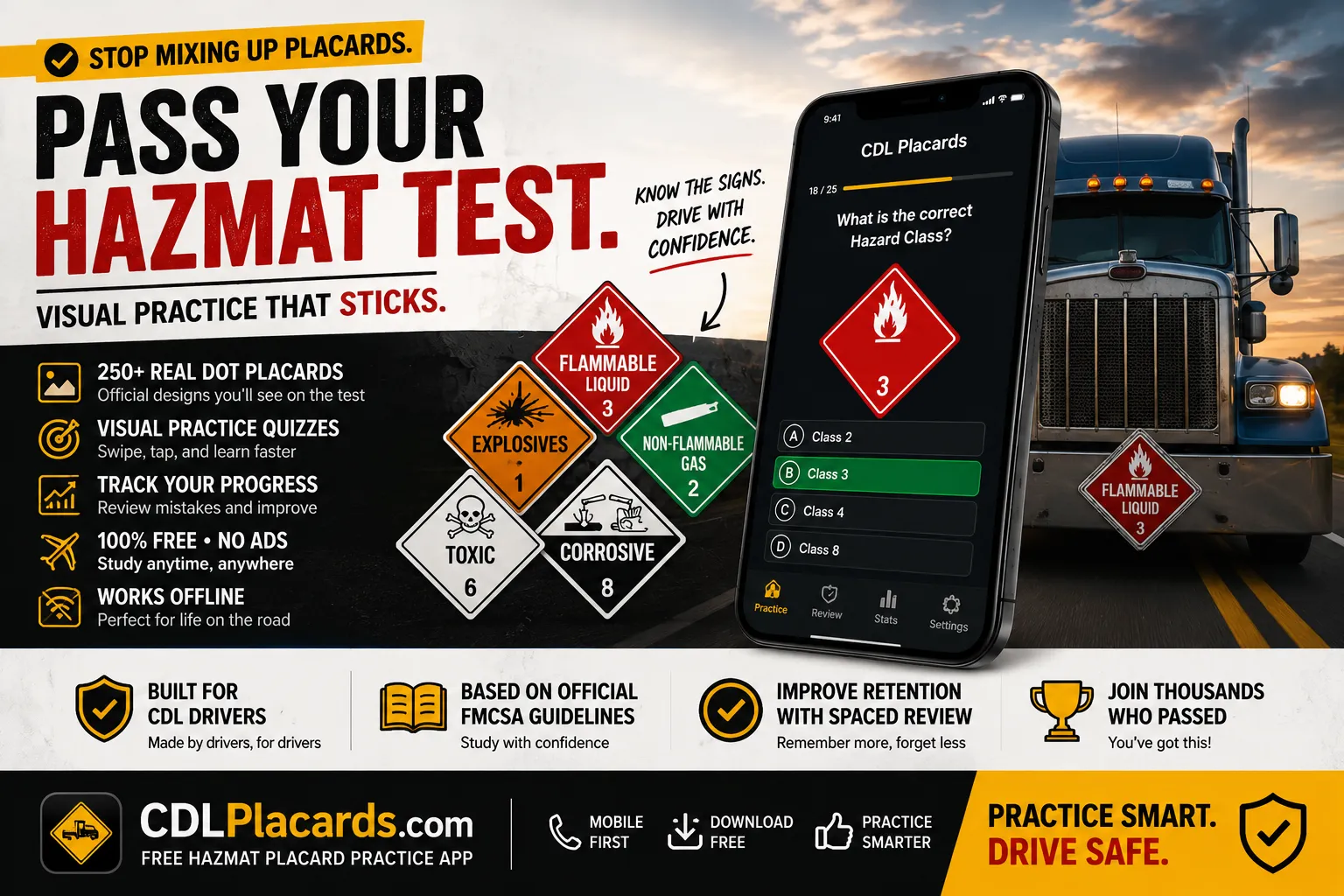
Pairing the diamond with its meaning
An interactive format that reveals an explanation for each diamond is useful because it directly ties the picture to its meaning. You see the diamond, then read what its color, symbol, and class number signify and what hazard it represents. That connection, image to explanation, is exactly what recognition is built on.
What each explanation covers
A good per-diamond explanation covers the three cues and the hazard: the color (the family), the symbol (the type), the class number (the class), and what danger the material poses. For example, a red diamond with a flame and a 3 explains as a Class 3 flammable liquid. Reading that alongside the diamond fixes the meaning.
What the explanations teach
The content behind the format:
| Cue explained | What you learn |
|---|---|
| Color | The hazard family |
| Symbol | The specific hazard type |
| Class number | The exact class (1 to 9) |
| Hazard | What the material does |
Each diamond explained by its cues and hazard. Verify against your official manual.
Then move to recall
Reading explanations is a strong way to learn, but it is recognition (you see the answer). To be ready for the test, follow it with active recall: see a diamond without the explanation, name it, then check. The explanation phase builds understanding; the recall phase proves you can identify a placard on your own.
How to study and verify
Use the interactive explanations to learn what each of the nine classes means by its color, symbol, number, and hazard, then switch to active recall to lock it in, focusing on the look-alikes. Make sure the placards and explanations are correct by checking them against your official state CDL manual, the authority on each design.
Frequently asked questions
- Does an interactive hover-to-explain format help learn placards?
- Yes. Pairing each diamond with text on its color, symbol, class number, and hazard ties the picture to its meaning, which is how recognition is built. Follow it with active recall so you can identify without the text. Verify against your official manual.
- What should each diamond's explanation cover?
- The three cues and the hazard: the color (family), the symbol (type), the class number (class), and what the material does. For example, red with a flame and a 3 is a Class 3 flammable liquid.
- Is reading explanations enough?
- It builds understanding, but it is recognition with the answer shown. Follow it with active recall, see a diamond, name it, then check, so you can identify a placard on your own for the test.