Inhalation hazard vs poison test dmv trick questions
Poison and inhalation hazard both use the skull-and-crossbones on white, which is why they get confused. Class 6.1 is toxic substances, usually liquids or solids. A toxic gas is Class 2.3. The words INHALATION HAZARD flag materials that are poisonous to breathe, which can apply to certain 2.3 and 6.1 materials.
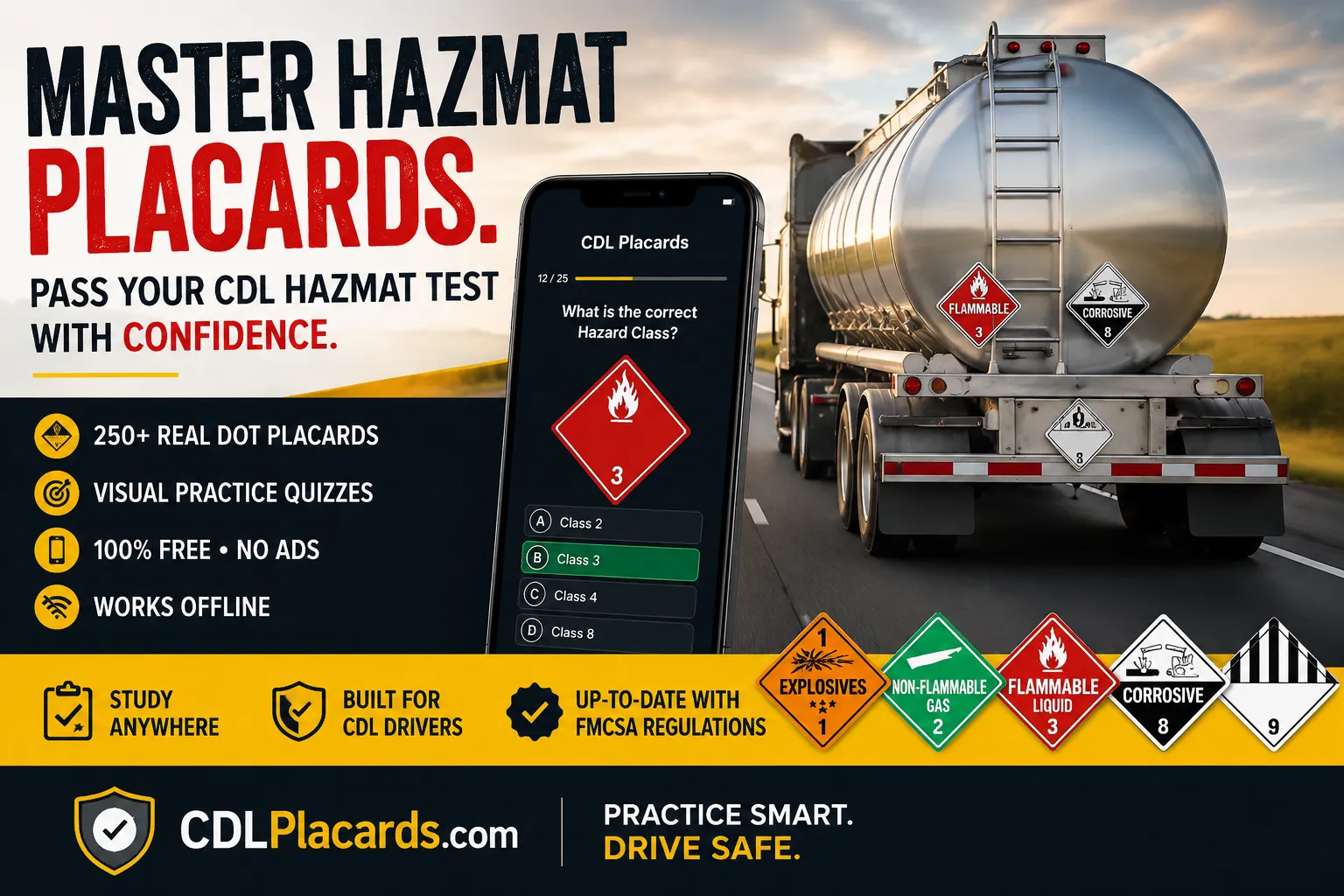
Same skull, different class number
Both the poison placard and the toxic gas placard show a skull and crossbones on a white background, so the symbol alone will not separate them. The class number does the work: a 6 means a toxic substance (Class 6.1), and a 2 means a gas (Division 2.3, toxic gas).
What 'inhalation hazard' actually means
Inhalation hazard is not a separate class. The words INHALATION HAZARD mark materials that are poisonous to breathe, sometimes called poison inhalation hazard or toxic inhalation hazard. Those materials can be toxic gases (Class 2.3) or certain toxic liquids (Class 6.1). So it is an added warning on top of the class, not a replacement for it.
Why the trick questions catch people
A question may show a skull placard and ask for the class. If you only memorized skull equals poison equals Class 6, you will miss the toxic-gas case. Read the symbol and the number together, and notice any inhalation-hazard wording.
Frequently asked questions
- Is inhalation hazard the same as poison?
- Not exactly. Poison (toxic) is the hazard; inhalation hazard specifically flags materials that are poisonous to breathe. Those can be toxic gases (Class 2.3) or certain toxic liquids (Class 6.1). Confirm details in your official manual.
- What is the difference between Class 2.3 and Class 6.1?
- Class 2.3 is toxic (poisonous) gases; Class 6.1 is toxic substances that are usually liquids or solids. Both can show the skull symbol, so the class number is what tells them apart.
- How do I tell them apart on the placard?
- Look past the shared skull symbol to the class number at the bottom: 2 for the toxic gas, 6 for the toxic substance. Always verify with your official state CDL manual.