CDL endorsement cheat sheet for visual color matching screen pdf offline app
A color-matching cheat sheet pairs each hazard color with its family so you can read a placard at a glance: orange explosives, red flammable, green non-flammable gas, yellow oxidizer, white poison, blue dangerous when wet, yellow-over-white radioactive, white-over-black corrosive, and stripes for miscellaneous. Color is the fast first cue; the symbol and number confirm it.
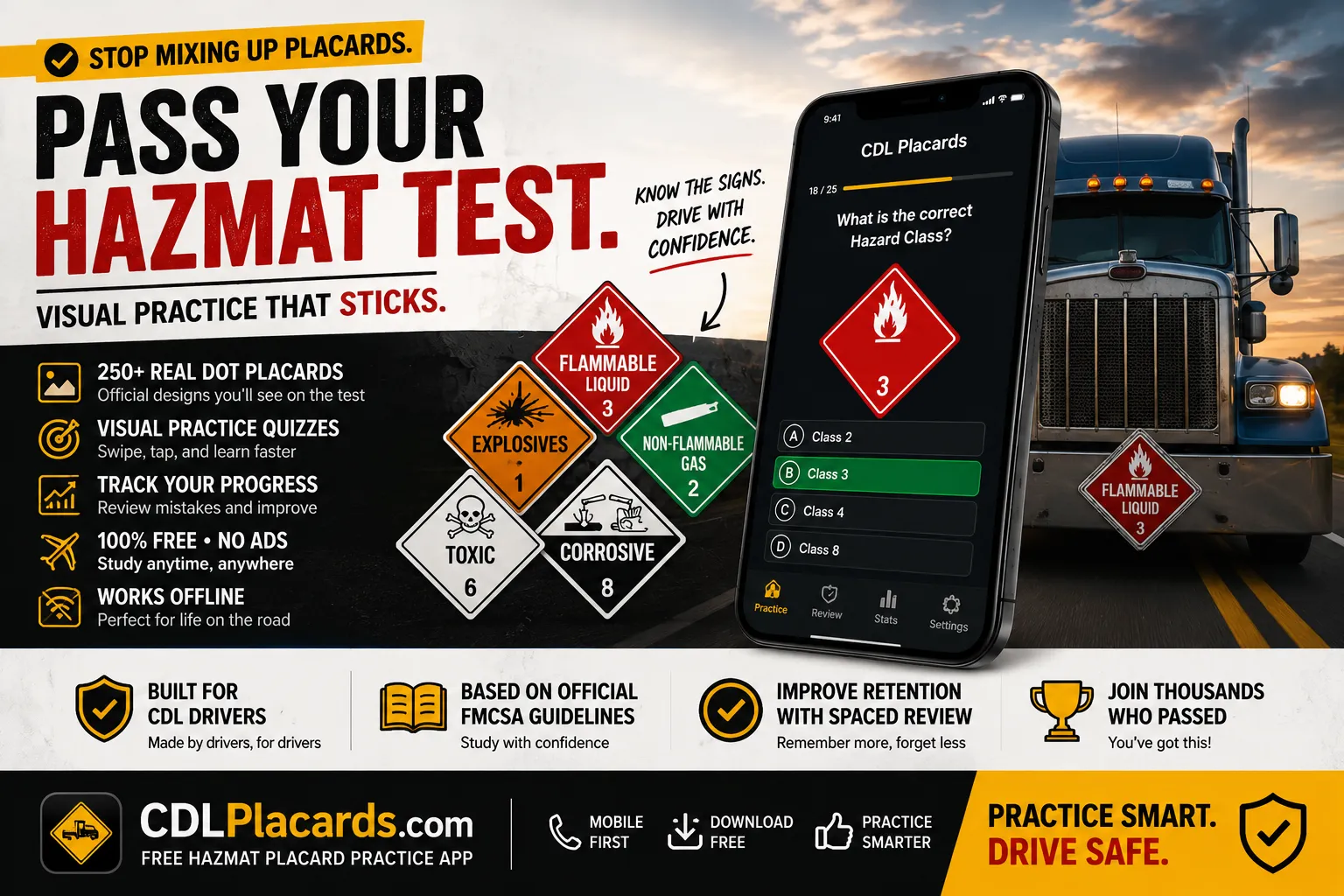
Color is the fastest first cue
A color-matching cheat sheet works because color is the quickest thing to read on a placard. It points you to the hazard family before you read the symbol or number. So a compact color map is the most useful single reference for fast recognition, especially for the look-alikes once you add the other cues.
The color map
Each color to its family:
| Color | Hazard family |
|---|---|
| Orange | Explosives (1) |
| Red | Flammable liquid / gas (3, 2.1) |
| Green | Non-flammable gas (2.2) |
| Yellow | Oxidizer (5) |
| White with skull | Poison / toxic (6.1, 2.3) |
| Blue | Dangerous when wet (4.3) |
| Yellow over white | Radioactive (7) |
| White over black | Corrosive (8) |
| White with stripes | Miscellaneous (9) |
Color narrows the family; the symbol and number confirm. Verify against your official manual.
Color narrows, then confirm
Color gets you close but not all the way, because several families share a color: red is both flammable liquid and flammable gas, white is both poison and toxic gas, black-and-white covers both corrosive and miscellaneous. So use color to narrow, then read the symbol and class number to land on the exact class.
Why a cheat sheet helps
A one-page color map is easy to review and to keep in mind, and it turns recognition into a fast, repeatable habit. It is most useful when you use it for recall, cover a color and name its family, rather than just reading it. Pair it with the look-alikes for the full picture.
How to use it and verify
Learn the color map first, then add the symbols and numbers, and drill the shared-color look-alikes. Use the sheet for active recall. Because it is only useful if correct, check the colors against your official state CDL manual, which is the authority on each placard's color.
Frequently asked questions
- What is a placard color cheat sheet?
- A map pairing each hazard color with its family: orange explosives, red flammable, green non-flammable gas, yellow oxidizer, white poison, blue dangerous-when-wet, yellow-over-white radioactive, white-over-black corrosive, striped miscellaneous. Color narrows; symbol and number confirm. Verify against your manual.
- Is color enough to identify a placard?
- Not by itself, because several families share a color. Use color to narrow to a family, then confirm with the symbol and class number, especially for the look-alikes.
- How should I use a color cheat sheet?
- For active recall: cover a color and name its family, then check. Learn the color map first, then add symbols and numbers and drill the shared-color look-alikes.