Drayage truck driver port container placard inspection visual apps generator tests
A drayage driver moving containers from the port reads placards on the containers, and those follow the international system, since ocean freight uses the IMDG code with the same nine-class diamonds. So a placarded container shows the familiar color, symbol, and class number, sometimes with a UN number. Recognizing the nine classes lets you verify a container's placards match its paperwork.
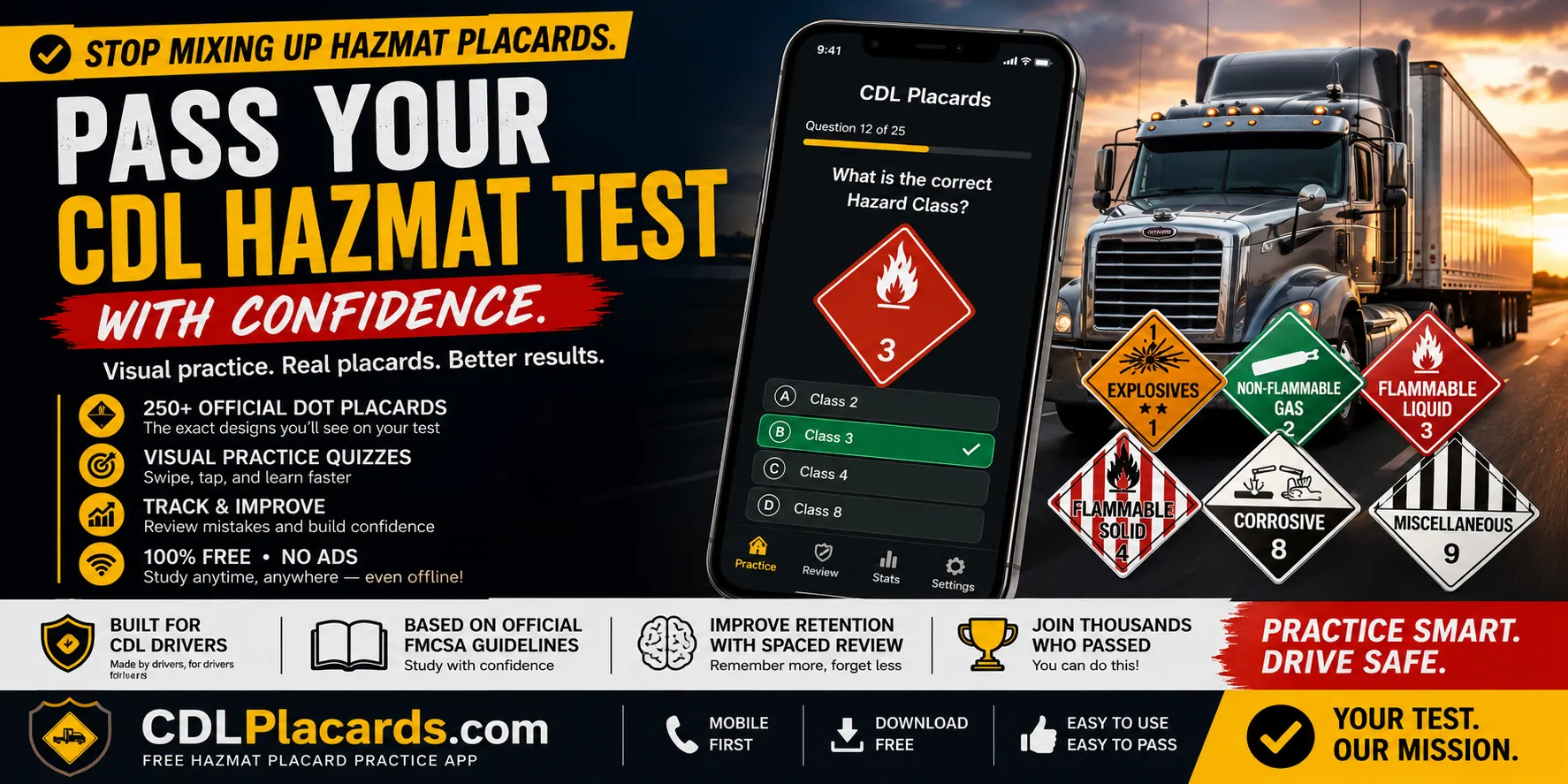
Port containers use the same diamonds
Drayage, moving containers between the port and nearby destinations, means handling ocean freight, which travels under the IMDG (maritime) code. That code uses the same international UN hazard classes, so a placarded container shows the familiar nine-class diamonds: color, symbol, and class number. The recognition you study applies directly to container placards.
What to check on a container
On a placarded container, read the hazard class from the diamond, note any four-digit UN number identifying the substance, and confirm the placards match the container's paperwork. A mismatch between the placards, the UN number, and the documents is a red flag worth catching before you move the box.
What a drayage driver reads
The cues on a container:
| Cue | What it tells you |
|---|---|
| Diamond color/symbol/number | The hazard class |
| UN number | The specific material |
| Marine pollutant mark | Environmental hazard (sea freight) |
| Paperwork match | Placards agree with the documents |
Containers use the same diamonds, plus marine markings. Verify the rules in the regulations.
The marine pollutant angle
Because the freight came by sea, you may see the marine pollutant mark (the dead-fish-and-tree symbol) on containers carrying materials harmful to the aquatic environment. That is a marking added alongside the hazard diamond, more common on ocean freight, so it is worth recognizing on port containers.
How to study and verify
Drill the nine classes so you can read any container placard, and learn the marine pollutant mark for sea freight. For the actual inspection duties, what a drayage driver must check and document, those are set by the regulations and your operation, so confirm them there rather than assuming from the container alone.
Frequently asked questions
- What placards do port containers use?
- The same nine-class hazard diamonds, because ocean freight follows the IMDG code built on the international UN classes. A placarded container shows the familiar color, symbol, and class number, sometimes with a UN number and a marine pollutant mark. Verify the rules in the regulations.
- What should a drayage driver check on a container?
- The hazard class from the diamond, any UN number, any marine pollutant mark, and whether the placards match the container's paperwork. A mismatch is a red flag to catch before moving it.
- Why might a container show a marine pollutant mark?
- Because it arrived by sea, and materials harmful to the aquatic environment carry the marine pollutant mark (dead fish and tree) alongside the hazard diamond, which is more common on ocean freight.