DOT weigh station scale hazard diamond trick test app prep colors offline
At a scale or weigh station, an inspector reads your placards the same way you study: color, symbol, and class number to identify the hazard, then whether the placards are correct, legible, and on all required sides. The color trick to avoid is leaning on color alone, since several classes share a color, so confirm with the symbol and number.
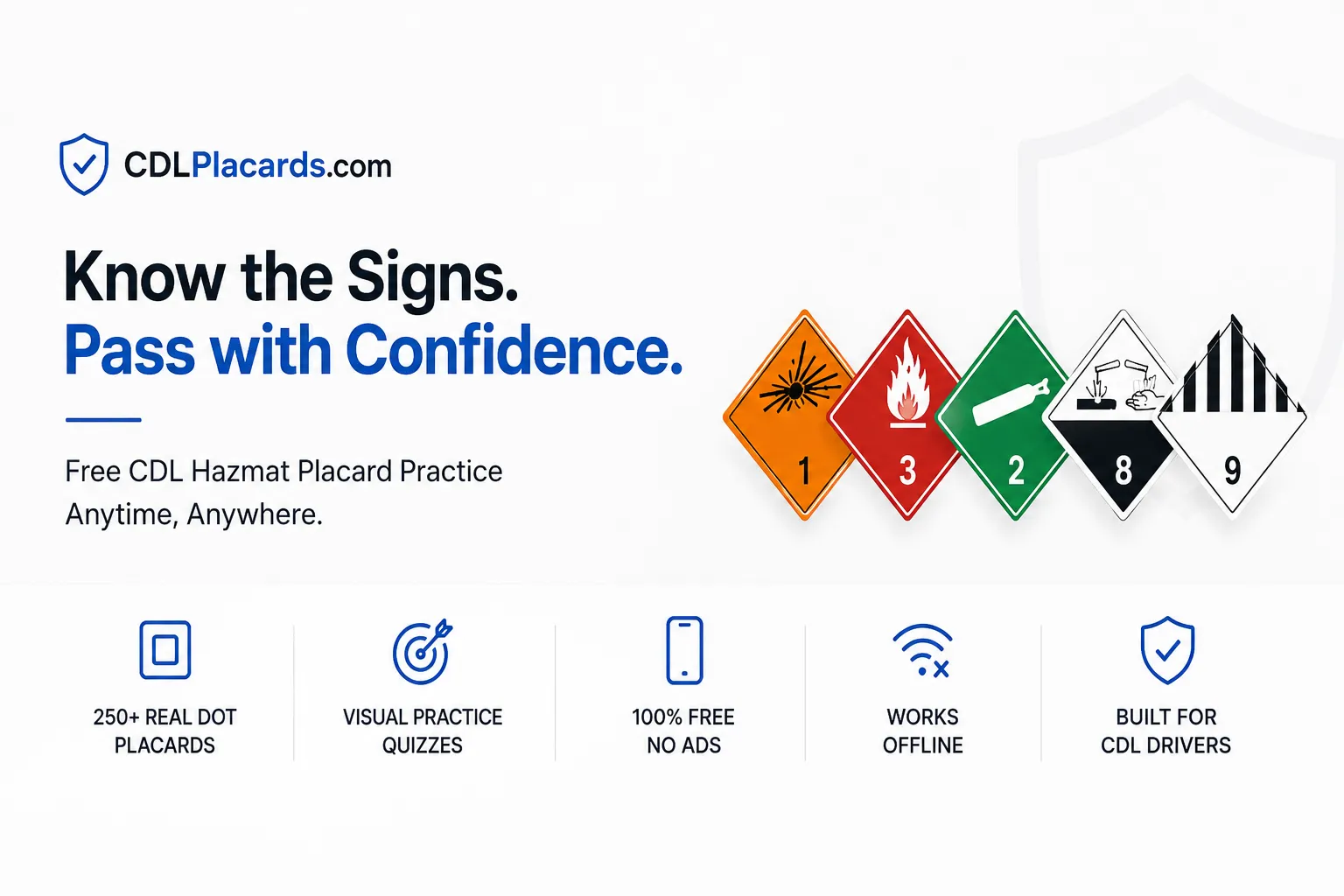
What happens with placards at a scale
When you pull into a weigh station, an inspector can check your placarding along with weight and paperwork. They are doing the same recognition you practice, identifying the hazard class from color, symbol, and number, plus confirming the placards are correct, legible, and displayed on all required sides.
The color trick to avoid
The trap with color is relying on it alone. Several hazard families share a color: red is both flammable liquid and flammable gas, white is both poison and toxic gas, and black-and-white covers both corrosive and miscellaneous. So a color-only read can land on the wrong class. Always confirm with the symbol and number.
What is checked
At an inspection:
| Check | What it verifies |
|---|---|
| Hazard class | Color, symbol, number identify it |
| Legibility | Not faded or damaged |
| Placement | All required sides, right-side-up |
| Match to papers | Placards and UN numbers agree with the documents |
Recognition plus compliance. Verify the exact rules in the regulations.
Why the shared colors matter
Because colors repeat, the inspector and you both have to read the full placard. Knowing that red could be Class 3 or 2.1, and that the flame versus the class number settles it, is exactly the kind of distinction a scale check can surface. So the safe habit is color first, then symbol and number to confirm.
How to prepare and verify
Prepare by drilling the nine classes with color, symbol, and number together, not color alone, and make sure your placards are legible and correctly placed before you roll. The exact placarding, placement, and documentation requirements are in the regulations, so confirm the specifics there and in your official manual.
Frequently asked questions
- What do inspectors check on placards at a weigh station?
- The hazard class (color, symbol, number) plus compliance: legibility, placement on all required sides, and whether the placards and UN numbers match the shipping papers. Verify the exact rules in the regulations.
- What is the color trick with placards?
- Relying on color alone, since several classes share a color (red flammable liquid and gas, white poison and toxic gas, black-and-white Class 8 and 9). Always confirm with the symbol and class number.
- How do I prepare for a scale placard check?
- Drill the nine classes by color, symbol, and number together, and ensure your placards are legible and correctly placed. Recognition plus compliance is what is checked.