Are DMV hazmat placard questions mostly about the colors or the numbers?
Both, but recognition is the real skill being tested. A placard question checks whether you can identify the hazard, and that comes from reading the color, the symbol inside the diamond, and the class number together as one quick impression, not from memorizing any one of them alone.
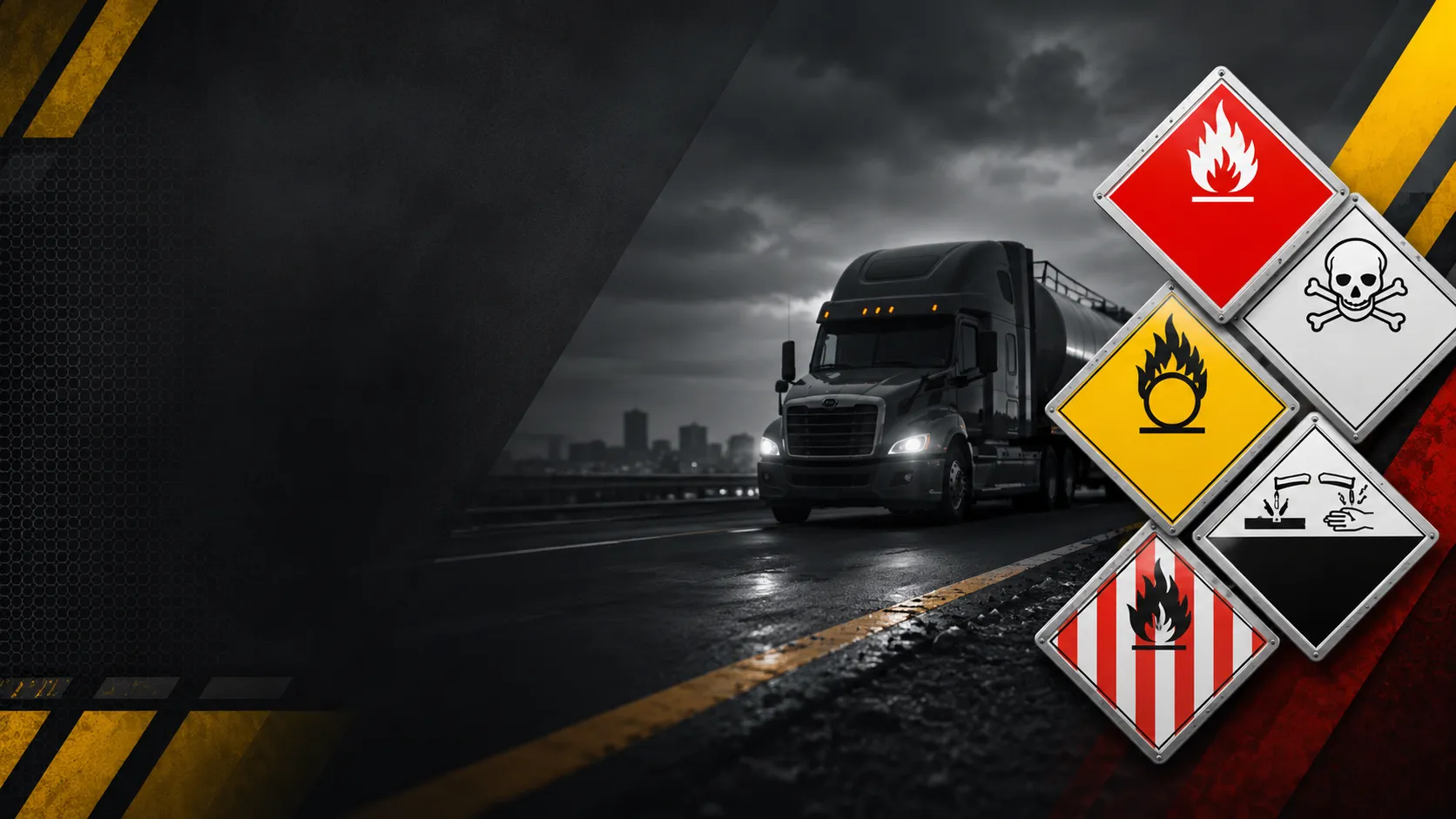
Color, symbol, and number each do a different job
It helps to stop thinking of it as color versus numbers and start treating them as three layers of the same clue. Color tells you the hazard family at a glance: red for flammable, orange for explosives, green for non-flammable gas, yellow for oxidizers, and so on. It narrows the field fast.
The symbol inside the diamond, such as a flame or a skull, confirms the type of hazard and separates two materials that share a color. The class number at the bottom point, from 1 to 9, pins down the exact hazard class. Most questions ask what a placard means or which class it is, so you need all three layers working at once.
Think of it like reading a license plate from a distance. The color is the state, the symbol is the make of the car, and the number is the exact plate. Any one alone leaves you guessing; together they identify the load in a fraction of a second.
The placard color cheat sheet
Color is the fastest first filter because it points you at a family before you read anything else. Here is the quick map most CDL learners start from. A few colors are shared across classes, which is exactly why the symbol and number still matter, so treat this as a starting point and confirm the edge cases in your manual.
| Placard color | Hazard family | Example class |
|---|---|---|
| Orange | Explosives | Class 1 |
| Red | Flammable | Class 3 (and 2.1 gas) |
| Green | Non-flammable gas | Class 2.2 |
| Yellow | Oxidizer | Class 5.1 |
| White with skull | Poison or toxic | Class 6.1 (and 2.3 gas) |
| White top, black bottom | Corrosive | Class 8 |
| White with black stripes | Miscellaneous | Class 9 |
| Blue | Dangerous when wet | Class 4.3 |
| Yellow over white | Radioactive | Class 7 |
Color narrows it down; the symbol and class number confirm it. Verify specifics in your official CDL manual.
So which one do the questions lean on?
In practice, most placard questions are visual recognition: you see a placard, or a description of one, and pick what it represents. That rewards people who read the whole diamond quickly rather than those who only memorized a list of numbers. Color usually gets you into the right neighborhood, and the symbol and number confirm the answer.
The exact mix and format vary by state and can change over time, so treat this as study guidance and confirm the question style and topics in your official state CDL manual, which is the authority on your test.
Where people lose points
The two common traps are leaning on a single layer. If you memorize colors alone, the look-alikes catch you, because several classes and divisions share a color family. If you drill numbers alone, you freeze when the question shows a visual instead of a number.
- Relying on color only, then missing look-alike placards
- Memorizing class numbers without the matching visual
- Confusing divisions within a class, like the gases in Class 2
- Forgetting that Class 9 has its own distinctive black-and-white striped look
- Reading red as automatically flammable liquid, when it can also be a flammable gas (2.1)
How to study it the fast way
Practice recognition, not recitation. Look at a placard, name the hazard out loud, then check. Drill the look-alikes side by side so the differences stick, and keep sessions short and frequent rather than one long cram. A few focused minutes a day builds the instant recognition the test rewards.
Start each session with the color cheat sheet above, then move to the symbol and number, then finish on the pairs you keep missing. That order trains the same fast top-to-bottom read you will use on the test.
Then verify everything against your official state CDL manual before test day. A study tool helps you practice fast, but the manual is the source of truth for what you need to know.
Frequently asked questions
- What do the colors on a hazmat placard mean?
- Color signals the hazard family: orange for explosives, red for flammable, green for non-flammable gas, yellow for oxidizers, white for poison, blue for dangerous when wet, and yellow over white for radioactive. Color narrows it down; the symbol and class number confirm it. Verify with your official manual.
- Do I have to memorize the hazard class numbers for the DMV test?
- You should be able to recognize the nine classes and connect each to its placard, including the number. Recognizing the whole diamond, color, symbol, and number, is more reliable than memorizing numbers in isolation. Confirm exactly what your state tests in your official CDL manual.
- Is knowing the colors enough to pass the placard questions?
- Color is a strong first clue but not enough on its own, because several hazard families share a color. Use color to narrow it down, then confirm with the symbol and class number. Always verify requirements with your official manual.
- Are CDL Hazmat placard questions multiple choice?
- Formats vary by state and can change, so check your official state CDL manual and licensing authority for the current question style. Whatever the format, fast visual recognition of the placards is what helps most.