Are DMV genie hazard images high res enough to zoom on the app?
For studying placards, image resolution matters less than you might think, because recognition relies on the broad cues, color, the basic shape of the symbol, and the class number, not fine detail. Placards are designed to be read at a distance, so even a modest-resolution image usually shows everything you need. Clear color and a legible number are what count.
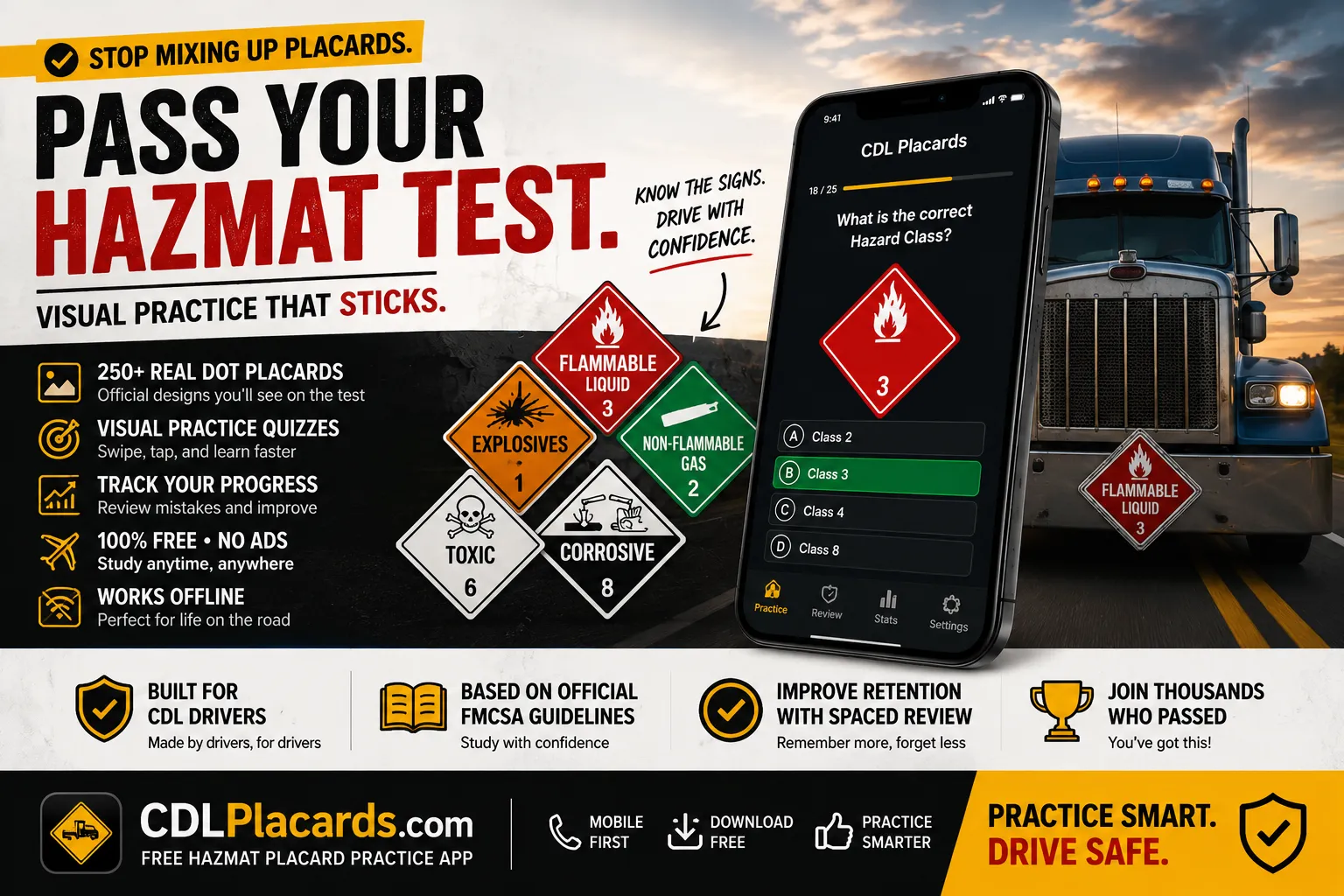
Placards are made for distance
Hazard placards are deliberately designed to be identified from a distance and from a moving vehicle, using bold colors, simple symbols, and a large class number. That means the information is in the broad strokes, not fine detail, which is good news for studying from images that are not ultra-high-resolution.
What recognition actually needs
To recognize a placard you need three things: the color, the general shape of the symbol (a flame, a skull, a cylinder), and the class number. All three are large, high-contrast features that read clearly even at modest resolution. You are not hunting for tiny print, so extreme zoom is rarely necessary.
What matters in a study image
Prioritize these over raw resolution:
| Feature | Why it matters more than zoom |
|---|---|
| Accurate color | Color is the first recognition cue |
| Legible class number | Pins down the class |
| Clear symbol shape | Confirms the hazard type |
| Correct placard | Studying the right design matters most |
Clear color, symbol, and number beat raw resolution. Confirm against your official manual.
When higher resolution does help
Higher resolution can help on a small phone screen, or when a symbol has fine elements (like the bars on a radioactive label or the difference between similar symbols). But for the core nine-class recognition, a clear, correctly colored image at reasonable size is plenty. Accuracy of the image matters more than its pixel count.
How to study and verify
Pick study images that show accurate colors, a clear symbol, and a readable class number, and do not worry much about extreme resolution. Most important is that the placards themselves are correct, so cross-check the designs against your official state CDL manual, which is the authority on what each placard should look like.
Frequently asked questions
- Do placard study images need to be high resolution?
- Not really. Recognition rests on color, the basic symbol shape, and the class number, all readable at modest resolution because placards are built to be seen from a distance. Clear color and a legible number matter most. Verify against your official manual.
- What matters most in a placard study image?
- Accurate color, a clear symbol shape, and a legible class number, and that the placard design is correct. Those beat raw resolution for learning recognition.
- When is higher resolution useful?
- On small screens, or for fine details like the bars on a radioactive label. For core nine-class recognition, a clear, correctly colored image at reasonable size is enough.