Dispatchers hazard placards interactive drag drop tool tests tools checks
Dispatchers benefit from placard recognition even though they do not drive, because matching loads, paperwork, and hazards is part of the job. The content is the same nine hazard classes by color, symbol, and number. An interactive matching drill (pairing a placard to its class or hazard) is a good fit, since the dispatcher skill is recognition and matching, not driving.
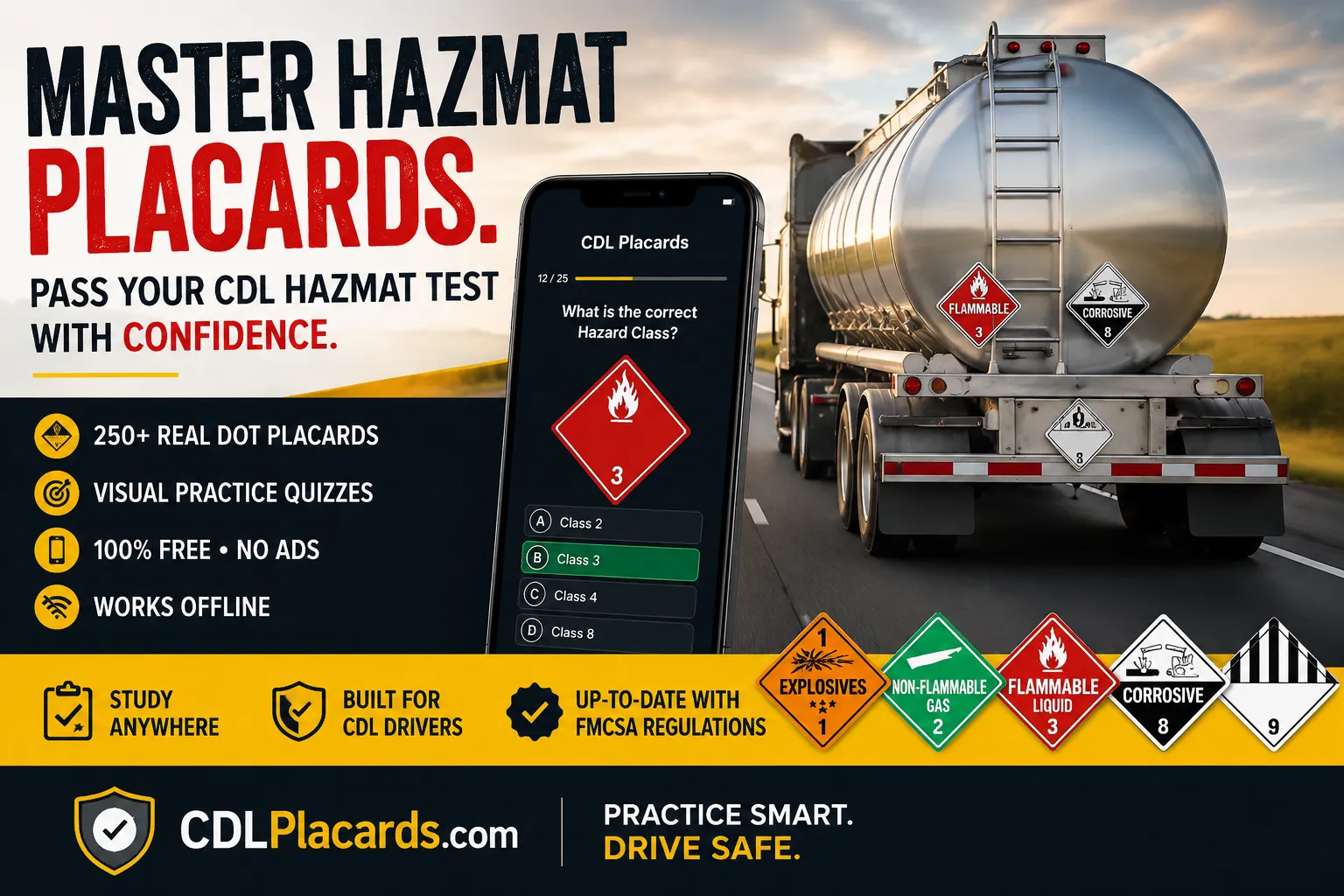
Why dispatchers need recognition
A dispatcher coordinates loads, drivers, and documentation, and hazardous materials are part of that. Being able to recognize the nine hazard classes helps a dispatcher match a load to its placard and paperwork, flag a mismatch, and understand the handling a load needs. They do not drive, but the recognition is directly useful to the coordination role.
The content is the same nine classes
There is no separate dispatcher placard system; it is the same nine hazard classes by color, symbol, and number that drivers learn. So a dispatcher studies the identical diamonds. What differs is the application: matching and verifying rather than reading them on the road.
Why matching drills fit the role
What suits a dispatcher:
| Skill | Why it fits dispatch |
|---|---|
| Recognize the nine classes | Read what a load is |
| Match placard to class/hazard | Verify load and paperwork |
| Spot mismatches | Catch paperwork conflicts |
| Drag-and-drop matching | Practices recognition and pairing |
Recognition and matching are the dispatcher skills. Confirm requirements with your employer and the regulations.
Matching is the dispatcher's version of the skill
For a driver the skill is reading a placard at a glance; for a dispatcher it is matching, does this placard match this load and this paperwork. An interactive matching drill, pairing each diamond with its class and hazard, rehearses exactly that. So the practice format can mirror the real task rather than a roadside read.
How to study and verify
Dispatchers can learn the nine classes the same way drivers do, then practice matching placards to classes, hazards, and paperwork. For what a dispatcher is actually required to know or document for hazardous materials, that comes from your employer and the regulations, so confirm those requirements there rather than assuming.
Frequently asked questions
- Do dispatchers need to know hazmat placards?
- They do not drive, but recognizing the nine hazard classes helps them match loads, paperwork, and hazards and spot mismatches. The content is the same nine classes drivers learn. Confirm any requirements with your employer and the regulations.
- Is the placard content different for dispatchers?
- No. It is the same nine hazard classes by color, symbol, and number. What differs is the application, matching and verifying rather than reading placards on the road.
- Why do matching drills suit dispatchers?
- Because the dispatcher skill is matching a placard to a load and its paperwork, not roadside reading. A drag-and-drop matching drill rehearses that recognition-and-pairing task directly.