Are test color differences important on state dmv exams colorblindness?
Color is one of the fastest cues on a placard, but you are never meant to rely on it alone. Every placard also carries a symbol, a class number, and sometimes a word, so colorblind drivers can identify them by shape, symbol, and number. Color matters, but it is not the only signal.
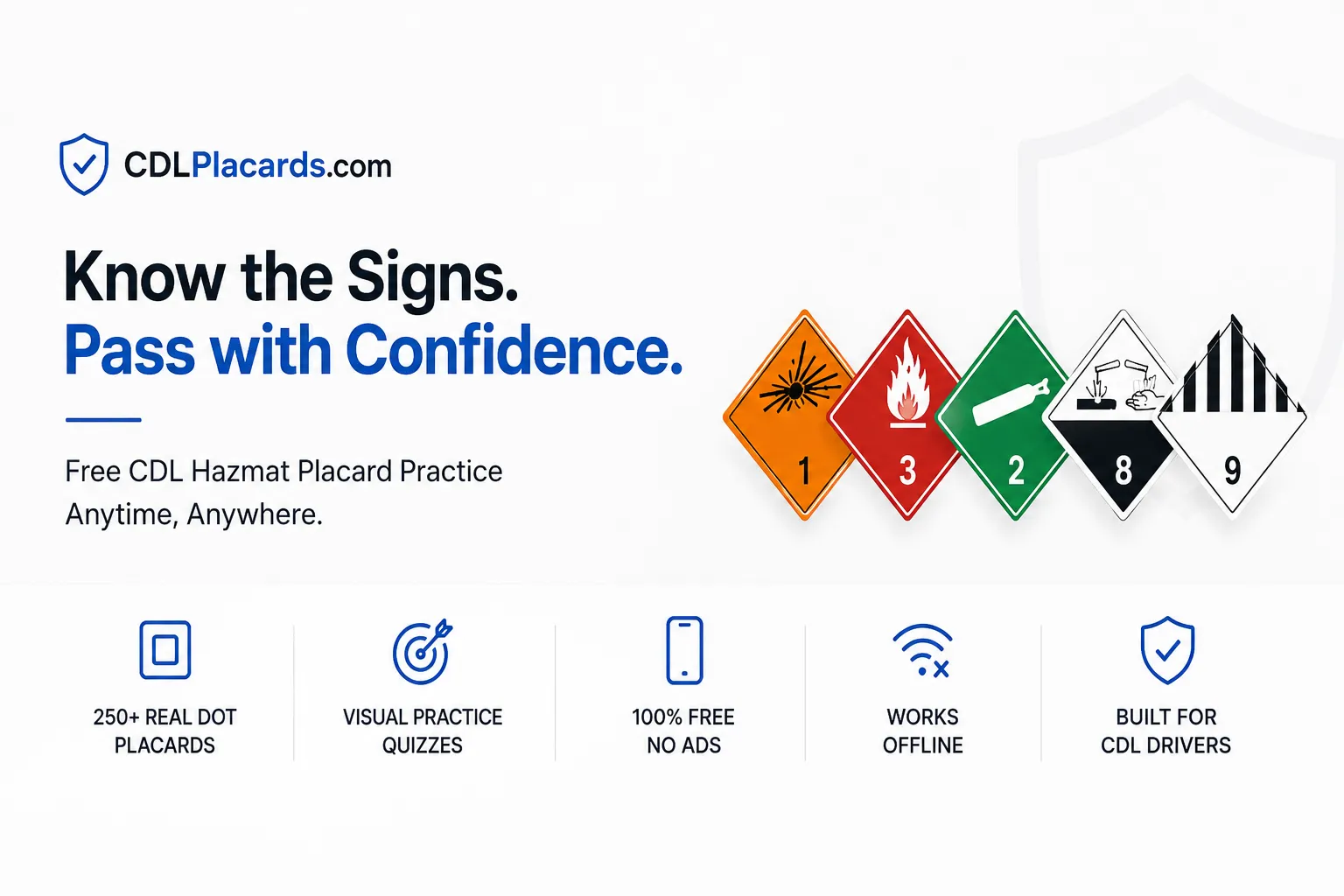
Color is a clue, not the whole answer
Placards are built with several redundant signals on purpose: the color, the symbol inside the diamond, the class number at the bottom, and on some, the hazard word. That redundancy means recognition does not depend on perfect color vision.
If you are colorblind
Lean on the cues that do not depend on color: the symbol (flame, skull, corrosion, and so on), the class number, and the layout (for example, Class 9 has vertical stripes, Class 8 has a solid lower half). Practicing by symbol and number first builds reliable recognition.
If color vision affects your testing, ask your licensing authority about how their exam presents placards and any accommodations. This site is an independent study tool and cannot speak for your state's testing rules.
Frequently asked questions
- Can you be colorblind and pass the CDL hazmat test?
- Color is one cue, but placards also use symbols, class numbers, and shapes, so you can identify them without relying on color. Ask your licensing authority about color-vision requirements and accommodations.
- Are placard questions mostly about color?
- Color helps narrow it down quickly, but the symbol and class number confirm the answer. Study all three together rather than color alone.
- How do I study placards without relying on color?
- Focus on the symbol, the class number, and the layout of each diamond. Drill them that way and the color becomes a bonus cue, not a crutch.