9 Hazmat Classes Explained
Hazardous materials are sorted into nine hazard classes, and almost every placard you will see on a CDL Hazmat test maps back to one of them. Learn the nine classes as a framework and the individual placards stop feeling random: each one has a slot to live in.
This hub gives you the nine classes in plain language, the colors and symbols that go with them, and the look-alikes that catch people out. It is a study aid, not a regulation. Always confirm the details against your official state CDL manual, which is the source of truth for your test.
The nine hazard classes at a glance
Each class covers a family of materials and has a recognizable placard style. These are the headlines; your manual has the full detail.
- Class 1: Explosives (orange)
- Class 2: Gases, including flammable, non-flammable, and toxic gases
- Class 3: Flammable liquids (red)
- Class 4: Flammable solids, spontaneously combustible, and dangerous when wet
- Class 5: Oxidizers and organic peroxides (yellow)
- Class 6: Toxic (poison) and infectious substances
- Class 7: Radioactive materials
- Class 8: Corrosives (black and white)
- Class 9: Miscellaneous dangerous goods, including many lithium batteries
Where people lose points
The trouble is rarely a class you have never seen. It is the pairs that look similar: the divisions inside Class 2, oxidizer versus flammable, or Class 9 which is the odd one out with its black vertical stripes. Drilling those look-alikes side by side is the fastest way to stop mixing them up.
Try it before you study
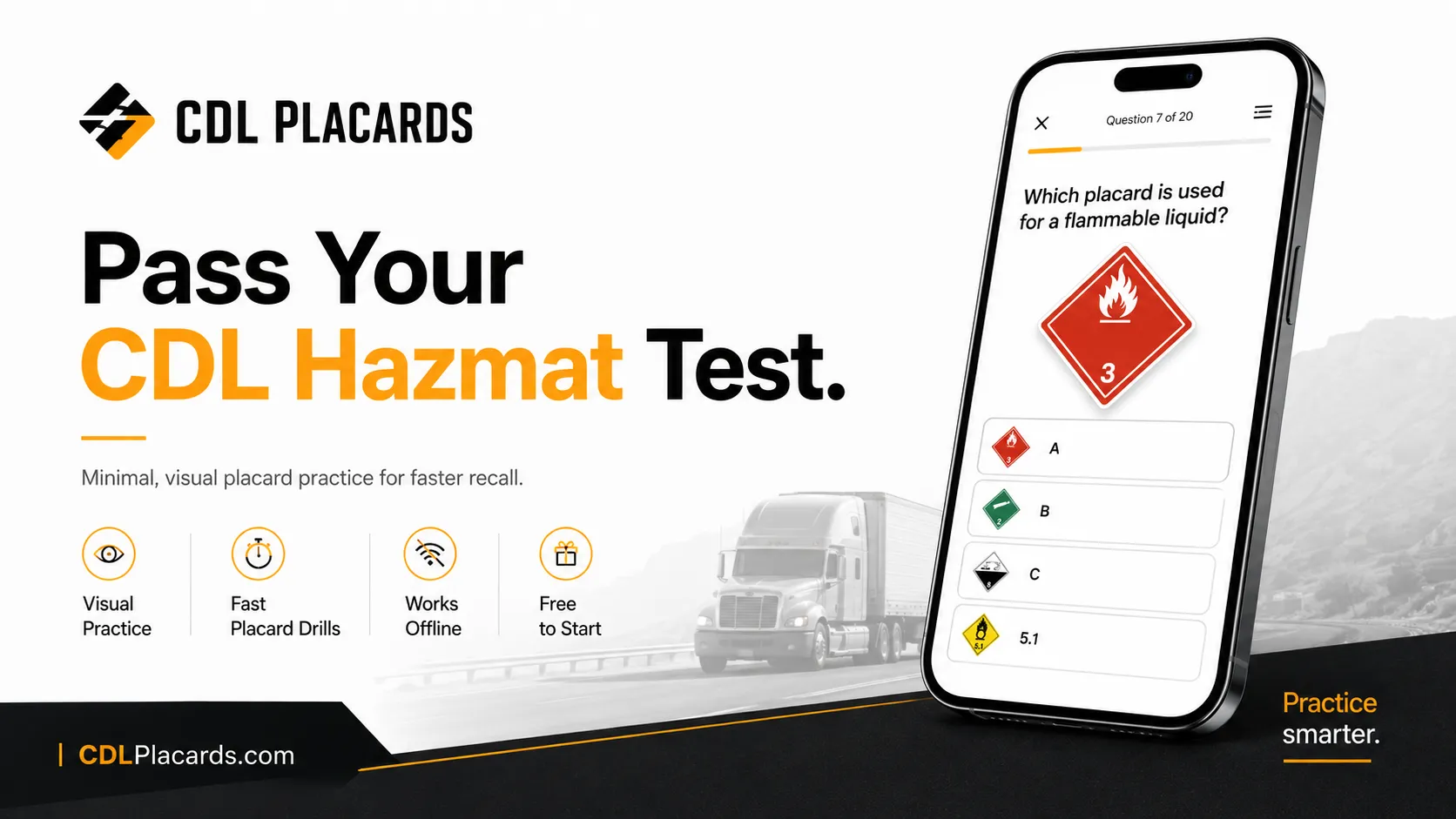
A quick, demo-only taste of how the practice works. Pick what each generic hazard diamond means and get instant feedback.
What hazard does this placard show?
That is the idea: see the sign, name the hazard, and keep the ones you miss in a review pile. The full app drills all nine hazard classes.
Frequently asked questions
- Do I have to memorize all nine hazard classes for the CDL Hazmat test?
- You need to recognize them confidently. Learning the nine classes as a framework, then drilling the placards within each, is the most reliable approach. Check your official state CDL manual for exactly what your test covers.
- Which hazard classes are easiest to confuse?
- Commonly confused sets include the divisions within Class 2 gases, oxidizers (Class 5) versus flammables (Class 3), and Class 9 because of its distinctive black-and-white striped look. Practicing them in pairs helps.
- Is the class number always shown on the placard?
- The class or division number usually appears at the bottom of the diamond, but always verify specifics in your official manual since there are exceptions and placarding rules vary by situation.