Test prep
Forbidden Hazardous Materials Explained (49 CFR 173.21)
Some materials are forbidden from transport entirely. Here is what makes a material forbidden, common examples, and why a driver should never accept one.
Lawrence Arya··5 min
73 posts · page 3 of 7.
Some materials are forbidden from transport entirely. Here is what makes a material forbidden, common examples, and why a driver should never accept one.
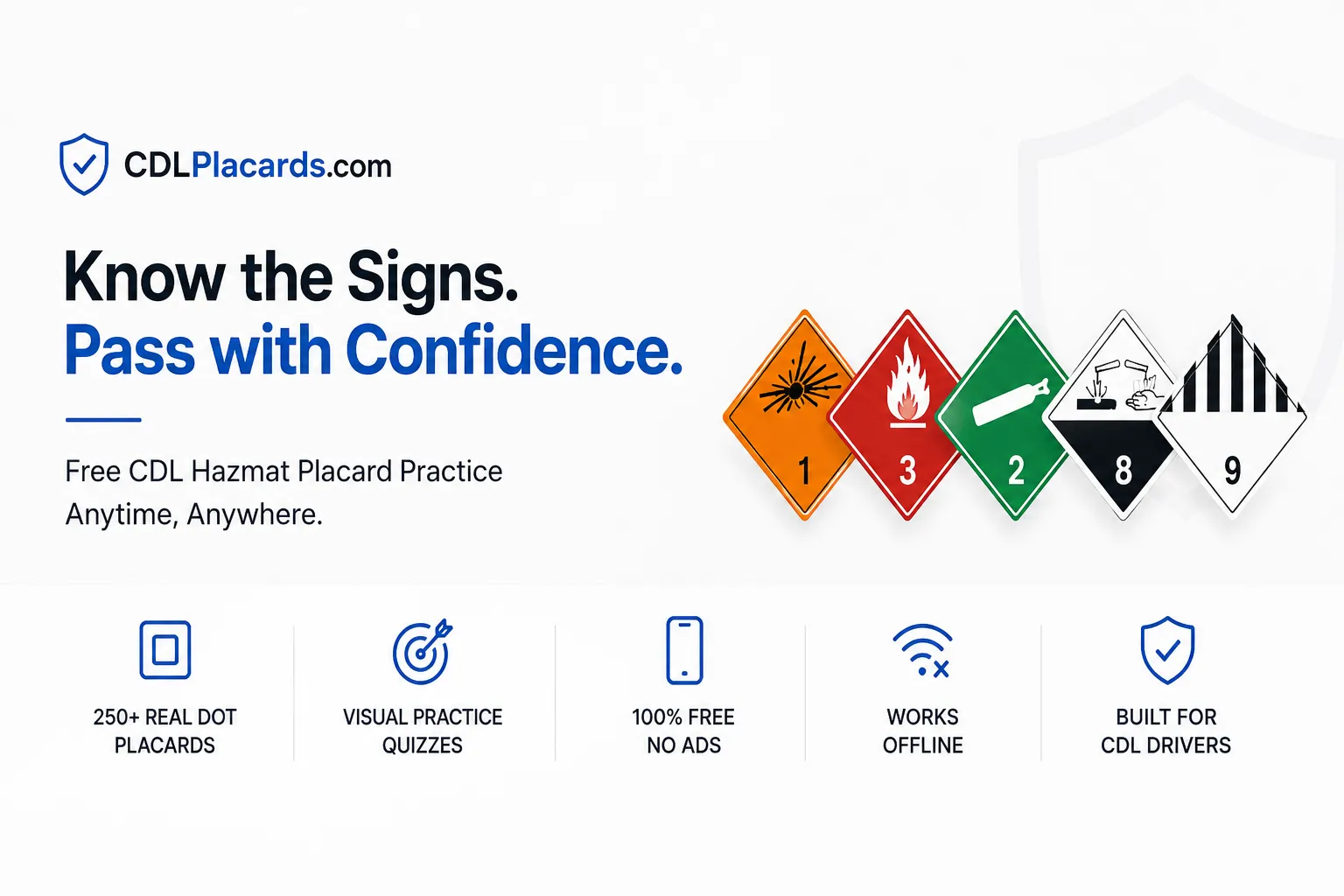
A plain-English breakdown of the nine DOT hazard classes, what each one covers, the placard color and symbol that signal it, and how to memorize them.
What the Uniform Hazardous Waste Manifest is, why it tracks waste from generator to disposal, and how it works as shipping papers for a driver.
Which offenses can block a CDL hazmat endorsement, the difference between permanent and interim disqualifiers, and where the TSA rules live.

What happens when hazmat rules are broken: civil and criminal penalties, out-of-service orders, and why the consequences are designed to be serious.
Flashcards and practice tests do different jobs in CDL hazmat prep. Here is what each is best for and how to combine them for the strongest results.
When a hazmat incident must be reported, the difference between immediate notice and the written report, and who to call. A CDL hazmat study guide.
The general hazmat loading and unloading rules CDL students need to know: no smoking, brakes set, careful handling, and the class-specific precautions.
What the markings on a hazmat package mean, from the shipping name and UN number to orientation arrows, and how markings differ from labels and placards.
Where you can park a placarded hazmat vehicle, when it must be attended, and the stricter rules for explosives. A CDL hazmat study guide.

Where hazmat placards must go on a vehicle: all four sides, point up, readable, and clear of clutter. A study guide to the placement rules CDL tests love.
How big a hazmat placard must be, the inner border, color and durability rules, and why the specs exist. A study guide to the placard specification rules.